





I’ve always loved Victorian novels and the history that made them, especially the worlds of dramatic entertainments – whether the sideshows of quack doctors who travelled round the rural fairgrounds, or the glamorous theatres where pantomimes could last for hours and had the most impressive sets, not to mention casting stars to help draw in an audience.

One of my novel’s characters is a girl called Tilly Lovell who doesn’t grow a single inch after the age of five – much like the real Princess Lottie who, at the age of fourteen, was only twenty inches tall and weighed no more than nine pounds. Princess Lottie was a member of a theatrical troop that performed as Harvey’s Midges, and that is all I know of her. However, this photograph brings her to vivid life, as do others I discovered of some of the real people who went on to inspire those invented in my fiction.
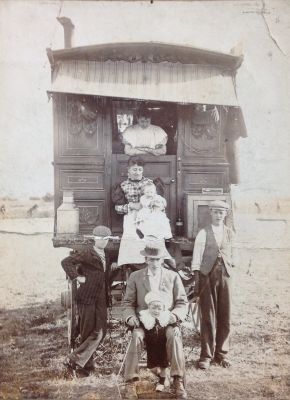
The famous Lord George Sanger was a circus manager, with his adult profession influenced by a childhood with his roguish showman father. The younger Sanger trained his own performing troop of mice, and this aspect of his story I have echoed when describing my character called Ulysses. There is also the tale told by Tilly and her sister of having seen a dead man’s face outside the window of their vardo, which was another memory from Sanger’s autobiography – when he claimed that one night a pair of grave-robbers were riding on his father’s fairground wagon, and the corpse that they had stolen and stored up on the roof started slipping from its wrappings in a most alarming manner.
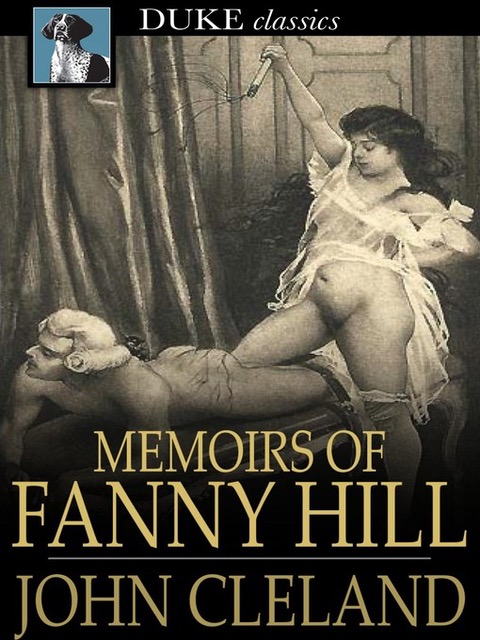
Another real character deserves a novel of his own; but, for the purposes of this one, he once owned the Chiswick house where my Lovell sisters live with an Italian called Captain (after escaping their exploitative drunkard of a father who tours his daughters round the showgrounds to sell his ‘miracle elixir’). In Linden House they are told how the now absent Thomas Wainewright killed some of his relatives by the means of poisoned powder kept concealed inside a ring. This is mirrored in the book when Keziah finds a ring that may well have held the poison, which is subsequently used to dramatic effect. Also drawn from Wainewright’s life is the fact that his family published the first editions of the scandalous book: The Memoirs of Fanny Hill. Still available today, the book is highly entertaining and extraordinarily explicit. Quite the sexual education for Tilly and Keziah Lovell.

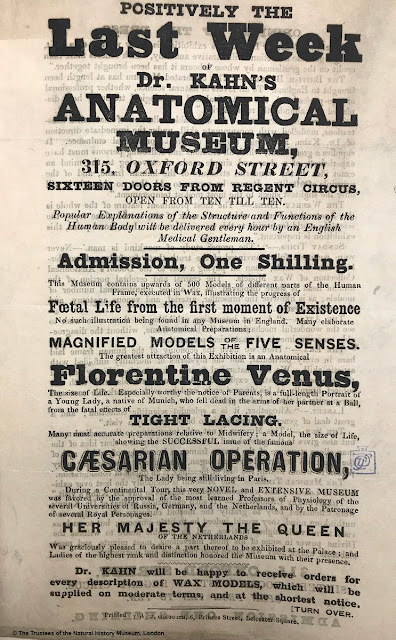
The Oxford Street Museum, where Theo Seabrook is employed by Doctor Eugene Summerwell, was another real venue run by a Doctor Joseph Kahn. Known at the time as a gloomy sepulchre of horror, it claimed to educate the masses on reproduction and good health, for which it also sold medicinal pamphlets and quack cures. Titillation for the masses came with displays of wax models which exhibited the ravages of venereal disease. There were also displays of so-called freaks of nature, while the Anatomical Venus represented a woman whose torso was exposed to reveal the inner workings of the organs of the body; even a baby in the womb. The museum was closed down and its exhibits were destroyed after complaints from the Society for the Suppression of Vice. However, such collections were very popular at the time. Today, for those inclined to see a similar display, Viktor Wynd’s Museum of Curiosities, Fine art, and UnNatural History is situated in East London. For somewhat less bizarre, but equally macabre displays, there are the specimens on show in the Hunterian Museum, which is currently owned by the Royal College of Surgeons.
Surgeons working at the time when this novel takes place were very often known as butchers. Many operations were performed with no sedation before an audience of students. The gruesome scene in which my character of Theo recollects one surgeon having claimed to amputate an injured leg in less than seven seconds flat is based on a true story.

Somewhat less bloody but perhaps equally cruel entertainments were to be found in the freakshows of anatomical ‘wonders’. Living human exhibits such as Joseph Merrick, known as the Elephant Man, would be toured around the showgrounds where their appearances drew responses of pity, shock, and disgust.
[Fedor Jeftichew with hairy face]

My own imaginary Aleski with his dense growth of body hair is partly based on the real Fedor Jeftichew. Fedor was called ‘The Dog Faced Boy’ and was displayed all over Europe. He was then hired by P. T. Barnum who took him to America, claiming the boy was raised by wolves, and still so wild he only barked or growled in conversation. (In fact, he was well-educated, speaking fluently in Russian, German, and English.) My Aleski also talks about a Julia Pastrana, another real and unnaturally hirsute young woman who was born in Mexico. It was claimed that Julia had an ape for a father, and when she died in childbirth the showman who had ‘owned’ her (likely to be the baby’s father) had Julia and her dead child embalmed to carry on his touring. The greed for money and fame was what produced the real monsters, more of whom are found within the pages of my book.
But, despite the gothic horrors and the darkness of this story I also hope to shed some light on the bonds formed by friends and a protective ‘family’ – with the hope that being ‘different’ does not always have to mean a life of pain and suffering.
Essie Fox is author of The Fascination, published on 22nd June, by Orenda Books.
For more detailed information about the themes and real stories discovered in The Fascination, please visit Essie Fox’s website: www.essiefox.com, or The Virtual Victorian, a historical blog based on ‘facts, fancies, and fabrications’ relating to the era. www.virtualvictorian.blogspot.com


