Posted on

Orenda Books picks up Trevor Wood’s gripping, moving DCI Jack Parker series in a three-book deal

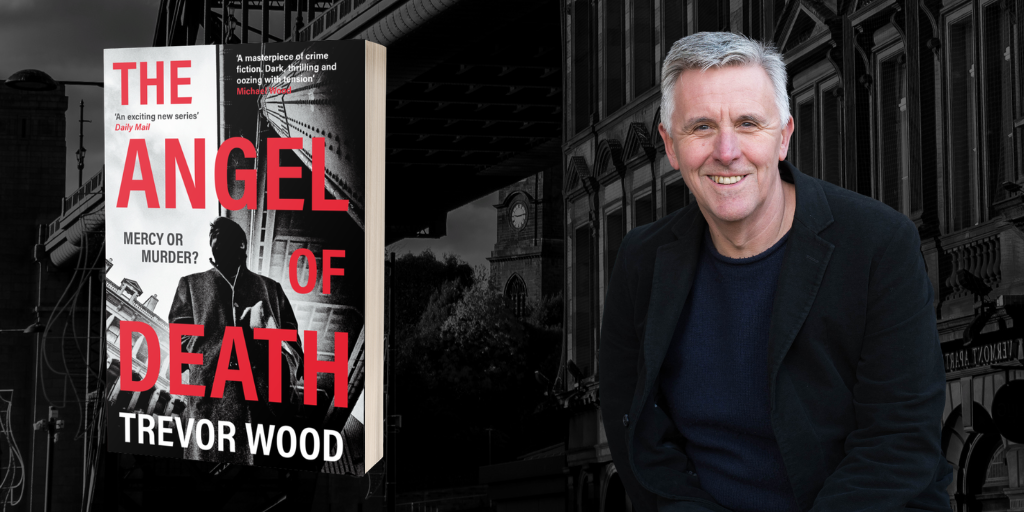
Karen Sullivan, publisher of Orenda Books, is delighted to announce the acquisition of World English Language rights for Trevor Wood’s The Angel of Death, book three in the DCI Jack Parker series, in a three-book deal negotiated with Oli Munson at AM Heath.

The book opens with a chilling murder – or is it a mercy killing, or someone exercising their own right to die? – and it becomes clear that death is stalking the streets of Newcastle, with signs that these deaths may not be isolated. An anonymous killer is offering the terminally ill a dignified escape. Mercy to some. Murder to others. DCI Jack Parker doesn’t want the case. He has a secret of his own – a diagnosis of early-onset dementia he’s desperate to conceal. But the signs are becoming impossible to ignore. As his mind begins to betray him, the city faces its own moral reckoning. While politicians debate a contentious new law and the self-styled Angel of Death selects another victim, Jack’s world is shaken when the killings are traced to a carers’ support group – one his wife, Helen, has been attending in secret. Yet his deepest fear is also his darkest temptation. Because when his disease becomes unbearable, Jack can’t escape one haunting question: Could the Angel of Death be the saviour he’s been waiting for?

Karen says, ‘I have been following Trevor’s career closely since publication of his superb, award-winning debut, The Man on the Street, and I have avidly read everything he has written since that time. When the opportunity to continue the series arose, I didn’t think twice. Not only is this series whip-smart, tense and utterly authentic, but Trevor tackles an immensely topical issue with great insight, warmth and heart. Jack’s discovery of his own early onset dementia, his confusion, fury, apprehension and determination to protect his family and to do his job despite growing symptoms, is both eye-opening and deeply moving, underpinning a complex investigation that, in The Angel of Death, feeds directly into his own fears.

With his trademark wit and compelling characters, Trevor creates high-stakes scenarios, ticking-clock, character-driven plots and, perhaps most importantly, explores a growing social issue that impacts so many lives, in this case, a police officer and family man who is witness both to his own symptoms and decline, but also the impact it has on his team and his family – and a case that reaches beyond the immediate investigation into the wider community.

This is a riveting, immaculate and intensely thought-provoking thriller, a gripping whodunnit, and The Angel of Death does what all good crime fiction should do: it asks questions, probes societal issues, addresses personal impact and fall out, all delivered in the form of pure, page-turning entertainment. The Angel of Death is Trevor’s best yet, with Jack’s decline and the personal and professional consequences of this profoundly echoed in a shocking case, as a ruthless killer stalks the streets of Newcastle, and it becomes clear that there is more at play than anyone could have imagined, with the assisted dying debate right at its heart. Trevor – and this series – are the most perfect fit for our growing list of superb crime fiction, and we are thrilled to welcome him to the team.

Trevor Wood says, ‘I’m absolutely delighted to have joined Team Orenda! I’ve long admired their professionalism, unbridled enthusiasm and support for their writers and their absolute dedication to producing high-quality writing. Their list is like a who’s who of my favourite writers and it’s an honour to now stand alongside them.’

Oli Munson says, ‘I’m so pleased that Orenda will be publishing Trevor and this gripping and timely series.’

The Angel of Death, by Trevor Wood, will be published on 16th July 2026, by Orenda Books, with book four and five in the DCI Jack Parker series published over the following two years. For more information, please contact Karen Sullivan: Karen@orendabooks.co.uk.

Posted on

A Whirlwind Debut and that Difficult Second Book…

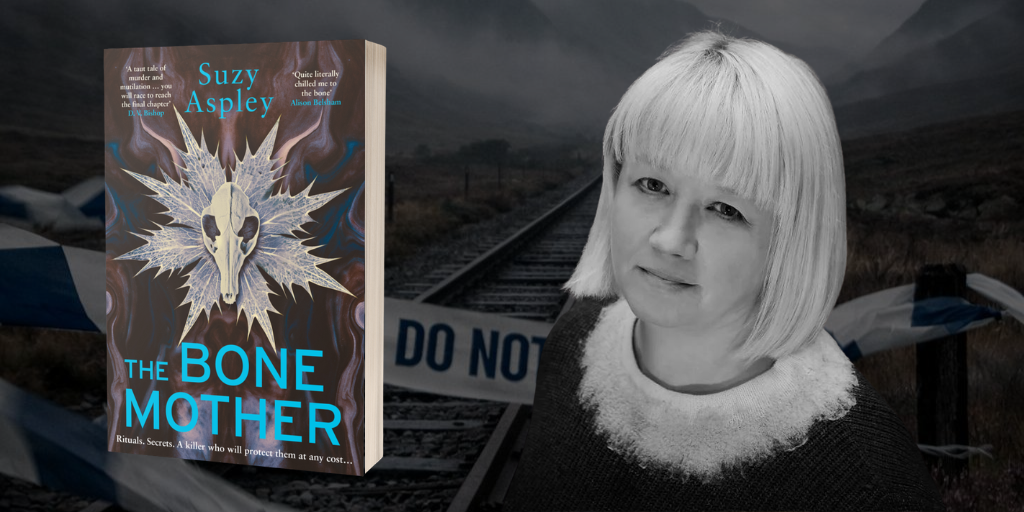
Suzy Aspley talks about her publishing journey and the inspiration for her gothic mystery, The Bone Mother

It’s hard to believe that it’s now more than two years since my debut gothic mystery, Crow Moon, was published. As a new author, you really know very little about publishing and what to expect. 

Being a debut was a whirlwind, and being shortlisted for several major crime fiction prizes in 2024 and with a raft of events that have continued to this day, there wasn’t much time to catch my breath. It’s fabulous when your first book is well received, but when your thoughts turn to the second one, you wonder whether you can pull it off again. The ‘difficult second book’ and all that. 

When I began writing Crow Moon in 2017, I had Martha by my side from the very start, when she walked fully formed into my head. I seemed to follow her, wherever she took the story. My writing process involves getting a seed of an idea and then starting to write – maybe with a few key scenes in my head, but no firm plan in terms of where I’m going, or how I’ll get there. As I write, the horizon emerges, and more ideas drop in. I spend a lot of time outside and often get ideas when I’m walking my dogs – a bit like Martha. 

Book two, The Bone Mother, began in a similar way, before Crow Moon was even published. I was at my favourite writing retreat, Moniack Mhor, a creative writing centre in the Scottish Highlands, and it was just after the pandemic lockdowns. It was summer and only half the usual number of guests was allowed, due to distancing rules. It was a strange time, with long sunny days and evenings outside drinking wine and telling stories, sometimes ghost stories, absorbing birdsong and looking out over the mountains on long, solitary hikes. 

I’d heard about the Cailleach Way, and the shrine in Glen Lyon, which is even more remote than Moniack. Other ideas dropped in – a news story about trains in Scotland and what was flushed out of their waste disposal systems onto miles of remote lines around the country. I wondered what might be disposed of in such a way that it might never be found. Or only by accident. This combined with memories of my time as a young reporter in the 1990s and a trip to Bosnia after the war, where I interviewed soldiers and scientists. In those days, they were using certain techniques to identify bodies with advanced forensics for the first time, and often through personal possessions found buried with disarticulated remains in mass graves. 

All of these threads gradually came together in a story, and the ideas helped form new characters, as well as influencing those already in Martha’s world. And, of course, I had to wrap it up in legend and folklore. 

When Crow Moon came out, someone said that despite Martha’s firm non-belief in other-worldly things, they nevertheless seemed to follow her around, and that’s absolutely true. She remains a determined sceptic, despite what has happened in her life. 

With The Bone Mother, it seemed like some of those other worldly threads have started to follow me, too. I went for a hike up to the shrine on a freezing, but sparkling January day about three years ago. Some of what I discovered there is written in the opening chapter of the book and was penned just after I got back. The place is far from anywhere. On the day we went, the mountains were laced with snow and we had to find a place to cross the high waters of the river which guards the entrance to the Cailleach Glen. 

On the way up, there was a turn in the track and a clearing where an old caravan might once have stood overlooking the waters of the loch. Heavily fleeced sheep studded the hillsides, hiding in hollows and amongst wind-blasted Hawthorns and Rowan trees. When we reached the shrine, it was peaceful. The small stone and turf-roofed dwelling was tucked off to the left of the track across boggy ground. The Cailleach stones were safe inside, hidden from the world, but atop the structure were flowers, animal skulls and other items. The atmosphere was truly magical and set me off to find out more about the stories surrounding Scotland’s goddess of winter.

Since then, I’ve met people with unexpected connections to the Glen and the Cailleach herself; I have had warnings about treating her tale with respect, and had several Tarot readings where a purple-robed queen with a definite resemblance to the goddess has appeared. 

The beautiful lines from a poem quoted at the start of the book, by writer Sarah Coakley were another coincidence, which has led to us planning an event together in Dundee on 21st May. There have been other odd coincidences, too many to detail here, but it all added up to Martha setting off on another strange adventure. There are bones, missing girls, and an exploration of the contrast between ancient and modern worlds. I hope readers will enjoy being alongside Martha again as much as I have. 

And this spring, I intend to return to the shrine to see the stones out, and will leave an appropriate offering for the Cailleach which I hope will please her.  

Suzy Aspley is the author of The Bone Mother, book two in the Martha Strangeways Investigation series and the sequel to Crow Moon, both published by Orenda Books.

Posted on

My Five Favourite Gothic Novels – Stephanie Bramwell-Lawes

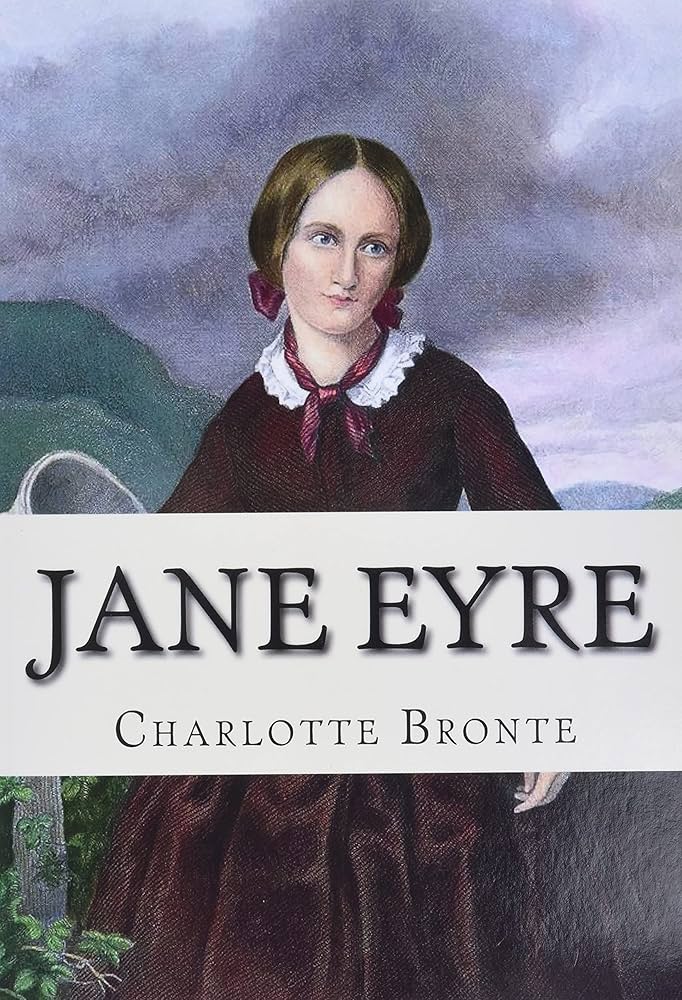
Jane Eyre, by Charlotte Brontë

It’s a tough call, but I think Jane Eyre just edges it as my favourite book of all time. As with so many of my favourite novels, it has an incredibly strong sense of place, with Thornfield Hall providing a dark, brooding backdrop to a tale of love, madness, and betrayal. As a protagonist, Jane was very much ahead of her time. She is independent, forthright and principled, and I defy anyone not to root for her!

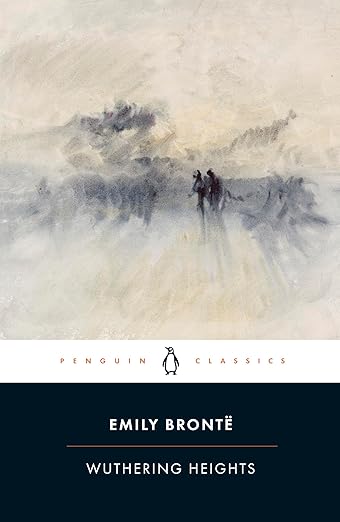
Wuthering Heights by Emily Brontë

I have read Wuthering Heights several times now, and each time I learn something new. I first read it as a teenager having been promised ‘the world’s greatest love story’, and I will never forget my outrage at Heathcliff’s behaviour! A Romantic hero, he was not! Nevertheless, I’ve gained new understanding from each reading, and I still can’t help but love this collection of flawed, passionate characters.

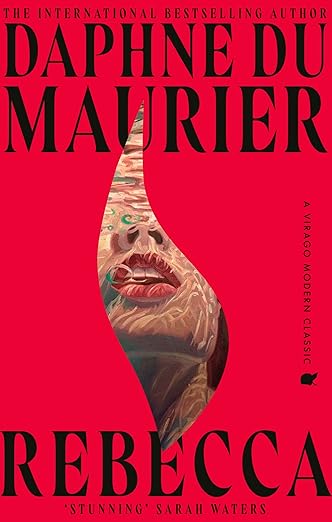
Rebecca by Daphne Du Maurier

Daphne du Maurier is one of my absolute favourite authors, and I have read almost everything she’s written.  Rebecca, her most famous novel, is right at the top of my list, and it had a profound impact on my own writing journey. From the infamous first line to the windswept clifftops of Manderley, it’s a gripping gothic treatise on class, obsession and the lengths people will go to for those they love. Its exploration of the ambiguity of human nature has always fascinated me.

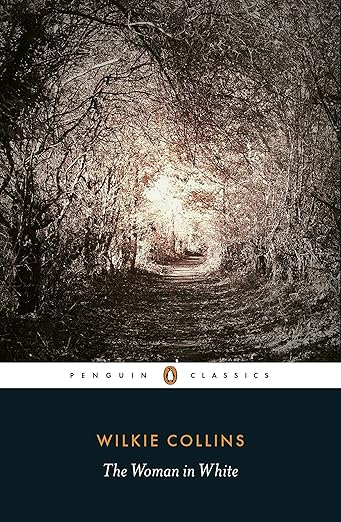
The Woman in White by Wilkie Collins

I could be wrong, but I’m always of the opinion that The Woman in White has never truly had the audience it deserves and isn’t shouted about enough! Its author Wilkie Collins was masterful in his creation of outspoken, energetic, intelligent female characters, and Marian Halcombe is an unsung hero. She is crawling around dark rooftops in the pouring rain eavesdropping on all and sundry – as well as any James Bond. The book also has a suitably Bond-esque villain in Count Fosco. I LOVE to see him get his comeuppance!

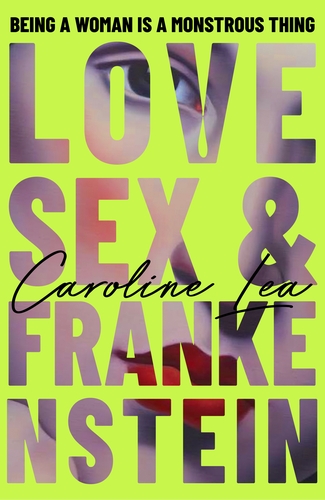
Love, Sex & Frankenstein by Caroline Lea

A tremendous, gothic exploration of female rage from Caroline Lea, which follows a young Mary Shelley as she journeys to Villa Diodati in 1816, where she would go on to write her masterpiece, Frankenstein. Among other things, what this book so brilliantly underscores is that Mary Shelley was just eighteen years old when she wrote the novel. To have such a complete, nuanced, tender understanding of what it is to be human – at that age – is absolutely confounding! With both Percy Shelley and Lord Byron in tow, this book is also a simmering cauldron of repressed desire. It NEEDS to be made into a film!

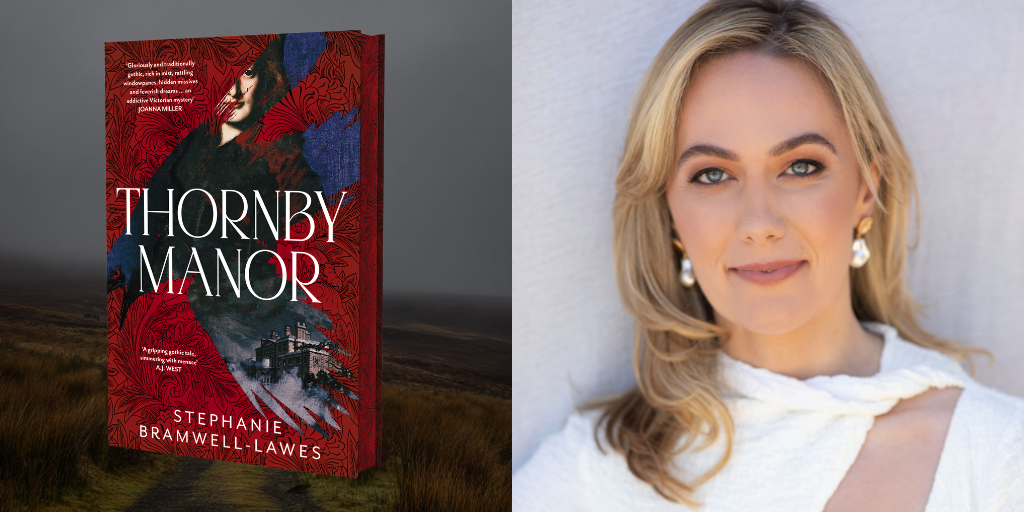
Stephanie Bramwell-Lawes’ spellbinding debut historical mystery, Thornby Manor, is published by Orenda Books on 23rd April 2026.

Posted on

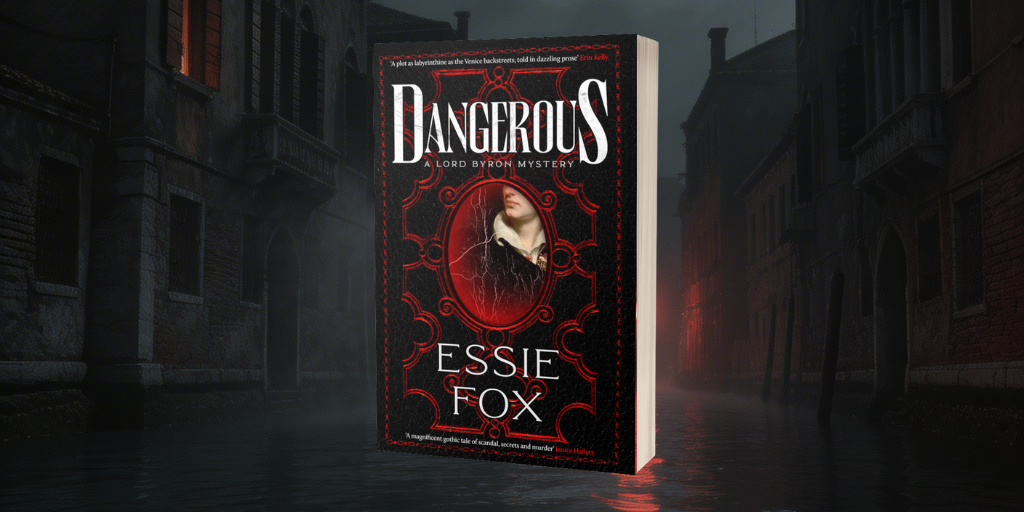
Vampires, Venice and a Romantic Rogue: The Inspiration for Dangerous: A Lord Byron Mystery – Essie Fox

Well, the Romantic era poet was like a rock star in his time. Not only talented and handsome, but with the added allure of being an aristocrat. Such was his fame and charisma that grown women would faint when he walked into a room. His poetry was read and admired around the world – with much of what he wrote containing anecdotes that echoed real events occurring in his life. 

It was a scandalous life, with a disaster of a marriage, and adulterous affairs, including one with his half-sister. He owed such vast amounts of money that he could well have been arrested and locked up in debtors’ prison. And then, there were liaisons involving other men that, in his time, were deemed illegal and could lead to execution. It was really little wonder that Lord Byron’s fortunes waned, and he was forced to flee his homeland and live in Europe as an exile. 

Over the course of three years when he settled in Venice he enjoyed yet more affairs; with prostitutes, and married women, and finally the young countess who went on to steal the poet’s heart … but not before he’d grown exhausted by the debauched and drunken nights he’d spent enjoying Carnivale, and the whispering campaign to further damn his reputation when a novella called The Vampyre, was fraudulently printed with his name upon the cover.

This novella was the spark to fire my imagination. I’ve always loved a vampire theme and, in my youth, I was obsessed with the work of Anne Rice, with its rich historical settings in which vampires existed in the world of mortal men. I’ve read the work of Le Fanu, with his feverish and lesbian-themed story of Carmilla. Bram Stoker’s Dracula is also a favourite in the genre – especially the book’s construction, using letters and diaries, even ships’ logs, telegrams and newspaper reports – a style I often use myself. And I’d also read The Vampyre, but when the novel was eventually published with the name of its true author: Doctor John Polidori. 

Polidori was employed by Byron for a time as his private physician – until their friendship soured, after which Polidori composed a story about a mysterious aristocrat by the name of Lord Ruthven, who frequents the London salons and seduces young women before they’re wickedly discarded. Ruthven then travels abroad with a companion called Aubrey, who learns the truth of Ruthven’s nature when they’re in Greece and a young girl is attacked and left to die with savage wounds to her throat. After this, Ruthven is injured by some bandits on a roadside. When he appears to be dying, he asks Aubrey to promise not to mention his name for a year and a day. Aubrey keeps this strange promise, and then travels back to London where he is shocked to find Lord Ruthven very much still alive, and also married to his sister … a sister Aubrey cannot save for by then she is dead, her fate having been to glut ‘the thirst of a Vampyre!

In reality, Lord Byron was incensed to think that a novel he considered to be of no merit had been published in his name. In my fiction, I have taken the seeds of this event and embellished them to write a murder mystery set in the glorious and gothic city of Venice, with its crumbling damp palazzos, brothels, and literary salons, even a hospital morgue, and an island monastery. Within this shadowy world of intrigues and decadence, some of the women Byron knows are found with wounds to their throats, much like the victim in The Vampyre. It isn’t long before a whispering campaign is being spread to claim that the novel is no more than a brazen confession of the most demonic crimes. 

Can Lord Byron clear his name, and is he telling the truth when he protests his innocence? I hope the conjuring up of his spirit on my pages might beguile you to find out in the pages of Dangerous, out this week in paperback. 

Essie Fox is the author of Dangerous: A Lord Byron Mystery, published in paperback by Orenda Books on 9th April 2026.

Posted on

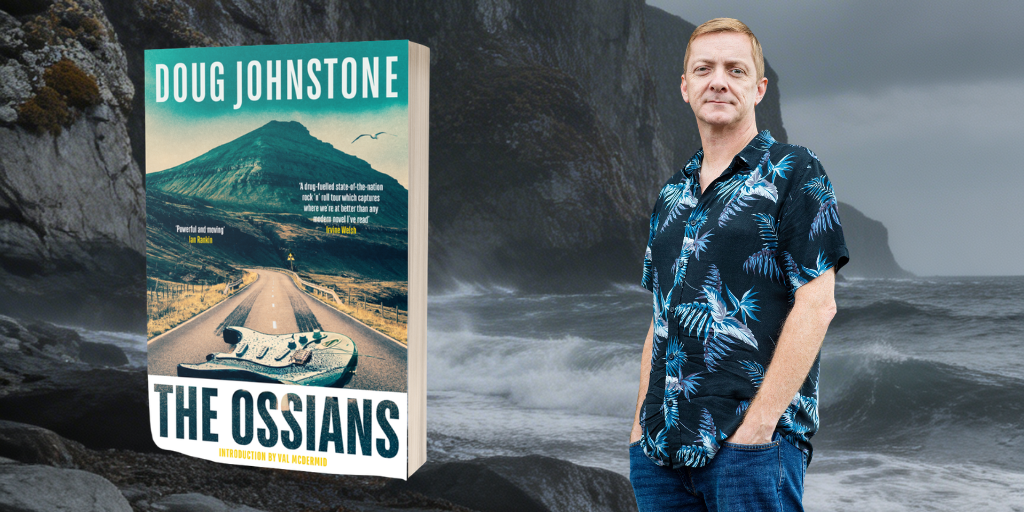
Doug Johnstone writes about the inspiration for The Ossians, and how it remains an accurate depiction of its time.

‘Writing about music is like dancing about architecture.’

This quote has been variously attributed to Frank Zappa, Elvis Costello and countless others, but whoever said it was talking about the pointlessness of music journalism in evoking the emotional impact of a song – saying it was a fool’s errand. Well, maybe, but that didn’t stop me from writing a whole novel about a band.

The Ossians was the first novel I ever wrote, but my second to get published after Tombstoning. In one sense, it’s a book about music, but in another, it’s not. It stemmed from my own experiences of being in indie bands for my whole adult life at that point, drumming in bands with names like Cheesegrater, Little Hopetown Giants and Imperial Racing Club. We’d play crappy gigs in crappy towns to a bunch of like-minded people, and we loved every minute of it. I had never seen that experience depicted in fiction before, bands playing the so-called ‘toilet circuit’ because all the venues were like toilets. So I set out to write it.

It was a vivid world of drink and drugs, elation and dejection, sometimes violence and always laughter. And I poured all of that and more into The Ossians – the story of a band falling apart on a tour of the Scottish Highlands. There are seagull massacres, botched drug deals, stalkers, a radioactive beach and drunken Russian submariners. And that’s not even half of it. The book is, on the one hand, a document of its time. It was written before streaming and social media, when bands still jumped in the back of a van and went out adventuring.

But hopefully the book is also about something much bigger. From the band’s name onwards, this is a book about Scottishness and what it means to be Scottish. There are two epigraphs at the start of the book – one by Robert Louis Stevenson talking about how great Scotland is, the other by Irvine Welsh slagging the place off. The truth is, it’s both great and shite being Scottish, and The Ossians dives into that headfirst, in all its sweaty, drunken glory.

I wanted to look at the big stuff, but I also wanted to make the story a visceral ride, so that the reader was right in the thick of the chaos with the band members. The response to the novel – both at the time it originally came out, and now for its republication – has been incredibly touching, and has suggested that I at least partly succeeded in those aims. Writing about music might be hard, but it’s been worth it for me, for sure.  

The anniversary edition of The Ossians by Doug Johnstone, with an introduction by Val McDermid, is published by Orenda Books on 9th April 2026.

Posted on

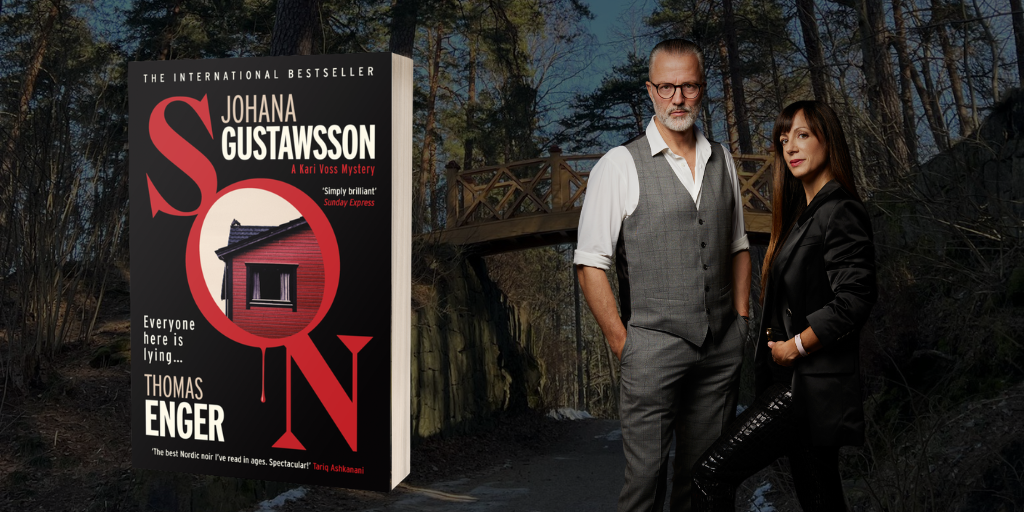
Thomas Enger describes the events that led up to his collaboration with Johana Gustawsson, and what has followed…

How has the process of writing a novel together been?

First of all, it’s been a lot of fun. It’s been a lot of work too, as it’s not very common for a French and Norwegian author to put their minds and pens together.

It all started during the pandemic, when Johana was living in London and I was based in Oslo. We knew each other because we were published by the same publisher in the UK/US (Orenda Books). A French colleague had asked Johana to reach out to me about participating in a noir fiction short-story collection in France, with the proceeds going to charity. Johana very kindly offered to edit and polish my father’s initial French translation (he taught French at a high school in Norway). While we were talking on the phone about various aspects and choices in that story, we realised very quickly that we had a unique creative energy when we talked about our craft. 

Ideas were sparking left, right and centre, every time we talked. At one point we thought: Why not see if we can write something together? After all, it was covid, and at the time we were both depressed out of our minds. This could become beacon of light, so to speak.

That’s when Johana told me about an idea for a character she’d been harbouring for a long time, a sort of memory and body-language expert. I loved the prospect of such a lead character, and once we gave her a name, we started plotting and doing research. In fact, we outlined the first three volumes of the Kari Voss series before even writing a single word of Son

We needed to know where we wanted to go with Kari. Johana did most of the research and wrote the Kari chapters, while I more or less took care of the rest. Having said that, we were always sending chapters back and forth, each of us adding or deleting sentences or paragraphs, meaning that in some parts of the book we’re not even sure ourselves who wrote what. Maybe that’s why it comes across as one voice.

There were some challenges to all of this, of course, the both of us writing in our own language first, then translating it to English so we could understand each other. At first we meant for this to be published in Norway, as Kari is Norwegian, but it became impossible for the both of us to take part in the editing process. In the end we decided to see if we could do it in English. Thankfully, our lovely common English publisher asked: ‘Can I please publish this?’ And Orenda Books led on the edits, then rights were sold across the world!

In short? It’s been a blast.

You’re both used to writing with great success and acclaim individually – what were the biggest advantages and challenges of writing in collaboration, and, more specifically, in collaboration with each other?

When you start a collaboration, in just about anything in life, you never really know how it’s actually going to work out. You don’t know whether it’s going to be as much fun after one month or seven as it was in the beginning. You don’t how your everyday life will play into it, either, especially when you live in two different countries and you don’t even share the same mother tongue. 

Johana has small children as well, while mine are grown up and out of the house. That means we live very different kinds of lives. Sometimes you’re dead tired. Sometimes you’re away for two weeks travelling. Sometimes you have to focus on solo projects. You need to be able to deal with all kinds of curve balls that life throws at you, while being on the same page, quite literally. You need to be able to handle criticism too.

Luckily for us, neither of us has big egos, and we both want the same thing, which is the best possible end product. And we share the same work ethic as well; we don’t mind the long hours or the sometimes endless rounds of rewriting. We know it’s part of the process and therefore completely necessary. We don’t care, either, about who had the idea for this or that or who clocked in the most hours.

In hindsight, the biggest challenge – without a doubt – was the language question in the initial stages. It took us a long time to realise how we needed to do this. Once that was determined, everything became so much easier.

One of the greatest assets of working together is the fact that we’re always two, whenever we write ourselves into a corner. There is a great chance that four eyes will see better than two, or that two brains will manage to come up with something smarter than just one. The creation of this universe is a good example of that; it was born from our imaginations colliding with each other.

 A good friend and colleague of ours, Jørn Lier Horst, said it well: If you go into a forest and you stumble upon an abandoned house that looks really scary, chances are better that you’ll venture inside if you’re two. You probably won’t if you’re alone. It’s a bit the same with writing. As a pair, we can afford to be more daring in our thoughts and ideas. Perhaps the initial idea isn’t perfect, but it might spark another one that will lead us in a direction neither of us would have thought of on our own.

Another huge advantage for us is the fact that we come from two different cultures. That means we will inevitably have different perspectives on various issues, which lays the foundation for a fruitful discussion. But, the biggest plus? It might just be achieving something together, like we have with Kari, who’s going to be published in over forty countries (and counting). It’s so much more fun to celebrate success with someone than on your own, isn’t it?

Did you agree on the storyline, themes and where you wanted the novel to go? And if you disagreed in the writing process, what did you do?

A: There are always discussions about ideas and if this way or that way is the right one going forward. But, touch wood, we’ve never argued, not once. That’s, in part, due to the fact that we have so much respect for each other, and each other’s opinion. If either of us has a bad feeling about something, chances are there’s a problem with that scene. We know each other so well now after working on Son that we can tell from each other’s voices whether we’re convinced about something or not.

With Son, we established what Johana refers to as a ‘skeleton’ of the book, a detailed chapter-by-chapter outline of the plot, before starting to write. After that we wrote chronologically, not moving onto the next until we were satisfied. 

The book is the first novel in the new series about Kari Voss, who’s a psychologist and expert on body language and memory, who therefore can detect lies – how do these abilities affect the dynamics of the story? And what inspired you to choose her characteristics and way of approaching investigations?

A: The initial idea was really to explore the theme of body language, but as Johana delved into her research, she came across the work of Dr Elizabeth Loftus, who is an expert on memory, often used as an expert witness in trials in America. It was really fascinating to dive into her science on how fallible our memory is. Our memories change every time we recall them, as if we alter the reality of the past just by thinking about it. It’s both fascinating, disturbing and ideal for storytelling: How can we determine what is true if our own memory is lying to us?

And, of course, adding that science to a person who’s more or less or real-time human lie-detector, and voila – you have a great crime-fiction character. We were really sure about that. 

From the onset, we were adamant that we didn’t want Kari to be a superwoman with superpowers. Yes, she had to be brilliant, of course, but we also wanted her to have flaws, like we all do. On the one hand, we wanted readers to like her, admire her, and to want to be like her to a certain extent as well, but also to identify with her on a human and personal level, in her fallibility. What we also thought would be very interesting was to give Kari a condition where her own body and brain shut down under extreme pressure and stress, causing her to lose consciousness and memory. It’s as if her own body is mocking her.

What do you hope to explore further in the series in the future? 

Oh, plenty of fun things. We couldn’t be more excited to continue the Kari Voss series. As mentioned, we have planned for three books to begin with. Let’s see where she takes us after that. Next, though, REMEMBER will be out in Spring 2027, and wait till you see what happens next…

Thomas Enger is co-author of SON, written with Johana Gustawsson, and published by Orenda Books.

Posted on

An entertaining Q&A with Queen of New Zealand Crime, Vanda Symon

An entertaining Q&A with Queen of New Zealand Crime, Vanda Symon Talking about her new City of Shadows thriller, Reaper

  1. If Max Grimes could sum up his life in one sentence, what would it be?

Even in the face of unfathomable heartbreak and adversity, to fight for the underdog is to fight to find the core of yourself.

  1. If Reaper had a soundtrack, what would the opening track be?

‘Tubthumping’, by Chumbawamba … ‘I get knocked down, but I get up again. You’re never going to keep me down…’

  1. What surprised you most while writing this one?

How a moment that described an act of kindness to a dog, lead to him becoming such a pivotal part of the novel.

  1. Which character in Reaper would you definitely not want to meet in a dark alley?

Meredith Peters – if you were on the wrong side of that woman you would be best advised to run! 

  1. What’s your favourite line in Reaper – the one that pleased you when you wrote it.

‘He sees you when you’re sleeping.’ Skeet sang the words like a 45rpm record played on 33⅓. ‘He knows when you’re awake’ – the effect on this cold, dark and misty night was fucking creepy.

I liked this because you could visualise the scene as well as hear it.

  1. Why an Auckland setting when your previous books were set in Dunedin?

A few reasons. Firstly, I knew in writing a book involving the homeless I needed to set it in a city where the scale and visibility was more apparent than in Dunedin. Secondly, I was fascinated by Grafton in Auckland, with its legendary Karangahape Rd (K-Rd) and its amazing cemeteries. Thirdly, I really wanted to challenge myself and get out of my comfort zone – from the physical environment, and the underlying themes and darkness. And it sure did.

  1. Reaper revolves around homelessness and corruption. What first sparked the idea for this book’s story?

It stemmed from that idea/belief that the homeless are invisible or ignorable and undesirable, and if someone was really targeting them, would anyone notice? Would anyone actually care? Max noticed, and Max cared.

  1. Faceless was written as a standalone. What made you decide to bring back Max Grimes?

Max was such a fantastic character to write about and had such vulnerability, depth and fortitude. I felt he had so much unfinished business to resolve in Faceless that he needed more of his story told.

  1. Will Sam Shephard be back?

Guess who I’m currently writing about…?

Reaper, by Vanda Symon, is the sequel to the critically acclaimed Faceless, both published by Orenda Books.

Posted on

Writing and Reading: A personal message and book recommendations from Simone Buchholz

Dear Orenda community, dear readers!

Sharks is out today, and I hope you will enjoy it as much as I enjoyed writing it – STOP, that’s a lie. You can’t really say that writing novels is only fun; it’s also a pain in the neck, at least from page twenty onwards. And, yet, it’s the best job I can imagine, and I am infinitely grateful that I can do it. But to make sure I don’t lose my train of thought and stay on track, I give my working day a strict structure, which I’d like to tell you about here.

I get up at 6:00am, make coffee for my son and myself, then prepare the same breakfast for him every morning: porridge with yoghurt, honey, apples and bananas. This gets him through the school day, and I don’t have to think early in the morning because I know this breakfast by heart. At 7:30am, I also leave the house and go to the swimming pool. In the small 25-metre pool, I swim two kilometres every morning, back and forth for an hour, eighty laps. After that, my head is clear and I’m ready to write – five hours of writing. If I’m lucky, I can manage seven pages; if not, it’s only three or four, but I have to accept that. Later, around 3pm, I take care of everything else that a single mum has to do: shopping, cooking, cleaning, washing up. The next day, it all starts again. That’s my rather unglamorous life as a working writer.

I hope you’ll enjoy Sharks, my story about property and murder – and about a coughing Riley torn between two men.

If you want to read other books by German authors, here are the best ones from my bookshelf (all translated into English):

Eva Menasse, Darkenbloom, translated by Charlotte Collins (Scribe)

Jackie Thomae, Brothers, translated by Ruth Ahmedzai Kemp (DAS)

Mariana Leky, What You Can See from Here,translated by Tess Lewis (Bloomsbury)

Judith Hermann, We Would Have Told Each Other Everything, translated by Katy Derbyshire (Granta)

Wolfgang Herrndorf, Why We Took the Car, translated by Tim Mohr (Andersen Press)

Cheers and take care,

Simone Buchholz

Hamburg, February 2026

Simone Buchholz is the author Sharks, translated by Rachel Ward, the third book in the Chastity Reloaded series and her eight book about Chastity Riley to be published in English by Orenda Books.

Posted on

Don’t Look Back in Anger – Doug Johnstone

Anyone who knows me, knows that I don’t have a nostalgic bone in my body. I much prefer looking forward to the next thing, as opposed to glancing over my shoulder at what I might have previously done.

So 2026 is a very strange year for me. My debut novel, Tombstoning, was first published twenty years ago and, to celebrate, Orenda has produced a beautiful new edition with an amazing introduction by Chris Brookmyre. Similarly, my second novel, The Ossians, will get a lovely new edition in April, with Val McDermid writing the introduction. And my twentieth novel, Ghost Notes, a new Skelfs mystery, will see the light of day in August.

So, despite my aversion to nostalgia, even I have to admit that twenty books in twenty years feels like a time to briefly look back at where I’ve come from.

In the case of Tombstoning, this nostalgia works twofold, as the book itself is about whether or not the past shapes us in the present. Set in the small Scottish fishing town of Arbroath where I grew up, it’s about David and Nicola, who return after fifteen years to attend a school reunion. David hasn’t visited the town since he left school, after his closest friend died in an accident at the local cliffs. The book is set up to examine whether the past defines us or whether we can reinvent ourselves anew every morning when we wake up. It’s disorienting to think that there is less time – eighteen years – between when I was at school and when the book came out, compared to the twenty years between when the book came out and the present day.

Re-reading Tombstoning in 2026 creates a strange anxiety for me. In one sense, it feels like it was written by a completely different person but, in another sense, I can see many of the same ideas, stylistic quirks and themes that I have been writing about across all twenty of my novels. There is dark comedy, a strong anti-authority streak, chaos and violence, and an obsession with how we live our lives in the face of death. All of that continues in my writing today, although hopefully in a slightly more refined manner.

What has been most gratifying is seeing readers’ reactions to a book written twenty years ago. The reviews of Tombstoning by book bloggers have been incredibly kind and gracious, and have highlighted positive aspects of the book that I was previously blind to. The fact that a novel I wrote two decades ago can still resonate with readers is something I feel immensely grateful for. So maybe looking back – at least for a brief moment – isn’t quite so bad after all. 

Doug Johnstone is the author of Tombstoning, reissued by Orenda Books in a special anniversary edition, with an introduction by Christopher Brookmyre. 

Posted on

Why I wrote The Hope by Paul E. Hardisty

My new novel, The Hope is set in 2082 in Tasmania. The world as we know it now has been completely altered by climate change and war. Vast parts of the planet have become uninhabitable to humans. A new feudalism has descended, and the remaining few hundred million people live lives of servitude and ignorance, isolated from rest of the world, ruled by the tyrants responsible for the cataclysm. The book is the third in the series, following three generations of one family as they navigate the result of our self-inflicted folly. 

The Forcing, the first in the series, covers the period 2039 to 2045, and introduces a world in the midst of a slow-motion collapse, where youth has taken power in North America in a desperate attempt to prevent total disaster. The follow up, The Descent, which bookends The Forcing, starts in 2024 and describes just how the world described in The Forcing came about, while following the descendants of The Forcing as they struggle to survive in a maimed world in the late 2060s. 

The idea for the series came to me more or less complete back in 2011 while camping with my wife and two sons on a remote island in the wild and sparsely populated south of Western Australia. At the time I was heavily involved in a huge project that would potentially create significant damage to the ocean environment and add significantly to the world’s greenhouse gas emissions. I was working to convince stakeholders that the project was environmentally unacceptable, and felt that I was losing the battle (fifteen years later, the battle is still being fought). I went for a long swim around the island in very cold water and there it was, the whole story. 

The motivation behind it was clear. Watching my two young boys, nine and eleven at the time, their delight in the beautiful natural surroundings, knowing what the future held for them if we didn’t change direction, I wanted to warn people what the future might very well look like. As one of the characters says in The Hope, what we have is a failure of imagination. We can’t imagine just how bad it can get if we don’t fix the problems we know we have, and we also can’t imagine how good it could be if we did. I wanted to write a series that would do both. It’s a cautionary tale, clearly. The world described in these books is not one that anyone but the most hardened psychopath would want. But it’s also a blueprint for hope, for what we need to do to avert this disaster. There is still time, and we have all the means we need right now to shape the future we want. It’s not impossible, and it’s not hopeless, quite the contrary.  But it is urgent, and it will take our best.

The Hope is a story of courage and sacrifice, about the power of the human spirit, and the belief that we can create a better world for all. The forces of darkness want our acquiescence, our silence. They want us to give up and let them run the world. Hope is what keeps people going, steels them for the fight, what motivates them to say enough, it’s our future, and we claim it back. We only have to imagine that future, and then decide that we are going to do what it takes to get it. And without giving anything away, the answer lies in each of us. In 2026, go forth, and take back your future.

Dr Paul E. Hardisty is author The Hope, the final book in The Forcing Trilogy, which includes The Forcing and The Descent. The Hope is published by Orenda Books.