



When I started writing my Skelfs series, one of the things I was trying to do, probably subconsciously, was write about a better way to live. The world is such a shitshow these days, in pretty much every aspect, and I felt like I had to start addressing that in my writing.
When I decided to start writing science fiction, this was still in my mind, for sure. I wanted to write a first contact story, but about ordinary people experiencing the extraordinary in the form of an alien life, and what that might really look like.
So right from the start Sandy and the other Enceladons – octopus and jellyfish creatures from one of Saturn’s moons – were set up as living a very different kind of life, with very different ideas of society, connection and community. They were peaceful, curious and in need of help. Of course, my ordinary human characters helped them, but the authorities viewed them as a threat and tried to capture, torture and kill them.
The whole series has been a quiet tirade against human exceptionalism. The idea that humans are better than other life on earth, or separate from their environment, is honestly at the heart of everything that’s wrong with the world right now. When you think of something or someone else as less than you, you can do anything you like to them. Imperialism, slavery, animal cruelty, climate change, social inequality, war – all of it stems from this idea, and it makes me sick.
So there has to be another way, right? That was the idea behind the Enceladons. If the first book – The Space Between Us – was about treatment of the ‘other’, then the second – The Collapsing Wave – was about how the military and imperialist forces try to destroy everything they perceive as a threat.
The Transcendent Tide goes further. Placing the Enceladons close to an indigenous Inuit community in Greenland allowed me to expose further the critical failings of modern capitalism. What we in the West think is an inevitable way of life is, actually, catastrophically evil. We have to be able to see a better way of living before we can do anything about it, and that was certainly in my mind as I wrote the final part of the trilogy. I tried to be hopeful, even as terrible things were happening, and ideally the reader will finish the book with a glimmer of that hope for the future of life on the planet.
There are no easy answers in The Transcendent Tide. But at least I’m asking the questions and hopefully making people think.
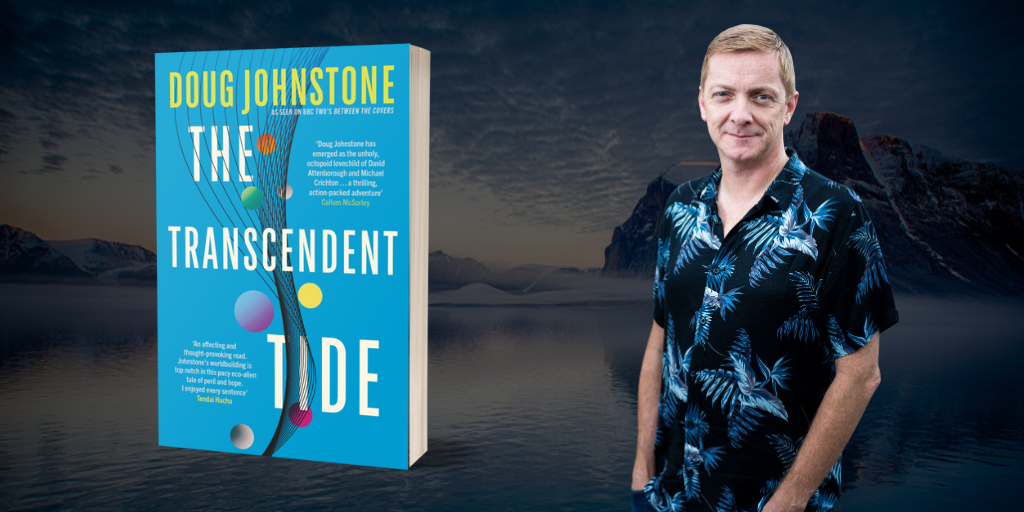
Doug Johnstone is the author of The Transcendent Tide, the third book in the Enceladons Trilogy, out today in paperback.


