




We’re not in YA anymore, Toto. Sometimes the sharpest detectives, witnesses, and survivors are still growing up. From quiet unease to unthinkable horror, these stories show innocence in crime fiction is rarely simple, and never safe.
Children and teenagers see the world differently: curious, impulsive, and often brutally honest in ways adults can’t afford to be. Writing from a young perspective reveals the world without filters – the good, the bad, and the things adults pretend not to notice.
Though writing from a child’s perspective comes with word-choice limits, it also brings a creative freedom unburdened by the self-censorship and social expectations that shape adult protagonists. And sometimes, that’s what makes them the best detectives.
From small towns to spectral realms, let’s count down seven young protagonists who’ve seen too much, and sometimes, seen the truth more clearly than any adult ever could.
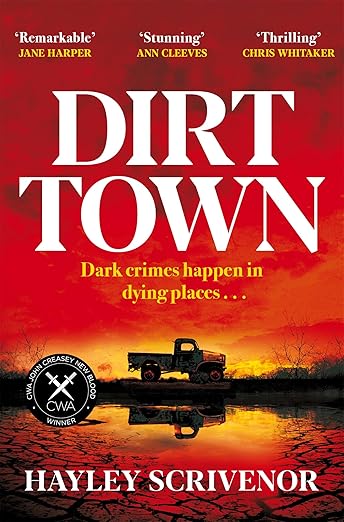
7. Dirt Town by Hayley Scrivenor (2022)
Protagonists: Ronnie, Lewis, and a chorus of local Durton children (around 12yo).
Seen: Death, fear, and the silence of small towns.
When twelve-year-old Esther Bianchi disappears from her Australian hometown, Durton, the story unfolds through her classmates Ronnie and Lewis, and the unique omniscient voice of a chorus of local Durton children.
Scrivenor captures how kids sense danger long before adults admit it’s there. Dirt Town is tender, haunting, and unforgettable: the first tremor in our countdown of those who’ve seen too much.
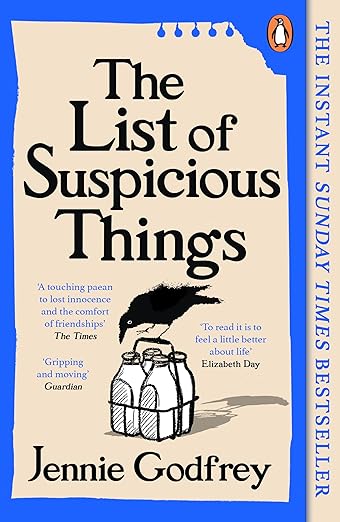
6. The List of Suspicious Things by Jennie Godfrey (2024)
Protagonist: Miv (12yo).
Seen: Secrets, suspicion, and the cracks in a so-called perfect community.
It’s 1979 in a small Yorkshire town, and twelve-year-old Miv is determined to solve the case of the disappearing women, or at least the mysteries in her own street. Together with her best friend Sharon, she begins a list of “suspicious things” that might lead them to the truth.
Funny, heartfelt, and quietly devastating, Godfrey’s debut captures the tension between childhood certainty and adult fear. Miv’s innocence becomes a mirror for the paranoia of a community on edge. Proof that sometimes, the biggest mysteries hide behind net curtains.
Part of the power of young narrators is how they balance innocence with intelligence, they see the truth but don’t yet have the armour to ignore it.
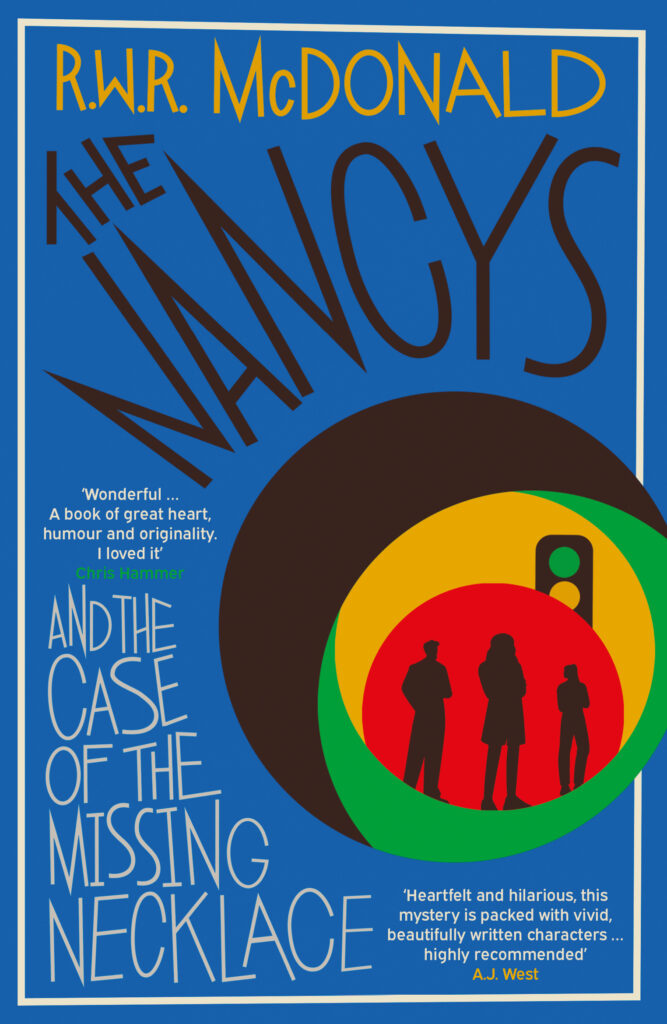
5. The Nancys and the Case of the Missing Necklace by R.W.R. McDonald (2025)
Protagonist: Tippy Chan (11yo).
Seen: A small town’s darkest secrets and the adults trying to hide them.
Set in small-town New Zealand, eleven-year-old Tippy forms The Nancys with her babysitting uncle and his boyfriend while her mum’s away on a cruise — a detective club fuelled by Nancy Drew, glitter, and a mission to investigate her school teacher’s murder. Like her role model, Tippy is clever, curious, and unafraid to take charge when the adults falter in their search for the truth.
Through Tippy’s eyes, murder meets mischief and grief meets gallows wit, a reminder that kids can hold horror and humour in the same breath. And sometimes, the only way to face the dark is to laugh at it.
I loved writing that wildness, that blurring of boundaries, the way kids throw themselves into chaos, convinced they can put the world right again. All perfect qualities for amateur detectives.
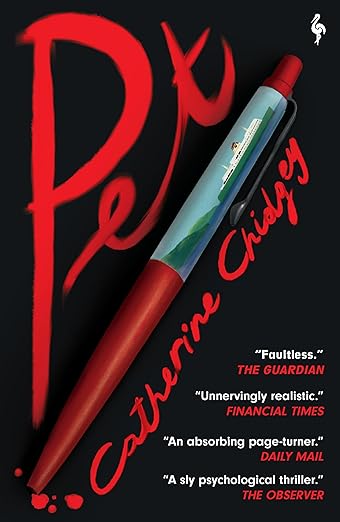
4. Pet by Catherine Chidgey (2023)
Protagonist: Justine (12yo).
Seen: The danger of devotion, and the betrayal that follows.
Like every other girl in her class, twelve-year-old Justine is drawn to her glamorous new teacher and longs to be her “pet.” But when a thief begins to target the school, her unease grows. With each twist, this story of deception and guilt takes a darker turn, leaving Justine to decide where her loyalties truly lie.
Set in 1980s Christchurch, New Zealand, Pet explores racism, misogyny, and the oppressive reaches of Catholicism with eerie precision, a chilling addition to the canon of childhood betrayal.
We’re deep in the countdown shadows now, and there’s no turning back…
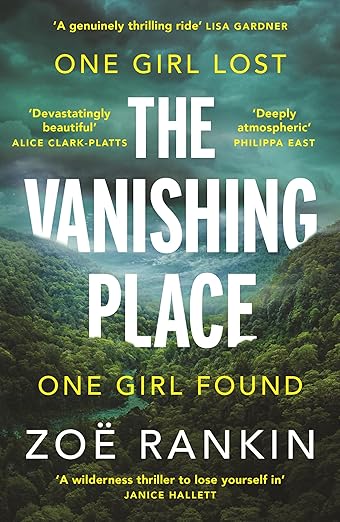
3. The Vanishing Place by Zoë Rankin (2024)
Protagonist: Margaret (teen).
Seen: The echoes of trauma and the shadows of memory.
Rankin’s taut debut explores how childhood trauma reshapes memory itself. Told with psychological precision, The Vanishing blurs the line between memory and mystery. A haunting reminder that the crimes we survive can be the hardest to solve.
As Zoë Rankin wrote in her Criminal Element feature on young protagonist narrators, “there is something deliciously raw and exposed about showcasing the voice of a child in a thriller novel.” And The Vanishing proves it.
Only two left in our countdown, and both novels’ kids have seen more than anyone should.
Honourable Mentions: Not Strictly Crime Fiction, But They’ve Seen Way Too Much
These last two may sit outside the strict boundaries of crime fiction, but the horrors their young protagonists witness, and survive, or don’t, earn them their places here.
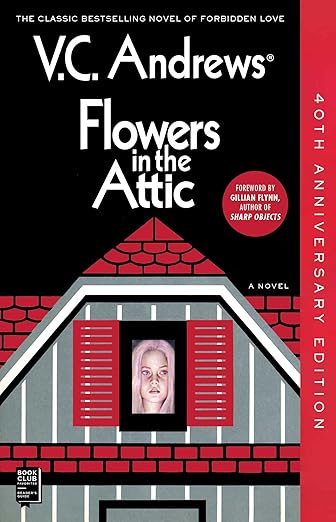
2. Flowers in the Attic by V.C. Andrews (1979)
Protagonists: The Dollanganger children (ages 5–14).
Seen: Everything, except sunlight.
I mean… the seventies were a different time… Locked away in the name of family honour, the Dollanganger children learn that love and cruelty can share a roof. A gothic nightmare masquerading as domestic bliss — and proof that the most chilling crimes don’t always leave the house.
It may not be filed under crime fiction, but it’s hard to think of a greater domestic crime than what these children endure.
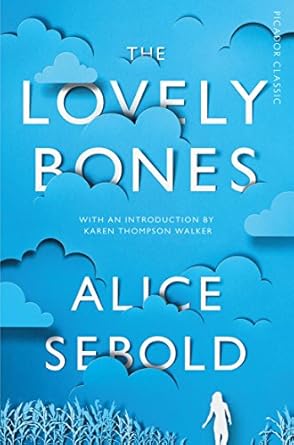
1. The Lovely Bones by Alice Sebold (2002)
Protagonist: Susie Salmon (14yo).
Seen: Everything, even her own death.
Susie Salmon narrates her murder from the afterlife. It’s devastating and transcendent: the voice of a teenager who refuses to stay silent, reminding us that innocence doesn’t end where life does.
Not strictly a crime novel, The Lovely Bones begins with a murder and never stops tracing its aftermath. A haunting inversion of the genre, where the victim, not the detective, leads us to the truth.
*
We began with a warning, and let’s be honest, Dorothy Gale saw some messed-up stuff.
From the haunting chorus of Durton’s children to Susie Salmon’s spectral watch, these young narrators remind us that courage isn’t about age, but about seeing clearly when others look away. They laugh, grieve, investigate, and in doing so, they reveal the truth adults can’t.
And maybe that’s the countdown’s lesson: sometimes the most dangerous thing a kid can do in crime fiction is notice.
R.W.R. (Rob) McDonald’s The Nancys and the Case of the Missing Necklace is published by Orenda Books on 20th November 2025.


