



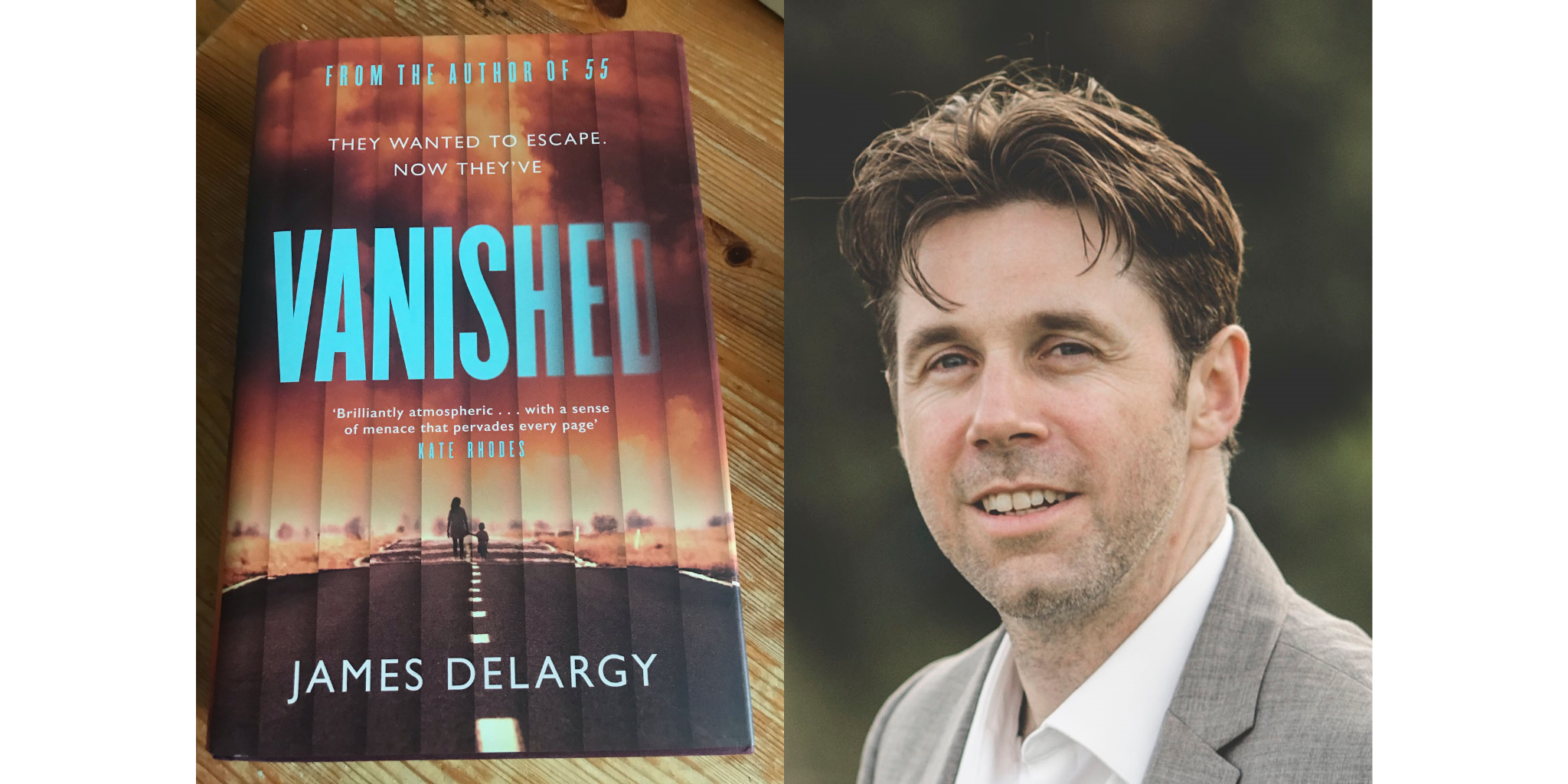
We are absolutely delighted to have an exclusive interview with James Delargy, author of Vanished, which is out on 30th September (Simon & Schuster). A riveting, atmospheric thriller set in the Australian Outback, its complex narrative is full of eye-watering twists and it will leave you wrong-footed and utterly chilled.
Here’s what it’s about:
When you go looking for a new start, make sure you don’t find a nightmare instead.
The Kane family, Lorcan, Naiyana and their young son, relocate from Perth to Kallayee, an abandoned mining town in the Great Victoria Desert to start over again, free from their chequered past.
The town seems like the perfect getaway: Peaceful. Quiet. Remote. Somewhere they won’t be found.
But life in Kallayee isn’t quite as straightforward as they hope. There are noises in the earth, mysterious shadows and tracks in the dust, as if the town is coming back to life.
But the family won’t leave. No one can talk sense into them.
And now, no one can talk to them at all.
They’ve simply vanished.
Now it’s up to Detective Emmaline Taylor to find them… before it’s too late.
The fabulous Caz Frear called it ‘‘Intense, insightful and impossible to put down’, and we couldn’t agree more!
- ‘Outback Noir’ has become increasingly popular. What do you think is the appeal, and which books would you recommend?
The appeal of Outback Noir in my opinion is the endless opportunity and the room for manoeuvre that the blank canvas of the vast and mostly empty space provides. There is the inherent danger of the land itself, which is multiplied by the remoteness. There is the magnificent landscape that makes for a very rich well of ideas and offers any number of possibilities to entertain and shock the reader. This plus the threat and knowledge a reader has of what humans might visit upon other humans given seclusion and opportunity. And this breadth of options appeals to me as a writer to, the opportunity to visit anything on the page makes it a dream to write about.
As for top books, the first Outback Noir novel that I was introduced to was The Dry, which was suggested to me by my agent after I had submitted my novel – 55 – to her. I was lost in the magnificence of it and it immediately made me a Jane Harper fan, though if I had to choose one book – and had to choose – then I would plump for The Lost Man, which is a deliciously fantastic piece of storytelling and family dynamics.
As for other novels and novelists in the general Outback Noir arena I would definitely suggest visiting Chris Hammer’s Scrublands, Susan Allott’s The Silence, anything by Mark Brandi or Emma Viskic, and recently a writing friend of mine introduced me to Garry Disher and I quickly fell in love with his Paul Hirschhausen series.
- Is writing a second book harder than it looks? What was your experience?
Every book is hard. I haven’t come across one that hasn’t been a struggle at some points. Maybe someday.
In my experience books are about the central idea. If the idea comes quickly, fully enough formed, or has that internal motor that breeds and feeds ideas then the whole process is akin to being on a boat sailing across the ocean. When the ideas are flowing that engine powers the boat along, cutting through the waves or anything that seeks to halt that progress. But if that engine or idea isn’t there then it comes down to sheer exertion to power the boat, getting tossed around on the waves. The process is the same but it is rockier and there is a lot more perspiration and frustration involved.
As for Vanished being a second book, it both is and it isn’t. I have a number of other unpublished novels so my first novel – 55 – was, in fact, the eighth novel that I had completed, so after finishing 55, the issue became: Can I find that inspiration or key that set 55 out from the rest of my work and from the many other novels being published? Could I recapture that inspiration?
The final result isn’t for me to judge but I did find this novel more difficult to plot. For Vanished I wanted the reader to be in the shoes of both sides of the story – both past and present – the detective working the investigation trying to find out what happened to the family, alongside what actually happened to the family. This was the hardest part of the novel to balance, the different storylines and points of view, so when I was outlining it I had to write each person’s story out in full, then try to weave them in together so that the two main timelines fed into each other pushing towards a thrilling climax and the truth of what happened out there, in the desert.
- Tell us about your inspiration for Vanished. Does everyone secretly want a chance to start again … to go somewhere new and to forget their pasts? What was your starting point for this book? Was it written in the pandemic, when we all wanted to escape?
The setting of the abandoned mining town of Kallayee plays an integral role in the novel and in fact it was the genesis of the story itself. As a break from what I was working on, I was wasting time doing some random Internet and Wikipedia searches on abandoned railway stations close to where I live – what they looked like then and now – for absolutely no reason other than curiosity. Following this wormhole for a while I ended up on some pages regarding abandoned towns in Western Australia. Which got me thinking; what if someone decided to live in one of these towns? Even a whole family? Why would they want to move there? Why would they need to move there?
This was all I had at the start but the novel quickly expanded from that simple idea of a family moving to an abandoned town into discovering the reason why they had moved and creating the mystery of what had happened to them out there, seemingly all alone, trying to create a new life. The simplicity of the idea – and as mentioned above, the landscape – allowed plenty of scope to create and craft and the novel ended up being a pleasure to write. Eventually.
As for the pandemic, the first draft of the novel was mostly in order before it arrived so it didn’t impact what I was writing but even without it I have always liked to write books about escape in some form and that can be said of a lot of my other unpublished novels, from horror, to zombie, to 1930’s Scotland, to Serbian cops fleeing their homeland to become illegal immigrants in Ireland. And in my opinion that’s what the central job of a book is. To act as an escape. An escape into someone else’s created world, a dip into their imagination. Plus I do enjoy transporting myself to remote locations. It is like a holiday in itself. And we could all do with a holiday right now!
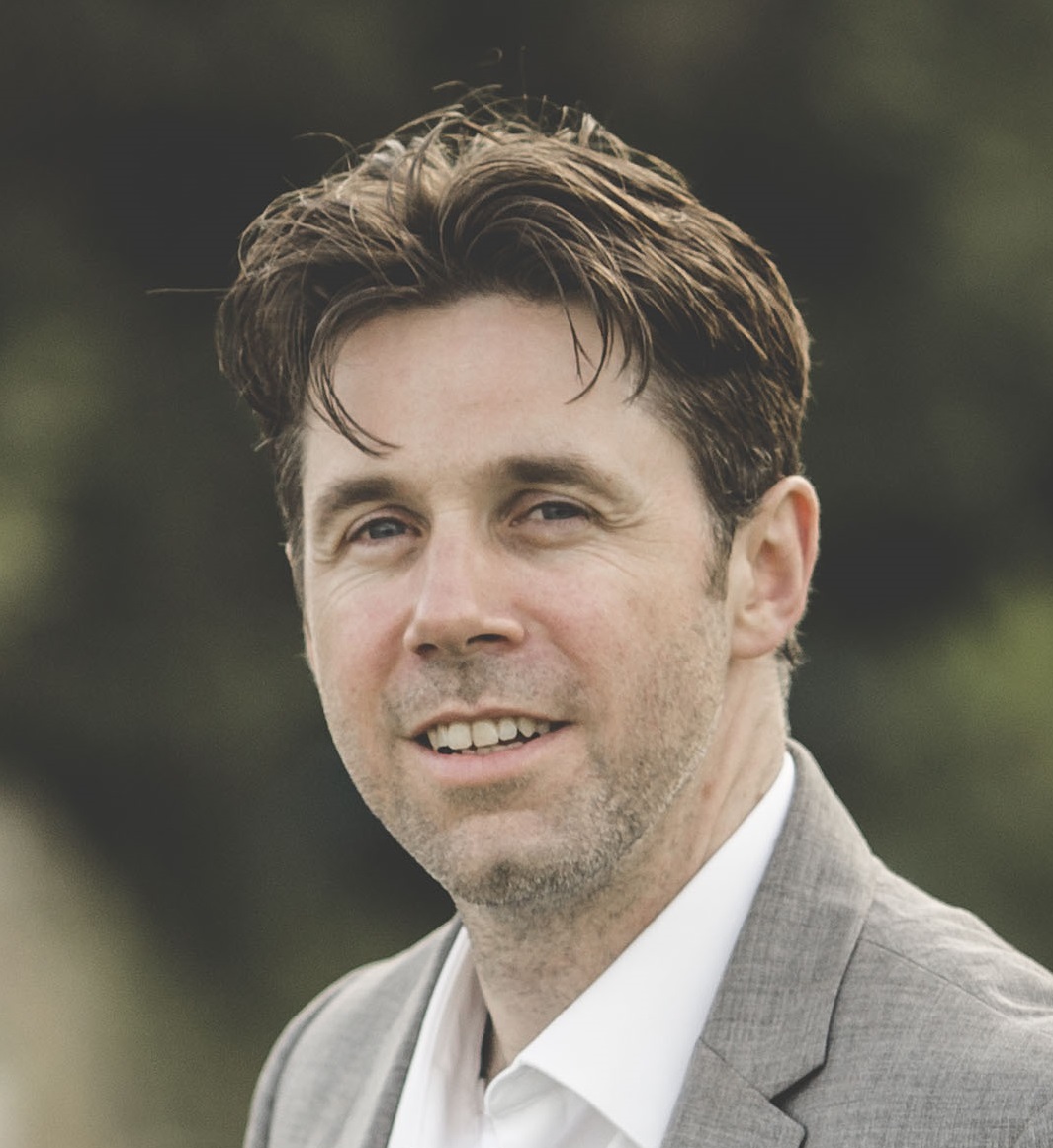
James Delargy was born and raised in Ireland but lived in South Africa, Australia and Scotland, before ending up in semi-rural England where he now lives.
He incorporates this diverse knowledge of towns, cities, landscape and culture picked up on his travels into his writing. He would like to complete a round-the-world series of novels (if only for the chance to indulge in more on-the-ground research).
His debut thriller, 55, was published in 2019 by Simon & Schuster and has been sold in twenty-one territories to date.
Chat to him on Twitter: @jdelargyauthor, or visit his website: Jamesdelargy.com.
Most importantly, buy here:
Bookshop.org – HERE
Waterstones – HERE
Kindle – HERE


