Posted on

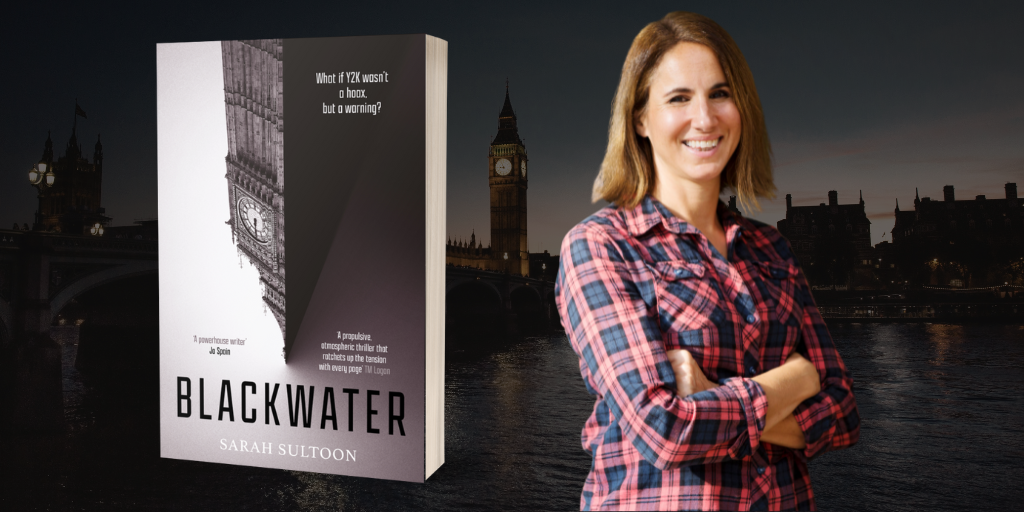
Five of the BEST Ticking-Clock Thrillers by Sarah Sultoon

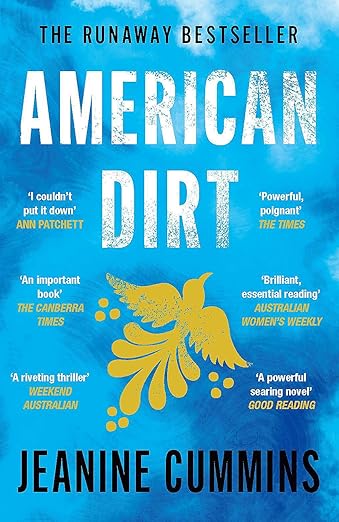
American Dirt by Jeanine Cummins.

Not exactly a thriller but a tale so breathless I was practically hyperventilating as I read it. The story of a Mexican mother and son forced to flee to the United States over threats of violence from a local drug kingpin, it takes the reader on a journey atop La Bestia – the Beast –- a real-life train route used by Central American migrants to travel through Mexico. This book courted a lot of controversy when it was published, accusing Cummins of cultural appropriation and exploitation as she is of Irish-American descent. I can see that line of argument, but I think it is reductive to diminish the book itself and wholeheartedly recommend it as a transportive piece of fiction. 

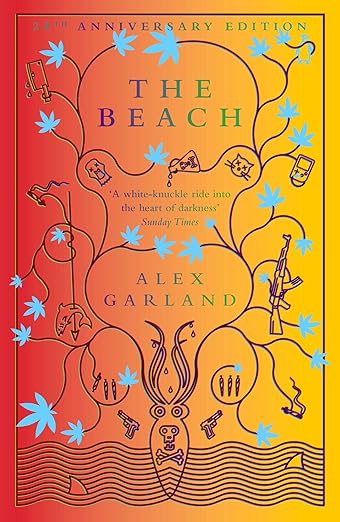
The Beach by Alex Garland.

Again, not exactly a thriller, but I read it from cover to cover on a very long train journey in India in my twenties and it has stayed with me ever since. A group of young backpackers that meet in varying circumstances on Bangkok’s famous Khao San Road set off in search of a legendary, idyllic and self-isolated community known as The Beach. After overcoming myriad obstacles – precipitous cliffs, waterlogged caves, and the small matter of criminal gangs guarding large marijuana plantations – they eventually find it and spend a paradisiacal few months before a descent into chaos. Set at a time before smartphones and email had revolutionised global travel, it captures a sense of adventure that is almost impossible to find in the modern age. A riot.

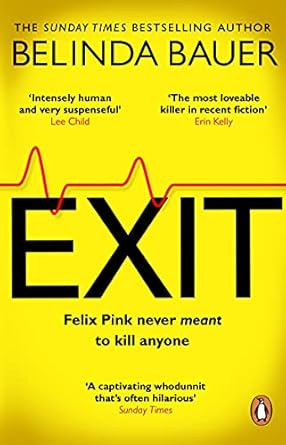
Exit by Belinda Bauer.

A better version of The Thursday Murder Club in my opinion. The most entertaining whodunnit I’ve ever read. Felix Pink – the most unlikely murderer you’ll ever have the good fortune to spend time with, says the blurb – starts out by keeping dying people company as they take their final breaths. But it turns out not to be as simple as that. And Felix spends the rest of the book on a wildly hilarious quest to find out if he’s more culpable than he realised – all the while staying ahead of police. It’s so original, I’m still amazed just writing about it.

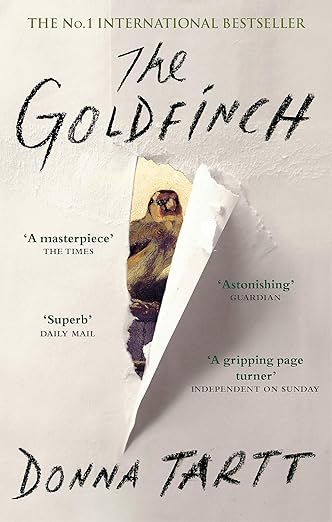
The Goldfinch by Donna Tartt.

A gripping tale with plenty of adrenaline. Thirteen-year-old Theo Decker survives a terrorist attack on the Metropolitan Museum of Art in New York that kills his mother but leaves him in possession of a valuable painting of a goldfinch. I was additionally enchanted by this book after learning Donna Tartt’s inspiration was the Taliban’s destruction of the famous Buddhas of Bamiyan in 2001. Afghanistan is a country that I love, having spent a lot of time there as a journalist many years ago.

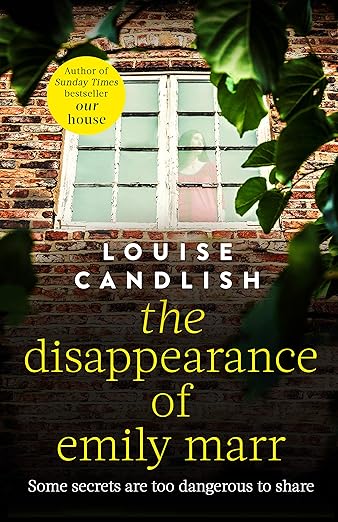
The Disappearance of Emily Marr by Louise Candlish.

This reminds me of that B-side track you find in a back catalogue. which is better than almost all the lead tracks. A scandalous tale of adultery woven with the lives of two very different women – plotted with such expertise that the consequences keep the reader guessing right until the last page. Everyone has a favourite Louise Candlish novel and in my view it should always be this one. 

Sarah Sultoon’s heart-pounding Y2K thriller, Blackwater, is published by Orenda Books on 4th December 2025.

Posted on

Orenda Books signs Essie Fox’s dark, seductive gothic masterpiece, Catherine: A Retelling of Wuthering Heights

Karen Sullivan, publisher of Orenda Books, is delighted to announce the acquisition of World English Language rights for Essie Fox’s breathtaking Catherine: A Retelling of Wuthering Heights, in a deal negotiated with David Headley at DHH Literary Agency.

Essie Fox – Sunday Times bestselling author, queen of the gothic, and master of atmospheric, dazzling historical fiction – has reimagined Wuthering Heights from a new angle, in Catherine Earnshaw’s own voice. Revealing scenes, moments and emotions Nelly Dean was not privy to, Essie breathes new life into the greatest tragic love story ever told, transforming a gothic masterpiece into a haunting confession of madness, grief, obsession, and a love that even death cannot end. 

With a nature as wild as the moors she loves to roam, Catherine Earnshaw grows up alongside Heathcliff, a foundling her father rescued from the streets of Liverpool. Their fierce, untamed bond deepens as they grow – until Mr Earnshaw’s death leaves Hindley, Catherine’s brutal brother, in control and Heathcliff reduced to servitude. 

Desperate to protect him, Catherine turns to Edgar Linton, the handsome heir to Thrushcross Grange. She believes his wealth might free Heathcliff from cruelty – but her choice is fatally misunderstood, and their lives spiral into a storm of passion, jealousy and revenge … and ultimately ruin.

Now, eighteen years later, Catherine rises from her grave to tell her story – and to seek redemption.

Essie Fox’s Catherine reimagines Wuthering Heights with beauty and intensity – a haunting, atmospheric retelling that tells the other half of a timeless classic and lays bare the dark heart of an immortal love.

Karen says, ‘Essie’s Catherine isn’t just a retelling – it’s a resurrection, a revelation. Nelly Dean told only half the story … there’s more. What if Heathcliff raised the spirit of the woman who has obsessed him since childhood, when he desecrates her grave to hold her in his arms once again? What would the ghost of Cathy recall from her life, from the moments that Nelly Dean was not present to describe? What would she see and feel when she observes the cruelty and wickedness of the man she once loved – with Heathcliff now intent on destroying the innocent daughter who was born when Cathy died? Bringing gothic richness, profound emotional depth and a modern clarity to this story, Essie has created an extraordinary novel with all the atmosphere, darkness and passion of the original, and from a convincing, devastating new perspective.

‘This is the defining Essie Fox novel – the story she was meant to write, to tell – and we’ll be publishing it as a significant literary event, with the highest-spec hardback imaginable and our biggest marketing campaign ever, two days before Valentine’s Day and the new Wuthering Heights film.’

Essie says, ‘I’ve been obsessed with this story since I was five years old, when I first saw the old film of Wuthering Heights starring Laurence Oliver and Merle Oberon. Since then, I’ve read the book more times than I can say, and it’s long been my passion to try and write about events that Nelly Dean had never seen, to relate in her account.  This is the story of Catherine. But Catherine as a ghost, looking back into her past and her enduring love and passion for the abused and orphaned boy who shared her home at the Heights … then moving forwards as she follows her own daughter through the nightmare of the hell he creates from grief and revenge.’

David Headley says, ‘I’ve loved Wuthering Heights since I first read it as a teenager, but Essie Fox’s retelling genuinely astonished me. She brings new depth, urgency and emotional power to Cathy’s story while honouring the soul of the original. It’s both a love letter and a revelation.’

Catherine: A Retelling of Wuthering Heights, by Essie Fox, will be published in glorious hardback by Orenda Books on 12th February 2026. For more information, please contact Karen Sullivan: Karen@orendabooks.co.uk.

Posted on

Countdown: Seven Young Protagonists in Crime Fiction Who’ve Seen Too Much by R.W.R McDonald

We’re not in YA anymore, Toto. Sometimes the sharpest detectives, witnesses, and survivors are still growing up. From quiet unease to unthinkable horror, these stories show innocence in crime fiction is rarely simple, and never safe.

Children and teenagers see the world differently: curious, impulsive, and often brutally honest in ways adults can’t afford to be. Writing from a young perspective reveals the world without filters – the good, the bad, and the things adults pretend not to notice.

Though writing from a child’s perspective comes with word-choice limits, it also brings a creative freedom unburdened by the self-censorship and social expectations that shape adult protagonists. And sometimes, that’s what makes them the best detectives.

From small towns to spectral realms, let’s count down seven young protagonists who’ve seen too much, and sometimes, seen the truth more clearly than any adult ever could.

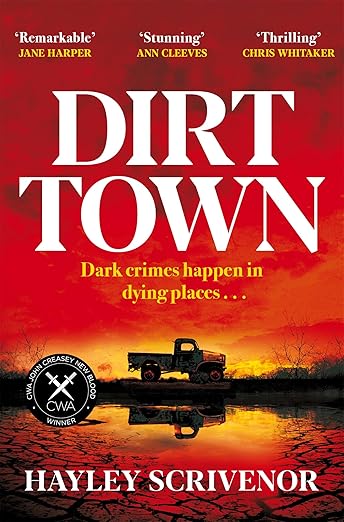
7. Dirt Town by Hayley Scrivenor (2022)

Protagonists: Ronnie, Lewis, and a chorus of local Durton children (around 12yo).
Seen: Death, fear, and the silence of small towns.

When twelve-year-old Esther Bianchi disappears from her Australian hometown, Durton, the story unfolds through her classmates Ronnie and Lewis, and the unique omniscient voice of a chorus of local Durton children.

Scrivenor captures how kids sense danger long before adults admit it’s there. Dirt Town is tender, haunting, and unforgettable: the first tremor in our countdown of those who’ve seen too much.

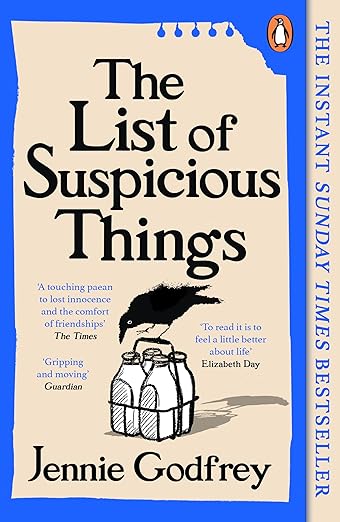
6. The List of Suspicious Things by Jennie Godfrey (2024)

Protagonist: Miv (12yo).
Seen: Secrets, suspicion, and the cracks in a so-called perfect community.

It’s 1979 in a small Yorkshire town, and twelve-year-old Miv is determined to solve the case of the disappearing women, or at least the mysteries in her own street. Together with her best friend Sharon, she begins a list of “suspicious things” that might lead them to the truth.

Funny, heartfelt, and quietly devastating, Godfrey’s debut captures the tension between childhood certainty and adult fear. Miv’s innocence becomes a mirror for the paranoia of a community on edge. Proof that sometimes, the biggest mysteries hide behind net curtains.

Part of the power of young narrators is how they balance innocence with intelligence, they see the truth but don’t yet have the armour to ignore it.

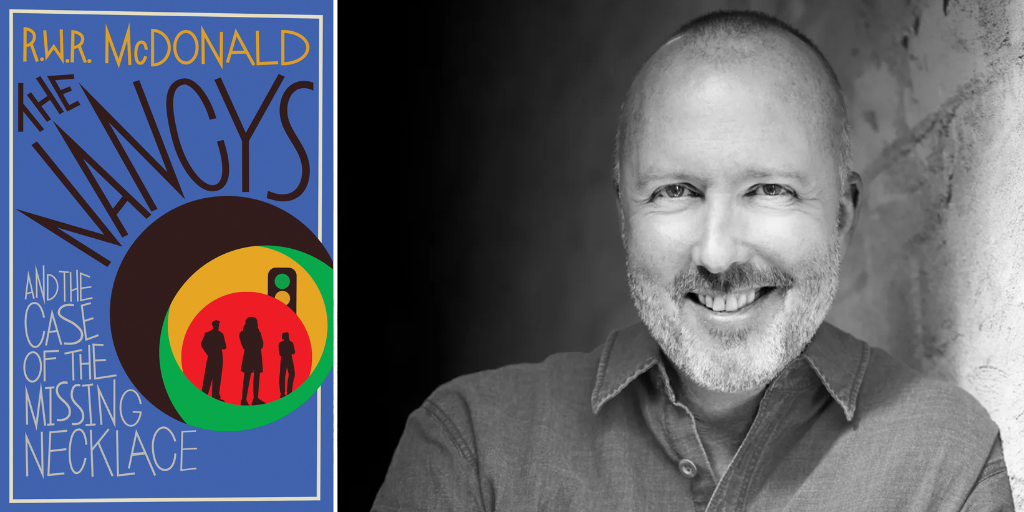
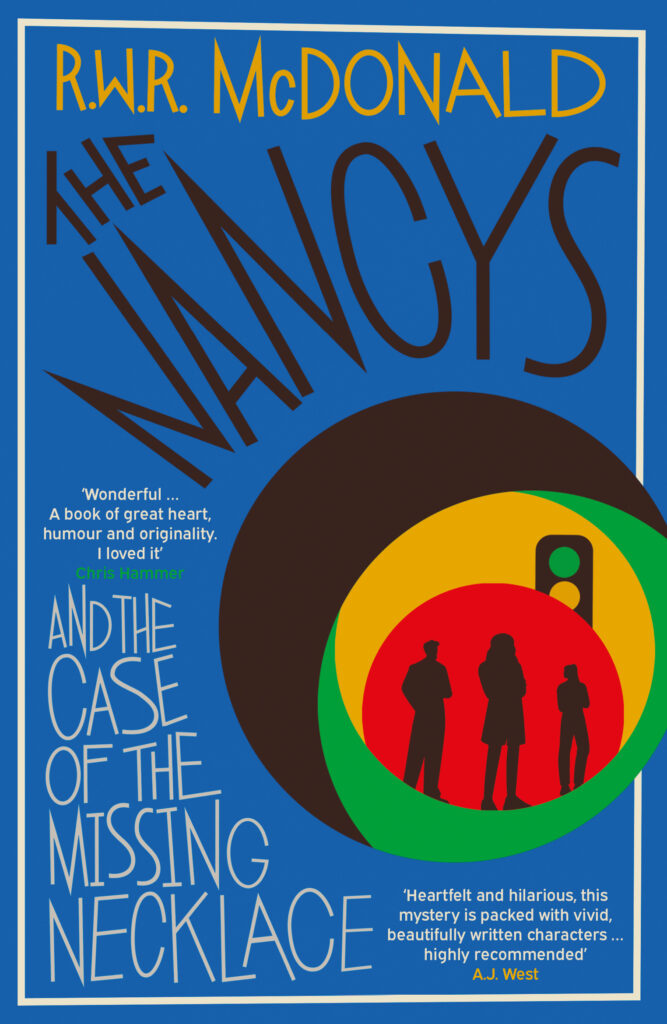
5. The Nancys and the Case of the Missing Necklace by R.W.R. McDonald (2025)

Protagonist: Tippy Chan (11yo).
Seen: A small town’s darkest secrets and the adults trying to hide them.

Set in small-town New Zealand, eleven-year-old Tippy forms The Nancys with her babysitting uncle and his boyfriend while her mum’s away on a cruise — a detective club fuelled by Nancy Drew, glitter, and a mission to investigate her school teacher’s murder. Like her role model, Tippy is clever, curious, and unafraid to take charge when the adults falter in their search for the truth.

Through Tippy’s eyes, murder meets mischief and grief meets gallows wit, a reminder that kids can hold horror and humour in the same breath. And sometimes, the only way to face the dark is to laugh at it.

I loved writing that wildness, that blurring of boundaries, the way kids throw themselves into chaos, convinced they can put the world right again. All perfect qualities for amateur detectives.

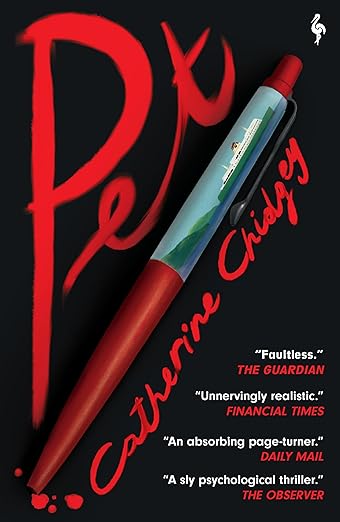
4. Pet by Catherine Chidgey (2023)

Protagonist: Justine (12yo).
Seen: The danger of devotion, and the betrayal that follows.

Like every other girl in her class, twelve-year-old Justine is drawn to her glamorous new teacher and longs to be her “pet.” But when a thief begins to target the school, her unease grows. With each twist, this story of deception and guilt takes a darker turn, leaving Justine to decide where her loyalties truly lie.

Set in 1980s Christchurch, New Zealand, Pet explores racism, misogyny, and the oppressive reaches of Catholicism with eerie precision, a chilling addition to the canon of childhood betrayal.

We’re deep in the countdown shadows now, and there’s no turning back…

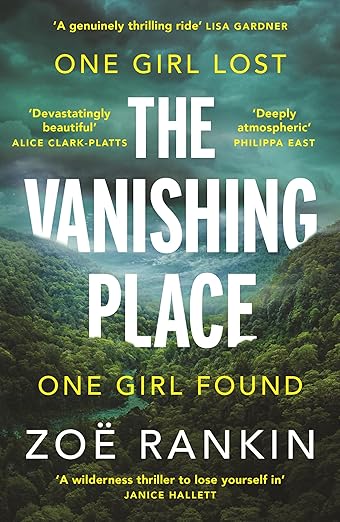
3. The Vanishing Place by Zoë Rankin (2024)

Protagonist: Margaret (teen).
Seen: The echoes of trauma and the shadows of memory.

Rankin’s taut debut explores how childhood trauma reshapes memory itself. Told with psychological precision, The Vanishing blurs the line between memory and mystery. A haunting reminder that the crimes we survive can be the hardest to solve.

As Zoë Rankin wrote in her Criminal Element feature on young protagonist narrators, “there is something deliciously raw and exposed about showcasing the voice of a child in a thriller novel.” And The Vanishing proves it.

Only two left in our countdown, and both novels’ kids have seen more than anyone should.

Honourable Mentions: Not Strictly Crime Fiction, But They’ve Seen Way Too Much

These last two may sit outside the strict boundaries of crime fiction, but the horrors their young protagonists witness, and survive, or don’t, earn them their places here.

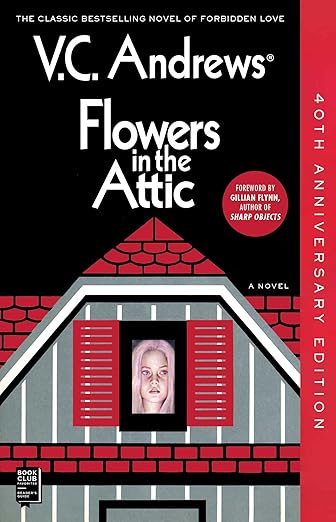
2. Flowers in the Attic by V.C. Andrews (1979)

Protagonists: The Dollanganger children (ages 5–14).
Seen: Everything, except sunlight.

I mean… the seventies were a different time… Locked away in the name of family honour, the Dollanganger children learn that love and cruelty can share a roof. A gothic nightmare masquerading as domestic bliss — and proof that the most chilling crimes don’t always leave the house.

It may not be filed under crime fiction, but it’s hard to think of a greater domestic crime than what these children endure.

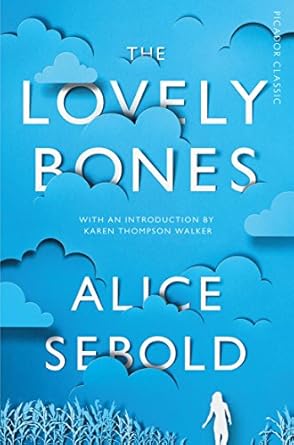
1. The Lovely Bones by Alice Sebold (2002)

Protagonist: Susie Salmon (14yo).
Seen: Everything, even her own death.

Susie Salmon narrates her murder from the afterlife. It’s devastating and transcendent: the voice of a teenager who refuses to stay silent, reminding us that innocence doesn’t end where life does.

Not strictly a crime novel, The Lovely Bones begins with a murder and never stops tracing its aftermath. A haunting inversion of the genre, where the victim, not the detective, leads us to the truth.

*

We began with a warning, and let’s be honest, Dorothy Gale saw some messed-up stuff. 

From the haunting chorus of Durton’s children to Susie Salmon’s spectral watch, these young narrators remind us that courage isn’t about age, but about seeing clearly when others look away. They laugh, grieve, investigate, and in doing so, they reveal the truth adults can’t.

And maybe that’s the countdown’s lesson: sometimes the most dangerous thing a kid can do in crime fiction is notice.

R.W.R. (Rob) McDonald’s The Nancys and the Case of the Missing Necklace is published by Orenda Books on 20th November 2025.

Posted on

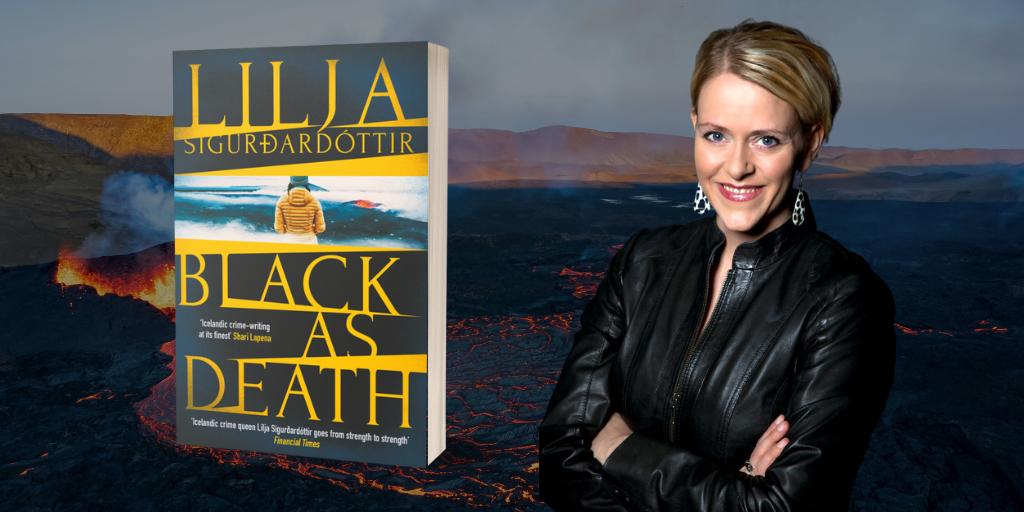
Goodbye Áróra

by Lilja Sigurðardóttir

A five-book series done. Five storms lived through Áróra’s eyes. And now, her story ends.

She was never meant to stay forever. Áróra arrived like a knock on the door in the middle of the night – sudden, urgent, impossible to ignore. She carved her way into my imagination with her intelligence, her strength and her dangerous independence. For years she was a voice I could not silence, a presence that pulled me back to the keyboard, again and again.

Writing a long-running series is a different kind of commitment from writing a standalone. With a standalone, you tell the story, let it echo, and move on. But with a series, the character follows you from book to book, from year to year. Áróra grew alongside me – her scars deepening, her voice sharpening. Writing her story was less like invention and more like living alongside someone who refuses to leave your side.

Now, with her tale complete, I stand in the quiet aftermath. I will miss her and her fellow characters, of course. But there is also a release. The kind of freedom that comes when a case is closed, when the past is finally put to rest.

I want to thank the readers who followed me and Áróra through all the books, through the trouble, the adventures, the danger, the grief. Thank you for reading, reviewing, commenting, and giving me feedback. You gave Áróra life beyond the pages, carried her with you, and made the ride worth every twist and turn.

Áróra is gone, but my creative wells are far from empty. New stories stir within me, waiting. And I am ready to chase them.

Black as Death, by Lilja Sigurðardóttir, translated by Lorenza Garcia, is published by Orenda Books on 23rd October 2025.

Posted on

Standalones or Series: That Is the Question

by Antti Tuomainen

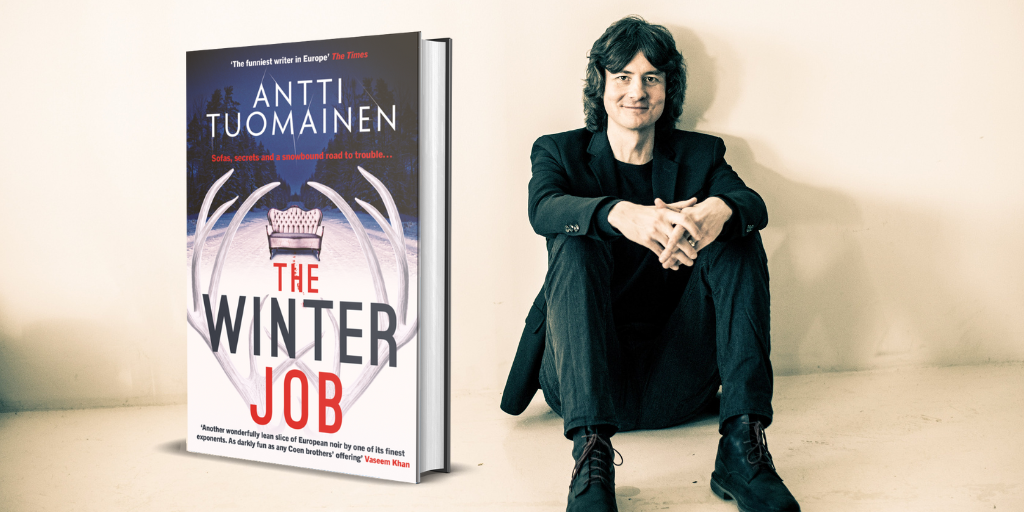
When I started writing The Winter Job – out today in the UK – I knew it was going to be a standalone. But how did I know that? I think there are at least two bigger reasons. First, it was my second standalone after The Rabbit Factor trilogy, and I think I still felt that it was too early to start another trilogy or series. Second, and probably more important, I felt that the story itself required that it be completed in one book. Thus, in hindsight, I think I can say that it was an instinctive decision based on the nature of the original idea.

After fifteen novels, anyone would think that I would have developed a better, perhaps more scientific method than instinct – and the abstract nature of an idea – to decide whether to write a standalone or to embark on a series, but I must admit that I haven’t. I realise there are potential commercial advantages to series – they are often easier to market, and readers tend to find them easier to approach, especially in genre writing, like crime fiction. But I have also come to learn that writing a book demands so much work for such a long period of time that I really need to take the only possible short-cut available: write what I want.

Case in point: when I was writing The Rabbit Factor (the first book in the trilogy of same name) I hadn’t planned a trilogy. I was near the end of the first draft when I suddenly – and yes, instinctively and based on the nature of the original idea – knew that this story isn’t over yet, that there is more to this character and his journey. So, I suggested to my agent that I write a sequel, and he asked could it be a trilogy. I answered immediately because I already knew the answer: Yes, it could be, and happily. I was indeed thrilled to continue writing from this character’s (a highly rational actuary) perspective and to see him achieve his goal: love and happiness and the end of solitude. It was a longer journey because it, well, needed to be.

The Winter Job, then, was a natural standalone. As I said, I knew this from the beginning, and I think I knew it when I had the first inkling of the idea some years ago. The biggest reason for that seems, at least to me, to lie in the very nature of the story. It is a road-trip movie in the form of a book, and once a journey is completed – no spoilers here, I’m not telling how it is completed – and the story of a friendship is told, the most important goals were achieved. I loved the characters and saw potential in their subsequent adventures and could have gone on with them, but something just told me that they would be alright without me and that I should continue to the next story.

And that’s what I am doing, following my instinct and listening what the story is trying to tell me. Standalone or a series – that is the question, again.

The Winter Job, by Antti Tuomainen, translated by David Hackston, is published by Orenda Books on 23rd October 2025.

Posted on

Creating a Hero – DI Ben Kitto

I was ready for a change when I began my Isles of Scilly mysteries. I’d spent eight years writing a series set in the crowded South London streets where I grew up. It had been a labour of love, but my imagination needed a break from the traffic-filled city streets, so I chose a radically different environment. I’d been visiting the Isles of Scilly since childhood, and had fallen for its pristine landscape, full of winding paths and uncluttered beaches, gleaming with mica.

The challenge I faced was how to bring a character to life that typified such an extraordinary landscape. I wanted, above all, to create a hero that the islanders themselves would accept as their own. So, I began my research, during a trip to St Mary’s in the spring of 2015. I spoke to people on all five of the inhabited islands, asking about the traits they observed in themselves and their fellow islanders. Two aspects kept on cropping up: resilience and a strong community spirit. It made perfect sense to me. You need a firm backbone to withstand the toughest of winters, when Atlantic storms pound the islands’ shores. And it’s never wise to isolate yourself in a small community, where almost everyone is connected. 

One story above all was instrumental in helping me shape Ben Kitto’s character. When I spoke to Peter Hicks, the lifeboat coxswain on St Mary’s, he told me about one of the RNLI volunteers. There had been a terrible storm the previous winter, and the lifeboat had sailed out to save a stricken fishing boat, which needed towing back to harbour. One young man volunteered to jump aboard the trawler in a raging sea. He fell between the two vessels and sustained life-changing injuries. He spent months in hospital, learning to walk again, yet his determination to remain a lifeboatman never wavered. By the following autumn, he was back on duty, despite being fitted with an artificial foot.

I knew that my character needed the same kind of unshowy heroism, and be programmed to help others, whatever the risk. He took shape the moment I named him Benesek, which means blessing, or good will, in Cornish. I wanted him to possess a bone-deep desire to support his community, which I witnessed right across the islands. But he needed flaws too, so I made him shy, especially with women, and prone to obsess over issues that bother him.

Ben Kitto’s personal history needed to parallel the islands themselves. Scilly’s fate has always been inextricably tied to the sea, from the days when Irish pilgrims sailed over, to establish religious communities, through centuries of smuggling, to the fishing industry which endures today. So I made his father a trawlerman who had drowned when Ben was fourteen, and his uncle Ray a master boatbuilder, on the island of Bryher.

Socialising matters in Scilly too, with each of the islands having at least one pub, even though some have less than a hundred permanent residents. Much of Ben’s back story has been shaped by the Rock pub on Bryher, which is run by his godmother Maggie Nancarrow. I know from experience that the pub matters in winter, after getting stranded on Bryher for a week, when storms became too fierce to fly back to the mainland. The majority of islanders battled through strong winds and rain to reach the pub’s warmth, to gossip, or play chess by the log fire. I wanted Ben’s childhood memories to have been shaped by spending many evenings crammed shoulder to shoulder with the other islanders, until they became like relatives.

I took a risk in using real places in all the books, so Ben Kitto would find himself dealing with familiar buildings and people, when he investigates crimes. But I wanted to give him a degree of objectivity too. Many people leave Scilly to go to university or work on the mainland, but plenty return to raise their children there. Ben Kitto’s experience of spending ten years in London, is typical, only to find himself longing for the islands when he hit thirty.

I gave myself a significant challenge when I decided to narrate all the books from Ben’s perspective, first person, as if each story is unfolding in present time. Ben is a colossal six feet six inches tall. So, as well as imagining a male perspective, I had to get used to a totally different physique, which turned out to be fun! I made him a typical islander, keen on wild swimming, and outdoor sports. But we share a passion for watching the landscape. I gave him my favourite walk, to the brow of Gweal Hill on Bryher, to watch nesting kittiwakes and the vast Atlantic stretching almost to infinity, studded with charcoal grey islands, thrown down like pebbles.

I suppose the true test of whether or not a community accepts a fictional character is whether or not they read the stories. I was thrilled to get a message from Mumford’s shop on St Mary’s recently, to let me know that each of the books always sells out on the day it hits the shelves, which helped me breathe a sigh of relief. After eight years spent writing about Ben Kitto and a range of characters, most of whom are based on real people, I’m relieved that the islanders have taken him to their hearts.

Kate Rhodes is the bestselling author Deadman’s Pool, book eight in the Isles of Scilly series, featuring DI Ben Kitto, published by Orenda Books.
Posted on

Orenda Books signs RWR McDonald’s gripping, glorious debut mystery, The Nancys and the Case of the Missing Necklace

Karen Sullivan, publisher of Orenda Books, is delighted to announce the acquisition of World English Language rights ex ANZ for RWR (Rob) McDonald’s debut mystery, The Nancys and the Case of the Missing Necklace, in a two-book deal negotiated with Craig Sisterson.

Eleven-year-old Tippy Chan is thrilled when her uncle Pike returns to her quiet New Zealand town with his boyfriend Devon to look after her while her mum is away on a Christmas cruise. An avid fan of her uncle’s old Nancy Drew books, Tippy is desperate for a real mystery – and when her teacher is found dead beside Riverstone’s only traffic light, she finally gets her chance. Teaming up with Pike and Devon, she forms a secret detective club, The Nancys, and sets out to uncover the truth. What begins as a bonding and sightseeing adventure quickly turns dangerous: a wrongful arrest, a close encounter with the killer, and Tippy’s mother intervening all raise the stakes. Undeterred, The Nancys must use their wits and courage to stop the murderer before they strike again – whatever the cost.

Karen says, ‘Gripping, gloriously camp, immensely moving, and at times unbearably tense, The Nancys and the Case of the Missing Necklace is a funny, often heartbreaking debut that balances a simmering mystery with laugh-out-loud moments and poignant relationships, all set in small-town New Zealand. Tippy, Uncle Pike and his boyfriend Devon are divine creations, and readers will fall for their charm immediately as the trio navigates chaotic investigations that carry real jeopardy – coached throughout in masterful innuendo, clever side-stories and warm-hearted humour.

‘Originally published as The Nancys in ANZ, winner of the Ngaio Marsh Award for Best First Novel and shortlisted for a Ned Kelly Award, The Nancys and the Case of the Missing Necklace has been transformed to heighten the Nancy Drew connection, recrafted to deliver even more tension and momentum, and now features a brand-new prologue – ensuring Tippy’s adventures sparkle with heart, peril and laugh-out-loud fun. We’ll be celebrating with Nancys tote bags for booksellers and a glittering Christmas marketing campaign.

‘Brimming with exuberance but also meaningful themes that add an extra layer of emotional depth, this is the perfect book for darkening nights, and with a delicious second book in the series scheduled for 2026 – and the promise of more to come – we are genuinely thrilled to bring this book and wonderful author to Orenda.’

Rob McDonald says, ‘From Riverstone, New Zealand (population 3,687) to the world, it feels like something out of one of Nancy Drew’s wildest cases! I’m stoked that The Nancys has found a home with Orenda Books, and I love that the multitasking mystery club is now sleuthing its way into the hands and hearts of readers in the UK and North America. Kia kaha, Tippy, Uncle Pike and Devon; Category is Nancy Drew realness.’

Craig Sisterson says, ‘Delightful, charming, raucous, heartfelt, exuberant; not descriptors I commonly – or ever – turned to in more than 15 years of reviewing and judging many hundreds of crime novels, but they were top of mind after I first tore through RWR McDonald’s terrific debut, a refreshing and utterly unique tale in our wonderful crime and thriller genre. 

‘There’s just a real je ne sais quoi to this marvellous tale of an unlikely investigative trio: 11-year-old Tippy Chan, her visiting uncle Pike (who could body double for Santa Claus), and his fashionista boyfriend Devon, all banding together to battle Tippy’s grief at the death of her father by solving mysteries in Riverstone. Delightful, yet not lightweight, it also explores serious issues of grief and belonging. I’m so stoked that the brilliant team at Orenda Books is bringing this award-winning Kiwi crime tale to a northern hemisphere audience, so readers over here can experience what I and many antipodeans felt when we first read RWR McDonald’s superb tale of lovably unruly characters and chaotic events, dark deeds in a small town, perfectly seasoned with humour and heart.’

RWR McDonald’s The Nancys and the Case of the Missing Necklace is published on 20th November, by Orenda Books.
Posted on

My Five All-Time Favourite Books by Olivier Norek

I’m not drawn to any genre in particular, but rather to certain writers and their style. That’s why my bookshelves are so eclectic that it looks like someone put the books there at random, with no logic or order.

For now, here’s a selection of five of my favourite books today. Yesterday my choices would have been different, and tomorrow they will be different again.

The Boy with the Cuckoo-Clock Heart by Mathias Malzieu

Imagine a boy with a clock for a heart; a delicate clock which can’t deal with emotions without risking malfunction or complete breakdown. What would happen if this boy fell in love – truly, madly, deeply? How many more minutes could that clock keep ticking? This is a fantastic tale, and yet it tells nothing but the truth. Malzieu’s writing is poetic, funny and sensitive.

The Pillars of the Earth by Ken Follett
Or: the power of a writing style. In other words, the construction of a cathedral over multiple generations isn’t very interesting to me in itself, but the quality and the power of Ken Follett’s writing keeps you captivated in his story and you want to read to the end, trembling along with the builders, waiting to see the final stone set in place, the final word written.

The Ice People by René Barjavel

A book with a story so incredible and so wide-ranging that no film director has yet had the courage to take it on. Imagine that the traces of a civilisation pre-dating ours were discovered on Earth. The chance to see how a civilisation is born, lives and dies, how it could give us the intellectual tools we need to avoid the same mistakes. And we see how, despite all the warnings, we keep repeating the same errors. On top of that, it has the best plot twist of all time!

Reads Like a Novel by Daniel Pennac

This is not a novel, but a book to make you love novels – to remind you what a big part reading should play in our lives, because it makes them richer and more beautiful. And Daniel Pennac also reminds us of the inalienable rights of the reader which topple literature off its pedestal and, in doing so, give it back to humanity: “The right not to read. The right to skip. The right not to finish a book. The right to read it again. The right to read anything. The right to mistake a book for real life (in French, ‘le bovarysme’, named after the titular character of Madame Bovary). The right to read anywhere. The right to read out loud.”

The Big Sleep by Raymond Chandler
Chandler’s private detective Philip Marlowe is one of my favourite heroes. He’s a hero who knows, however, that this investigation (whichever one it is) will only bring him trouble at best. Fistfights are likely, and gunshots are inevitable. Marlowe knows all this, and he also knows that he lost all faith in humanity a long time ago. But he always says yes to the lost souls who walk into his office anyway. In the heart of darkness, there are people who could redeem the entire human race. You can smell the cigarettes, the cold coffee, the whiskey, the crumpled clothes from sleepless nights and arguments … Perfection!

Olivier Norek is the author of The Winter Warriors, translated from the French by Nick Caistor, and published by Open Borders Press, an imprint of Orenda Books.

Posted on

Wolves and Werewolves in Fiction – My Top Favourite Reads by Michael J. Malone

The Howling is the third book in the Annie Jackson Mystery series … and sees Annie once again thrust into danger. This time she’s been tempted out of seclusion by an old foe – with the promise that if she finds a child this person was forced to abandon at birth, they will help Annie end the curse that blights her life once and for all. 

The boy, now a man, dreamed of being a wolf – dreams linked to another boy centuries ago who was burned at the stake for succumbing to his wolfen urges.

The Howling is not a werewolf novel as such – but the human/wolf connection is an enduring fictional trope – and what’s not to love? In no particular order, here are some examples of this fictional device …

The Wolf’s Hour by Robert McCammon

First published in 1989, The Wolf’s Hour combines history, folklore, and myth. McCammon’s hero is Michael Gallatin, who was born into the Russian aristocracy, but was changed and raised by a pack of werewolves. Offering his ‘talents’ to the Allied cause, Michael becomes a secret weapon aimed at the destruction of Hitler and his Thousand Year Reich. This book manages to be both a historical thriller and a brilliant re-imagining of the traditional werewolf tale, by a superb author who has been criminally overlooked in recent times.

The Last Werewolf by Glen Duncan (Part one of Last Werewolf Trilogy)

For two centuries Jacob Marlowe has wandered the world, enslaved by his lunatic appetites and tormented by the memory of his first and most monstrous crime. Now, the last of his kind, he knows he can’t go on. But as Jake counts down to his demise, a violent murder and an extraordinary meeting plunge him straight back into the desperate pursuit of life.

The Wolf’s Gift by Anne Rice

“Anne Rice reinvented the vampire legend. Discover what she’s done with the werewolf myth.”
After a brutal attack, journalist Reuben Goulding finds himself changing. His hair is longer, his skin is more sensitive and he can hear things he never could before. Now he must confront the beast within him or lose himself completely. He flees the authorities, DNA analysts and the media, while trying to unpick the mystery of the mansion where he was attacked and turned into a werewolf.

The Werewolf of Paris by Guy Endore 

A horror novel as well as a work of historical fiction, The Werewolf of Paris follows Bertrand Caillet, the eponymous werewolf, throughout the tumultuous events of the Franco-Prussian War and the Paris Commune of 1870–71. Some literature experts have compared this book with Dracula by Bram Stoker, identifying it as the Dracula of werewolf fiction. Apparently, inspiration for the novel came from the true story of the French general, Francois Bertrand –  the infamous ‘necrophilic sergeant’ or ‘the vampire of Montparnasse’. Between 1848 and 1849, Bertrand experienced so-called brutal fits that led to acts of necrophilia and cannibalism in several French cemeteries. 

What do you think? Are there other werewolf novels that you’ve read and loved and would like to share with the world?

Michael J. Malone is the author of The Howling, the third book in the Annie Jackson Mysteries series, which include The Murmurs and The Torments, published by Orenda Books.
Posted on

What is the Enceladons Trilogy Really About? by Doug Johnstone

When I started writing my Skelfs series, one of the things I was trying to do, probably subconsciously, was write about a better way to live. The world is such a shitshow these days, in pretty much every aspect, and I felt like I had to start addressing that in my writing. 

When I decided to start writing science fiction, this was still in my mind, for sure. I wanted to write a first contact story, but about ordinary people experiencing the extraordinary in the form of an alien life, and what that might really look like.

So right from the start Sandy and the other Enceladons – octopus and jellyfish creatures from one of Saturn’s moons – were set up as living a very different kind of life, with very different ideas of society, connection and community. They were peaceful, curious and in need of help. Of course, my ordinary human characters helped them, but the authorities viewed them as a threat and tried to capture, torture and kill them.

The whole series has been a quiet tirade against human exceptionalism. The idea that humans are better than other life on earth, or separate from their environment, is honestly at the heart of everything that’s wrong with the world right now. When you think of something or someone else as less than you, you can do anything you like to them. Imperialism, slavery, animal cruelty, climate change, social inequality, war – all of it stems from this idea, and it makes me sick.

So there has to be another way, right? That was the idea behind the Enceladons. If the first book – The Space Between Us – was about treatment of the ‘other’, then the second – The Collapsing Wave – was about how the military and imperialist forces try to destroy everything they perceive as a threat.

The Transcendent Tide goes further. Placing the Enceladons close to an indigenous Inuit community in Greenland allowed me to expose further the critical failings of modern capitalism. What we in the West think is an inevitable way of life is, actually, catastrophically evil. We have to be able to see a better way of living before we can do anything about it, and that was certainly in my mind as I wrote the final part of the trilogy. I tried to be hopeful, even as terrible things were happening, and ideally the reader will finish the book with a glimmer of that hope for the future of life on the planet.

There are no easy answers in The Transcendent Tide. But at least I’m asking the questions and hopefully making people think.

Doug Johnstone is the author of The Transcendent Tide, the third book in the Enceladons Trilogy, out today in paperback.