




I’ve taken some big risks with my novels, not only in that I write in almost a different genre every time, but because of the topics I’ve chosen to explore. I don’t like to make things easy for myself when I create fiction – I enjoy being challenged, pushed, and learning something new. This is why I’ve often written outside my own limited experience. Yes, most of my novels have a little of me in them, I admit, a little of the emotional aspects of my life, but who doesn’t feature in their own work? It’s impossible to hide fully in our prose.
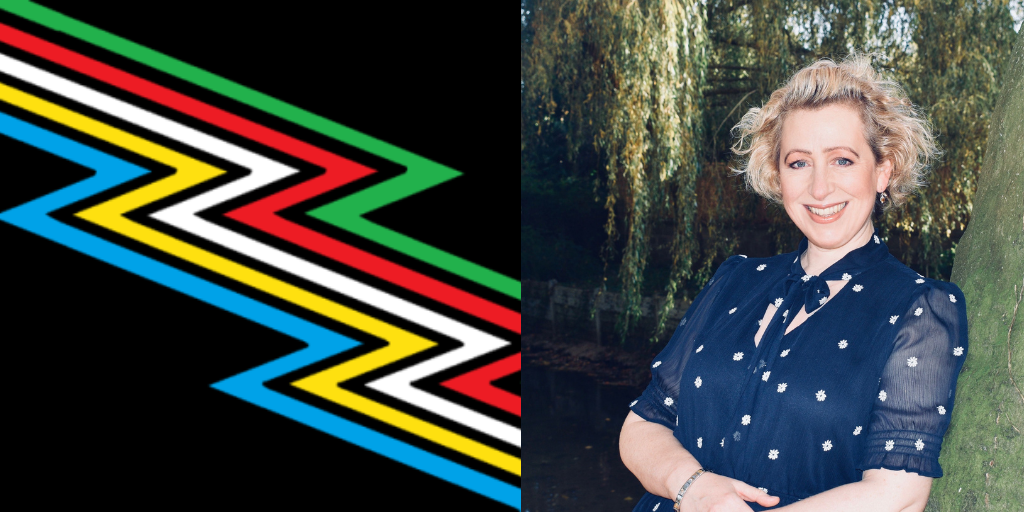
Writing outside of what I know – so to speak, if we throw the ‘write what you know’ advice on its head – has meant exploring a variety of disabilities in some way. I didn’t randomly choose these conditions; they were often visited upon me. When I created Sebastian, a readers’ favourite from This Is How We Are Human, and perhaps my proudest character – I based him on a dear friend of mine. Sean is a real-life young man who is autistic, and he’s very vocal about this, very proud, and very annoyed when people get him wrong. Who wouldn’t be? So when I put him on the page, albeit as a fictional creature, I knew I had to get it JUST right. Sean made sure I did. He acted out certain scenes with me before I wrote them, which I then recorded and listened back to, to make sure the way he spoke was accurate. He also read the finished thing and gave further advice.
I worried that taking on the whole spectrum of autism, especially when I haven’t lived it, might be met with criticism. And I would have understood that. We need to hear the ‘own voices’ of those living different lives to ours, those in the minority, those on the fringes of society, those often misunderstood, those without a voice. That’s the priority. But Sean assured me that he was being heard via my pen, so to speak; he didn’t know how to write but I knew what he wanted to be said, and I can.
One condition that I’ve explored twice now is Type 1 Diabetes, which my daughter was diagnosed with aged just seven, after almost going into a coma. It felt absolutely natural to explore this complex illness that involves numerous daily blood test and injections, and that can render the sufferer unconscious during the dreaded hypo. In How to be Brave nine-year-old Rose is based on my daughter and what she went through after diagnosis, and in The Lion Tamer Who Lost Andrew, one half of my tragic gay relationship, has been diabetic since he was a child. Was it easier to write what I knew? Of course it was. There wasn’t any research, and I wasn’t afraid of judgement, having experienced this. But it almost felt lazy, which is ridiculous because it was very emotional to look back on a painful time in my life and paint a person going through the same.
In my current novel, Nothing Else, a main character realises that she is beginning to lose her hearing. This is doubly difficult for her, because she loves music, and is a beautiful pianist. Some of my research involved chatting to my sister who can communicate via BSL (British Sign Language) and she explained to me how that works and who uses it. I also have a friend who uses a hearing aid and she described exactly what everyday world sounds are like for her. But really, the main requirement for writing the unknown, aside from research, is having an open mind and some empathy. We’ve probably all lost something we loved or been forced to give up something we didn’t want to, and these experiences can shade our story with the necessary layers.
Watch out for a future character who is a wheelchair user and is on the receiving end of pity he neither wants nor deserves. My own mother has used a wheelchair for the last three years and it’s really opened by eyes to how unseen these people are, not only physically, because we have to look down to speak with them and because we can miss them in a crowd, but due to a lack of access, a lack of consideration, and through pure ignorance, often speaking to a carer rather than the person sitting before us. I realised how many simple things I’m able to do – get on a train without assistance, go into a shop that has a step leading to it, go into a bar that’s underground, fit through every door. This gave me a great deal of compassion for my character.
Are there any topics or people I wouldn’t write about? I’d like to think not. But I’d only do it if I felt I could do it sensitively, with respect, with a great deal of research, and with my heart in the right place.


