Posted on

My 5 Favourite Psychological Thrillers – Eva Björg Ægisdóttir

In recent years, I’ve become a huge fan of psychological thrillers. They’re very different from the detective stories I devoured in my teenage years, which often followed a more realistic approach, where we watched the cases unfold through the eyes of the police. Although I still love a good detective novel, there’s something addictive about psychological thrillers. I love how unpredictable they can be, how the characters are often damaged and complex, making you constantly question their motives. The following books feature some of my favourite fictional characters, often deeply unreliable and sometimes not very likeable, but I love them anyway.  

1. Gone Girl by Gillian Flynn


This book was one of the reasons we saw a wave of thrillers featuring unreliable narrators. What Gone Girl has, though, and what many of the other books didn’t, is a brilliantly written dissection and satire of a marriage and of female stereotypes. Amy Dunne is both terrifying and brilliant. Even though she might be a terrible person, I was rooting for her all the way. Flynn’s writing, with its biting social commentary and layered characters, set a new standard for the genre. I’ve read this book many times now, and it never loses its impact.

2. Sharp Objects by Gillian Flynn


Yes, another Gillian Flynn novel. I think that few authors do psychological damage quite like the author, and there is just something about her writing style I simply love. Sharp Objects dives deep into family trauma, small-town secrets, and self-destruction – something I always love in a crime novel. Camille is a troubled journalist protagonist. She is very raw and real, and the ending still makes my skin crawl.

3. None of This Is True by Lisa Jewell


I have devoured every Lisa Jewell book in recent years, and I love how dark they’ve become. This story of a podcaster and her mysterious subject is chilling precisely because it feels like it could happen to anyone. Jewell plays with the idea of truth and storytelling in a way that leaves you doubting everything you read and it becomes so uncomfortable, but at the same time I couldn’t stop reading.

4. The Silent Patient by Alex Michaelides


This one has a premise that hooks immediately: a woman who murders her husband and then stops speaking entirely, leaving only a painting of herself. The twists in this one are masterful. and Michaelides balances suspense with deep character study. It’s the kind of book you want to finish in one sitting and then re-read to catch what you missed.

5. I Remember You by Yrsa Sigurðardóttir


I love a good supernatural story when it’s done in a subtle, realistic way … where it feels like it really could happen, so I have to include Yrsa’s Icelandic thriller. There aren’t many books that have made me afraid to go to sleep, but this one did! I Remember You blends ghost story and psychological suspense beautifully. The atmosphere is terrifying, set in a cold, isolated location, but the scariest parts aren’t the surroundings but the people. 

Eva Björg Ægisdóttir is the author of the chilling standalone psychological thriller, Home Before Dark, translated by Victoria Cribb.

Posted on

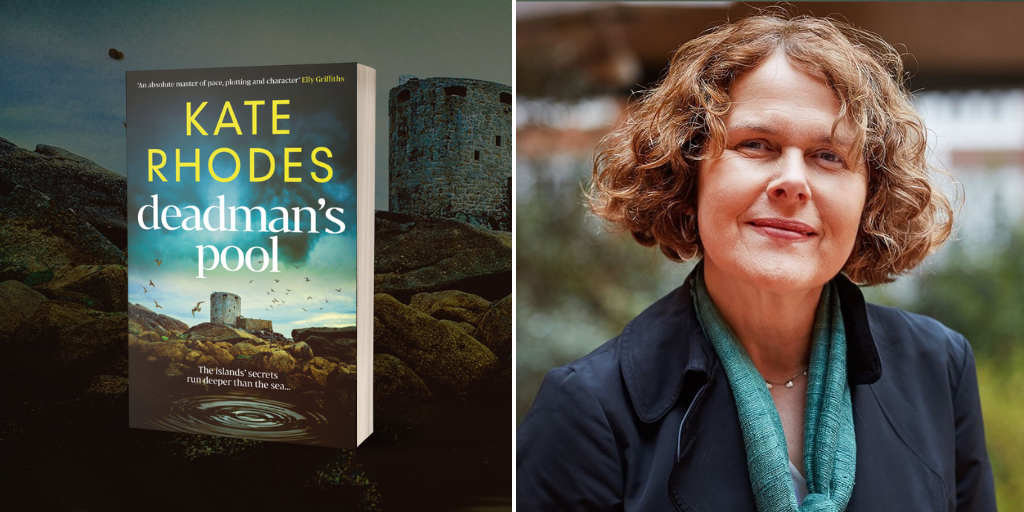
Orenda Books signs Kate Rhodes’ breathtaking, gripping Deadman’s Pool

Karen Sullivan, publisher of Orenda Books, is delighted to announce the acquisition of World English Language rights for Kate Rhodes’ Deadman’s Pool, book eight in the Isles of Scilly series, in a two-book deal negotiated with Teresa Chris Literary Agency.

The book opens with DI Ben Kitto ferrying the islands’ priest to St Helen’s, as winter storms lash the Isles of Scilly. Father Michael intends to live as a pilgrim in the ruins of an ancient church on the uninhabited island, but an ugly secret is buried among the rocks. Digging frantically in the sand, Ben’s dog, Shadow, unearths the emaciated remains of a young woman. The discovery chills Ben to the core. The victim is Vietnamese, with no clear link to the community – and her killer has made sure that no one will find her easily. The storm intensifies as the investigation gathers pace, and soon Scilly is cut off by bad weather, with no help available from the mainland. Ben is certain the killer is hiding in plain sight. He knows they are waiting to kill again – and at unimaginable cost.

Karen says, ‘The Isles of Scilly series has been one of my own personal favourites since Hell Bay was published in 2018, and one of the few series I have always read in hardback. DI Ben Kitto is a complex, memorable character, who has returned from London to his birthplace within the close community of Bryher, wrestling with grief and trauma, but always seeking justice. With his dog, Shadow, and in later books, new-found love, he investigates local crimes that inevitably have their roots in the community, and the dark secrets that lurk behind closed doors.

‘When the series became available – picking up at book eight, Deadman’s Pool, with book nine to follow in 2026 – I leapt at it. With its immense sense of place, intricate, locked-island plots, and compelling, believable characters that we grow to love, this has always felt like an Orenda Books series, and I am thrilled to welcome Kate Rhodes – a reader, bookseller and librarian favourite – to the team, and to be offered the opportunity to breathe new life into a series that has so much more to give.

‘Deadman’s Pool is without question the best yet, with the islands cut off by a storm, a killer in their midst, and a masterfully created ticking-clock tension and sense of peril. Readers of and new to the series will be blown away.’

Kate Rhodes says, ‘I’m delighted to be working with a really ambitious, innovative independent publisher like Orenda. I admire their wide international reach, and their strong focus on quality crime writing. But above all, they offer exceptional encouragement and care to all their authors. I feel lucky to have joined their excellent list.’

Teresa Chris says, ‘I am delighted that Kate is going to be published by the prestigious award-winning Orenda team’

Deadman’s Pool, by Kate Rhodes, will be published on 25th September 2025, by Orenda Books, with book nine in the Isles of Scilly series published a year later. For more information, please contact Karen Sullivan: Karen@orendabooks.co.uk.

Posted on

UK Kindle Monthly Deals – July 2025

Grab These Incredible Reads for Under £1.50 – All Month Long!
For the entire month of July, every title below is available on Amazon for less than £1.50. Don’t miss this chance to stock up on brilliant ebooks at unbeatable prices.
Click the banner to grab your next great read!

Posted on

Behind the Scenes of Double Room by Anne Sénès

What inspires me? It’s hard to say. A lot of daydreaming, some reading, a few travels, and the occasional Eureka!

It all begins in London, and I know several very different Londons.

There’s the London I discovered with my grandma when I was a young adult. The London where I lived with my husband (who was travelling, more often than not) and our newborn son. The London I found in the pages of countless novels, in old films and musicals, in Mary Poppins and Paddington. The London I explored for my research when I was working on my PhD. In short, a London that is vibrant, full of colours, sounds, smells, laughter, rules and freedoms, good and bad surprises, mews, avenues and parks.

And then there is Paris, where I grew up – a city I no longer love. But one day, while visiting a friend, he took me to La Mouzaïa, a little borough I didn’t know. And there I saw Stan’s house – the one with Alice and the white rabbit painted on its walls.

I had already started writing the novel, and suddenly it felt right for Stan to move there: a quiet place, but one full of mystery.

To be honest, like Stan, I never really liked Alice in Wonderland. Partly because I was jealous of Alice (I’m still waiting for a rabbit to come and fetch me), and partly because, as a child, I found everything in that book frightening. I could – and probably should – read it again, but for some reason, I don’t feel like it.

As for the plot, I wanted a male character. A composer. Someone who wouldn’t see or feel the world like the rest of us. Synaesthesia made sense, then. Stan’s sensitivity is extreme – and so, when Stan loves, he loves in an extreme way. Love that borders on madness. Absolute.

To the point where he recreates his dead wife’s voice.

What would we do for love? What would we do to keep alive the ones we love? To make sure they’re always there to chat with us, to hold us, to comfort us? How far are we willing to go to keep their ghost close?

This is where Oscar Wilde and Maupassant inspired me. Their fantastical short stories always play on that feeling: Is it real? Am I going mad? Who are these shadows? It’s eerie, and I love that sensation. We play with our fears, as if we were still children – ready to close the book and return to the safety of reality. But what if that’s no longer possible?

That is exactly what happens to Stan. As he wanders back again and again down memory lane, he forgets to live in the present. He loses himself in a past that, like all pasts, never truly existed. We all reshape our memories – brightening or darkening them depending on our mood. And suddenly, the mundane becomes extraordinary.

And we all fear and depend on our AI machines. We all wonder whether Alexa or Siri is spying on us. Remember that chat with your friends about going to Greece in the summer? And that same night, you start getting ads for dreamy little houses to rent by the sea on a remote Greek island? It’s happened to all of us. It stirs something strange in us. And sometimes, we can’t help but see these smart devices as our best friends – the ones we trust with our eyes closed.

Double Room is made of all these ingredients.

But above all, it’s what you see in it.

Anne Sénès’ English debut novel, Double Room, translated by Alice Banks, is published by Orenda Books.

Posted on

June 2025 Kindle Monthly Deals

UK Kindle Monthly Deals

All of the below titles are under £1.50 for the month of June. Click the images to get your copies now!

US Kindle Monthly Deals

All of the below titles are 99c for the month of June. Click on the images to get your copies now.

Posted on

Five Books That Inspired Me to Write – Katie Allen

2. The Moomin books, by Tove Jansson 

If we are doing this chronologically, and my main man Robin the accountant in Happy is the One would insist we do, I have to start with the Moomin books. My mum used to read to me when I was little and I just adored the characters and world that Tove Jansson created. I remember thinking I’d love to come up with fictional worlds of my own one day. Among the Moomin characters, my favourite has to be Moominpappa, with his urge to write (he has a memoir pen!), his struggles to find his place and his brilliant little sayings like ‘Bless my tail!’

2. Metamorphosis and Other Stories, by Franz Kafka

I studied Kafka a little when I did German at university and just loved his way of conveying the struggles of being human through weird and unforgettable stories. In Happy is the One, Astrid is a Kafka expert and shares one of Kafka’s most striking short stories with Robin, that of the ‘fasting artist’, a man exhibited in a circus cage on his own volition and starving himself for weeks at a time. This story is barely ten pages long, yet it left me with so much to think about.

3. May We Be Forgiven, by A M Homes

It was on re-reading this funny, sad and ultimately life-affirming American novel in 2016, that I thought, ‘Gosh, if books can be like this, I want a stab at writing one.’ It begins with a violent tragedy and follows a man out of his depth as he takes on the care of his niece and nephew, flounders at work and in love and grapples with demons from his past and family members from his present. It’s witty, unconventional and vast in scope, with so much to say about modern America. I had the pleasure of meeting Homes at a book signing and told her she’d inspired me to write my first novel. She made me promise I’d finish it. I often thought of that promise as I limped towards the last lines of my debut, Everything Happens for a Reason.

4. The Autobiography of Mark Twain, edited by Charles Neider

It was Twain’s belief that he would die when Halley’s Comet was in the sky that inspired the premise of Happy is the One. Twain had been born with the comet in 1835 and predicted he would go out with it when it was back in 1910. He was right. In Happy is the One, my main character Robin is born when the comet returns again in 1986. Newspapers at the time re-tell Twain’s beliefs about the comet and his spookily accurate prediction. Robin’s mother cuts out these articles and sticks them in Robin’s baby album. When I knew I was going to be working with Twain’s comet prophecy, I read his autobiography. It’s not something you can read cover to cover, given his editors were left with a mass (and a mess) of notes to put in some kind of order. But as always with Twain, there are great lines and observations and some extremely touching stories from a family life marked by many tragedies. He relays his daughter Susy’s cynicism at a young age when she lists all the hardships in life and then says simply, ‘What is it all for?’ This too provided a central theme for Robin’s story and his own quest for meaning. What is it all for?

5. The Return of Halley’s Comet, by Patrick Moore and John Mason

Once I knew Halley’s Comet had got its claws into me, I wanted to read up about its previous appearances in our skies. I can’t remember seeing it when I was seven and it was passing Earth in 1986, and I’m not surprised because as Patrick Moore and John Mason note in this brilliant book, the conditions then for viewing the comet from the Northern Hemisphere were poor. I picked this book up – published in 1984, but still available – thinking it would give me a fact or two about the time of Robin’s birth and a taste of the fervour around the comet’s first return since the dawn of the space age. What it provided was centuries of stories around the comet: observations of it by the Chinese and the Greeks thousands of years ago; myths about the comet being the star of Bethlehem; the comet’s appearance in the Bayeux Tapestry; its condemnation as an ‘agent of the devil’ by a 15th-century pope. Moore and Mason also share the colourful life story of Astronomer Royal Edmond Halley, who was the first to identify that a comet observed every seventy-five years or so throughout history was in fact ‘one and the same’. All of this history and Halley’s life fed into my character of Robin, himself an avid observer of the night sky.

Happy Is the One, by Katie Allen, is published by Orenda Books.

Posted on

My Top Five Biggest Influences – Rod Reynolds

When people ask me why I’ve set most of my books in America, I explain that I’ve always been influenced more by American culture. When the inevitable follow-up question – Why? – is levelled at me, I point them to my childhood. London in the 1980s was a bleak place in many ways, and the way Britain was portrayed on TV reflected this. Think about Thatcher-era Coronation Street or Eastenders. This was a country telling itself its own stories, of people struggling to get by in rundown houses, with never enough to go around. It was in tune with the council estate where I grew up.

Then contrast that with the TV shows coming out of the US at the time. The opening to the A-Team had palm trees, androids, fast cars. Knight Rider could’ve been set on another planet! Dynasty, Dallas – these weren’t people struggling to get by, these were masters of the universe. This was a world of colour and power and excitement, and as a kid, I lapped it up.

As I grew older, books took centre stage. One of the first ‘grown-up’ novels I read was The Firm by John Grisham. While Tom Cruise’s salary as a junior lawyer wasn’t the most important element of the plot(!), I remember it leaving me wide-eyed, a sum that seemed impossible to imagine. American movies had a similar impact – from the wide-open landscapes of films like Unforgiven and Dances with Wolves to the anti-hero patrolled urban jungles of Heat and Carlito’s Way, I was drawn to the dark stories and dark characters found in the best American fiction.

Here are five of my top influences as a writer:

1. The Big Nowhere, by James Ellroy

This wasn’t the first Ellroy novel I read, and it’s certainly not his best known or widely acknowledged, but it’s undoubtedly the one that has had the biggest influence on my writing. The Big Nowhere introduced me to the idea of police as bad guys, killers as good guys and morality existing only in different shades of grey. The mix of real-life events, characters and places is intoxicating, grounding the book in a brutal realism that makes it all the more impactful. And most of all, it’s the moments where Ellroy thumbs his nose at the idea of crime as some kind of ‘lesser’ genre and drops a line or passage as heartfelt and affecting as anything you’ll read. I can recite the last lines from memory: ‘When the noise died, he was climbing into the foothills, Los Angeles just a neon smear in his rear-view mirror. He touched his future there on the seat: sawed-off, heroin, a hundred and fifty grand. It didn’t feel right, so he turned on the radio and found a hillbilly station. The music was too soft and too sad, like a lament for a time when it all came cheap.’

2. Heat

Michael Mann’s masterpiece is probably my most enduring single influence, which is somewhat surprising when I confess this one small detail: the first time I watched it, I hated it. 

That’s because when it first came out, I was looking for a twisty thriller of the kind I was accustomed to – cops chasing an unknown villain, lots of surprises, a big ‘whodunnit’ reveal at the end. Heat wants nothing to do with that kind of story.

Rewatching it a few years later, my understanding had matured enough to realise that the power of this film lies not in the complexity of its plot but in the complexity of its characters. Despite being on opposite sides of the law, Pacino’s Hanna and De Niro’s McCauley slowly realise that they are two sides of the same coin, creating a grudging respect between the two. The diner scene where these two icons are face to face is the most famous, but it is the ending, again, that stays with me the most – De Niro’s quiet acceptance of his fate, Pacino’s thousand-yard-stare as he comes to terms with what he’s been forced to do. It only works because of the film’s depth of characterisation, and that’s a lesson I’ve tried to bring to all of my books. 

3.  The Wire

The Wire is the opposite of everything I loved about American TV as a kid (yes, all writers are hypocrites!), but this is an object lesson in storytelling. Characters rise and fall over the course of five series. Seemingly unbreakable bonds are made – and shattered. Honour among police is shown to be as illusory as among thieves. Time and again, The Wire rejects established storytelling tropes and easy plot arcs to instead create something so detailed and real, some fans didn’t believe the stars were actors.

In part, that’s because the story goes out of its way to ensure there are no heroes here. Any time the viewer is tempted to start rooting for a character, they let themselves down – and us, in the process. And the reverse is true; we begin to understand the motivations of even the worst villains, often shaped by such bleak life experiences that it’s impossible not to feel at least a degree of empathy. These are people made by the world they inhabit, and both are so richly drawn that the result is – improbably – Dickensian.     

4. John Grisham

A confession: when I said The Firm was one of the first ‘grown-up’ novels I read, what I neglected to mention was that I stole it from my sister and read it under the covers – I was still supposed to be reading The Famous Five.At the time, The Firm and then The Pelican Brief were the most tense and suspenseful things I’d ever laid eyes on – surpassing even Five Go Off to Mystery Moor. Grisham is a master at deploying Chandler’s old adage of showing the audience the bomb under the table, ratcheting up the tension with every paragraph with a pace that never lets up. Time and again, I’d feel sure there was no way out for the hero – only for Grisham to send them even higher up into the tree and throw bigger rocks at them. Creating such a potent atmosphere of dread is hard – sustaining it is even harder.

5. The Red Riding Quartet, by David PeacePeace wears his Ellroy influences on his sleeve in this series of novels spanning the late 70s and early 80s, but it’s not the similarity in style that makes me such a fan but the way that Peace somehow creates the same sense of claustrophobic and labyrinthine darkness in Yorkshire as Ellroy does in LA. Until I read these books, I’d come to believe that what Ellroy had created was unique, a combination of his mastery and a very specific place and time. But the Red Riding quartet recalibrated my tastes somewhat, reminding me that the UK can be just as engrossing and enticing a place for crime stories. The characters are as compelling as anything set in the US, the darkness as horrifying – and the redemption just as uplifting. 

Rod Reynolds is the author of Shatter Creek, sequel to the bestselling Black Reed Bay, published by Orenda Books. 
Posted on

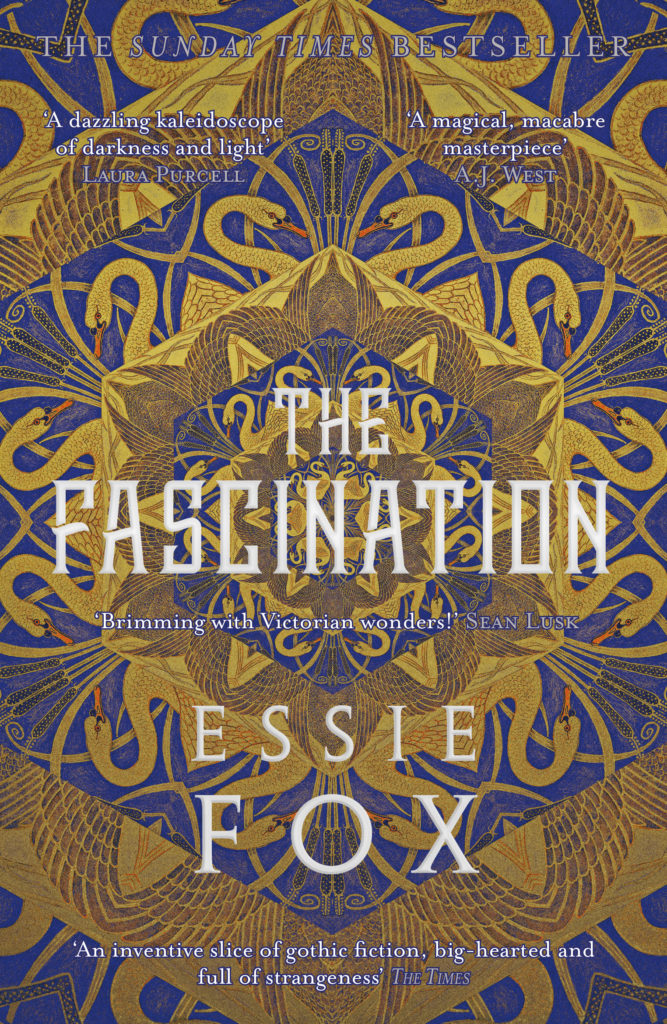
Firelight stories, stolen plots, Venice and vampires … The inspiration for Dangerous by Essie Fox

Firelight stories, stolen plots, Venice and vampires…

The inspiration for Dangerous

Essie Fox

It was never my intention to write a novel about Lord Byron. At the outset, my interest had been to try and find a way to create a vampire novel. But, where to start in a genre that’s been more-or-less sucked dry? How could I be original?

I began by researching the more recent Anne Rice novels, and then early literature, such as Le Fanu’s Carmilla, Bram Stoker’s Dracula, and Edgar Allen Poe who, whilst not being explicit in his references to vampires, does delve deeply into themes of love enduring beyond death. Finally, I stumbled on a novella first published in 1819, which I had read some years before without being aware of the story’s origin. 

The Vampyre, by John Polidori, features a charismatic but mysterious aristocrat by the name of Lord Ruthven. Ruthven frequents the London salons where he seduces young women before they’re wickedly discarded. He then travels abroad with a companion called Aubrey, who learns the truth of Ruthven’s nature when a lovely girl is attacked in Greece and left to die with a wound to her throat. After this, Ruthven is injured by some bandits on a road, and while he’s dying, he asks Aubrey to promise not to mention his name for a year and a day. Aubrey keeps this promise and then travels back to London where he is shocked to discover Ruthven very much alive, and also married to his sister … a sister Aubrey cannot save for by the time he arrives, she is dead, her fate having been to glut ‘the thirst of a Vampyre!

It is no coincidence that a character called Ruthven first appeared three years before, in the pages of Glenarvon, a ‘fuck and publish’ novel by Lady Caroline Lamb, who wrote it as revenge, at the end of an affair with the infamous Lord Byron. Caro also coined the term ‘mad, bad, and dangerous to know,‘ when describing her dark lord. 

Indeed, this warning of danger proved to be true for Polidori who, at the age of just nineteen, had qualified as a doctor and was employed to join the poet on his European travels, after a series of scandals, debts, and marital woes led to Byron being voluntarily exiled. As Byron’s personal physician, Polidori was present at the Villa Diodati on the shores of Lake Geneva, where Byron lived during the summer when Mount Tambora erupted, when the ashy atmosphere caused unusually wet weather, sometimes with days as dark as night. 

During this time, Byron was visited by the poet Percy Shelley, along with Mary Godwin Wollstonecraft, and her stepsister, Claire Clairmont. Often forced to stay inside, the group amused themselves by reading from a fantasmagoria – a book of stories of ‘the dead’ translated into French from the original German. These eerie supernatural stories encouraged Byron to challenge his guests to produce some horror stories of their own, and as the fire hissed and crackled, and wine and opiates were sipped, Mary Shelley nursed the seed of her novel, Frankenstein, while Byron started to compose the story of vampire. 

Mary’s idea went on to form a classic novel, but Byron soon grew bored and dismissed his attempt as being foolish and worthless. However, his discarded ‘fragment’ of prose was saved by Polidori, who nurtured literary ambitions and used that single scribbled page to inspire his own creation. The Vampyre came out three years later, by which time Polidori and Byron were estranged due to the young physician’s tendency to churlish tempers. Perhaps he also held a grudge because, much like Caro Lamb, Polidori’s novel was a work of revenge, with the vampyre of the title clearly based on the life and the character of Byron. However, any sense of pride that Polidori might have felt in the achievement of his work was destined to be short lived, for when his story was published, his name did not appear as the author of the work. It was credited to Byron, which the publishers knew would lead to greater sales than something penned by an unknown. 

When Byron heard of the fraud he was enraged and asked his publisher to sue Polidori’s publisher. Polidori was dismayed to be accused of lying and plagiarising Byron’s work. No doubt it was this shame, along with other disappointments, that caused the troubled doctor to commit suicide at the age of twenty-five – never living long enough to see his name upon his book, and never knowing that the novel would endure and become a classic of the vampire genre. 

Learning of this sorry tale, I was, all at once, inspired with the plot for my own novel. It would not be in the mould of the usual vampire novel, but a murder mystery set during Byron’s time in Venice. Taking the factual truths of The Vampyre’s publication, I then embellished those events into the fiction of my work. As Byron spent his time in Venice pursuing sexual pleasures, and as his poetry quite often alluded to his personal exploits, it was not such a leap to imagine a whispering campaign being spread among the Venetian upper classes, who hear of women Byron’s known being found dead with wounds to their throats and then suspect that The Vampyre is a brazen confession of the most audacious crimes. 

By referencing certain sections from the pages The Vampyre, along with excerpts I have taken from Byron’s own poetry, and details of vampiric myth from ancient European sources, Dangerous is a crime novel embroidered heavily with themes of supernatural mystery. But it is also – I hope – a book that spirits into life the characters of the two men forever destined to be linked by their connection with the scandal and the lies that first surrounded Polidori’s horror novel.

Dangerous, by Essie Fox, is published on 24th April 2025, by Orenda Books.

Posted on

Q&A with Thomas Enger & Johana Gustawsson

  1. Could you please introduce yourselves and your upcoming release, Son. Ladies first!

Johana: Bonjour! I’m Johana Gustawsson, I am a French writer living in Sweden after more a decade spent in London, where my three sons were born. Son is the first instalment of our new Kari Voss thriller series, where Dr Kari Voss, a social psychologist, gets entangled into the horrific death of two teenagers who used to be her missing son’s best friends. 

Thomas: Hei, hei. I’m Thomas Enger, I’m originally from a small town called Jessheim, but for the bigger (and maybe better) part of my life I’ve been living in Oslo. Having worked as a journalist for many years, I made my debut as an author back in 2010 with my Henning Juul series. Hooff, that makes me feel old.
  1. What would you say were the most rewarding aspects of writing as a duo?

T: I’ve always enjoyed teamwork in general a lot. To create something with another person is so much more fun than just doing it by yourself. It doesn’t mean that it’s half the work, of course, but what I find really enjoyable is just to throw ideas back and forth with someone as brilliant as Johana. Whenever we find ourselves backed into a corner, it’s easier to get out of the predicament as well, whatever it is, when you’re two.

J: Yes, and it’s the stimulation that I love the most. It’s always such an amazing and gratifying feeling to get the creative wheel running so fast that ideas pop every minute! Two brains are always better than one.

  1. Could you talk us through your collaborative writing process? Does one of you handle plotting while the other focuses on character development, for example?

J: Funnily enough, we do it all together: plot, talk about characters, editing. We just split off the research as I love that process to bits and Thomas is not fond of it. It’s almost hard for me to stop researching and start writing! So, I was responsible for most of the science linked to body language and memory, and created notes that Thomas could study. I know, It’s totally geeky! 

T: What I can add is that Johana was the primary writer on the chapters involving Kari, precisely because she had done most of the research, whereas I took more of the lead on some of the other characters. Having said that, we would always edit each other – add stuff, take away stuff – so in some of ‘my’ chapters there is a lot of Johana’s writing as well, and vice versa.

  1. How do you maintain a consistent voice and style in your work?

T: We write differently in our mother tongues; the structure of the sentences can be completely different at times. It’s possible that we sort of grew into a certain way of writing as well, adapting to each other in terms of syntax and grammar. Or maybe we just got very lucky. 

J: We never really thought about it consciously, I think, but maybe we secretly just hoped for the best! As Thomas touched upon, we can easily have a dozen versions of the same chapter, sending it back and forth between us, so I guess our voices somehow ended up as one. 

  1. Are there certain aspects of your collaborative writing that you both prefer over other aspects. For example, certain themes, scenes?

T: I prefer the actual writing the most. Dialogue, in particular. That’s where and how we really get to know the characters, hearing how they talk and seeing how they interact with other people.

J: I like it all but, but, but, I fear the worst when I have handed a chapter to Thomas, and he comes back with a long, over-elaborative sentence. I know then that the ‘but…’ is coming, and that I’ll have to rewrite extensively!

  1. Could you tell us more about your main characters: psychologist Kari Voss and Chief Constable Ramona Norum?

J: Kari Voss is a social psychologist expert on body language and memory who is grieving her missing son. She is very close to her father Hans-Christian, former Chief of the Oslo police, and to chief constable Ramona Norum with whom she has been working many criminal cases. Kari is hard-working, stubborn, and bloody brilliant.  

T: Ramona, I would say, is a modern-day life policewoman in the sense that she juggles the every-day challenges of being a mother of two sets of twins with her partner Linnea, as well as heading up the high-profile investigation of the brutal double murder. Ramona was, actually, in part, based on my sister Hege, who lives in Trondheim with her partner Anita and their five children. Hege is not a policewoman, though, but a brilliant doctor. 

  1. Do you have any rituals or routines that help you get into the collaborative writing zone?

J: To be honest, as soon as we talk plot and solve problems, we are in our creative bubble – it really is a magic thing. Even when my sons interrupt our conversations, popping into my office to ask me this and that, and end up talking to Thomas too, we go back to our mystery solving very quickly. I guess we are on the same work and creative frequency! 

T: I think Stephen King said it the best: ‘Amateurs sit and wait for inspiration, the rest of us just get up and go to work.’  

  1. What’s the best piece of advice you’d give to aspiring co-authors?

J: Write every day. Plan for 15 minutes daily. Sick, tired, drunk, no excuse accepted. Then increase that time until your story takes over and you get addicted to spending time with your characters. 

T: And – read. Read a lot. Read everywhere and all the time. If you find an author or a type of story that you love reading: Study it or study them. There are secrets to be found on every page.