Posted on

Disability Pride Month: Louise Beech on disability in her novels

I’ve taken some big risks with my novels, not only in that I write in almost a different genre every time, but because of the topics I’ve chosen to explore. I don’t like to make things easy for myself when I create fiction – I enjoy being challenged, pushed, and learning something new. This is why I’ve often written outside my own limited experience. Yes, most of my novels have a little of me in them, I admit, a little of the emotional aspects of my life, but who doesn’t feature in their own work? It’s impossible to hide fully in our prose.

Writing outside of what I know – so to speak, if we throw the ‘write what you know’ advice on its head – has meant exploring a variety of disabilities in some way. I didn’t randomly choose these conditions; they were often visited upon me. When I created Sebastian, a readers’ favourite from This Is How We Are Human, and perhaps my proudest character – I based him on a dear friend of mine. Sean is a real-life young man who is autistic, and he’s very vocal about this, very proud, and very annoyed when people get him wrong. Who wouldn’t be? So when I put him on the page, albeit as a fictional creature, I knew I had to get it JUST right. Sean made sure I did. He acted out certain scenes with me before I wrote them, which I then recorded and listened back to, to make sure the way he spoke was accurate. He also read the finished thing and gave further advice. 

I worried that taking on the whole spectrum of autism, especially when I haven’t lived it, might be met with criticism. And I would have understood that. We need to hear the ‘own voices’ of those living different lives to ours, those in the minority, those on the fringes of society, those often misunderstood, those without a voice. That’s the priority. But Sean assured me that he was being heard via my pen, so to speak; he didn’t know how to write but I knew what he wanted to be said, and I can.

One condition that I’ve explored twice now is Type 1 Diabetes, which my daughter was diagnosed with aged just seven, after almost going into a coma. It felt absolutely natural to explore this complex illness that involves numerous daily blood test and injections, and that can render the sufferer unconscious during the dreaded hypo. In How to be Brave nine-year-old Rose is based on my daughter and what she went through after diagnosis, and in The Lion Tamer Who Lost Andrew, one half of my tragic gay relationship, has been diabetic since he was a child. Was it easier to write what I knew? Of course it was. There wasn’t any research, and I wasn’t afraid of judgement, having experienced this. But it almost felt lazy, which is ridiculous because it was very emotional to look back on a painful time in my life and paint a person going through the same. 

In my current novel, Nothing Else, a main character realises that she is beginning to lose her hearing. This is doubly difficult for her, because she loves music, and is a beautiful pianist. Some of my research involved chatting to my sister who can communicate via BSL (British Sign Language) and she explained to me how that works and who uses it. I also have a friend who uses a hearing aid and she described exactly what everyday world sounds are like for her. But really, the main requirement for writing the unknown, aside from research, is having an open mind and some empathy. We’ve probably all lost something we loved or been forced to give up something we didn’t want to, and these experiences can shade our story with the necessary layers.

Watch out for a future character who is a wheelchair user and is on the receiving end of pity he neither wants nor deserves. My own mother has used a wheelchair for the last three years and it’s really opened by eyes to how unseen these people are, not only physically, because we have to look down to speak with them and because we can miss them in a crowd, but due to a lack of access, a lack of consideration, and through pure ignorance, often speaking to a carer rather than the person sitting before us. I realised how many simple things I’m able to do – get on a train without assistance, go into a shop that has a step leading to it, go into a bar that’s underground, fit through every door. This gave me a great deal of compassion for my character.

Are there any topics or people I wouldn’t write about? I’d like to think not. But I’d only do it if I felt I could do it sensitively, with respect, with a great deal of research, and with my heart in the right place.

Posted on

Orenda Books signs Suzy Aspley’s disturbing, atmospheric thriller Crow Moon, in a two-book deal

Karen Sullivan, publisher of Orenda Books, is delighted to announce the acquisition of World English Language rights for Suzy Aspley’s Crow Moon and a second (untitled) sequel, in a two-book deal negotiated with Euan Thorneycroft at A M Heath.

Set in the fictional village of Strathbran (Glen of Ravens) in Stirlingshire, Scotland, an area steeped in folklore and impenetrable mists, Crow Moon features ex-journalist Martha Strangeways, who discarded her career when her young twins died in a fire. Stricken by guilt that she was not there to save them, Martha carries their remains in a matchbox and struggles to find purpose in her life … until she stumbles across the body of a teenager, strung up on a tree, with a poem about crows inked on his back. Martha is soon drawn into the investigation into his death, teaming up with DI Derek Summers when another teenager goes missing in the remote landscape. With a plot that becomes darker, ever-more paranoid and increasingly enthralling with each page, Crow Moon is also a moving tale of grief and an exploration of psychological damage.

Karen says, ‘Crow Moon is a startling debut, and Suzy has been on my radar for quite some time. She was mentored by Jo Dickinson at Hodder, as part of Hachette’s Future Bookshelf Initiative, and won Bloody Scotland’s Pitch Perfect competition, as well as shortlisting the DHH Literary Agency New Voices Award at the inaugural Capital Crime Festival. Suzy brings alive Strathbran and populates it with complex, truly unforgettable characters, including Martha, whose search for redemption drives her to confront her own grief as she works to uncover a serial murderer whose motivation is genuinely creepy. This is an extraordinary first novel, rich in atmosphere – its sense of place reminiscent of the best Scandinavian fiction – exceptionally well plotted, and utterly immersive. I read it in one breathless, terrified gulp, and I have no doubt that readers will do the same.

Crow Moon is both convincing procedural and devastating psychological drama, and the start of a truly addictive series. We love books that cleverly marry so many compelling elements, and Crow Moon is a perfect addition to our list. 

Suzy says, ‘I am absolutely delighted to be joining Orenda Books and am looking forward to working with Karen and the team. I’ve long admired the many brilliant authors they publish and the beautiful books they produce, and can’t wait to see what they do with my debut novel, Crow Moon.’

Crow Moon will be published in April 2023 by Orenda Books. For more information, please contact Karen@orendabooks.co.uk.

Posted on

Indies need your support…

If you’re reading this, we know you have exceptional taste – you love good independents and great books, and you champion diversity and cultural variety in all its various forms – and for that, we are incredibly grateful. But we’d like to send out an appeal, to help you and every reader out there to understand the challenges that we are facing, and to ask for your help.

The publishing landscape has dramatically changed over the past five years, and there is a real and very concrete risk that many, many independent publishers are going to be forced to close their doors.

The cost of printing books has skyrocketed – up 38 percent, and then another 38 percent and still rising – as has the cost of delivery and virtually every other element of the publishing process. Like most independents, we have always worked on a shoestring, but even the tiniest margins have now disappeared. Translations add another element that not every small publisher faces; they cost three, sometimes four times more to get to the market than an English original, and that’s a cost that is going to increase, too, as translators have their own need to earn enough to survive.

The market has been flooded with digital publishers; Amazon’s own publishing arms have eclipsed that platform; conglomerate and large independents are throwing vast amounts of marketing and PR money behind their lead titles in order to secure retailer support and press coverage, and small companies simply can’t compete. Great books are simply not being stocked by increasingly risk-averse retailers, still recovering from pandemic losses, and they are often not reviewed either, as column inches are devoted to surefire hits, driven by publisher expenditure.

We are facing extremely difficult times and yet remain the most vibrant, bold and exciting part of the industry … willing to take risks on debuts and books that thrust the genre – literature – in new directions, keen to celebrate cultural and other diversity with international authors who bring something new and invigorating to the market. We take chances, we support our authors as their careers and their craft develops, we offer variety that enhances mainstream books and gives readers genuine choice. 

Think of it like a weekly shopping expedition. Do you always want to shop at chain retailers with own-brand goods, or do you want to find treats – hidden gems – that tantalise, astonish and excite you? Do you want to try new things, pick up something different, maybe even challenging, as a change? The simple truth is that the best books are not the ones that are the most hyped, or the most heavily stocked. The best books are those that people continue to think about, to recommend, to talk about, long after publication day. And that, I really feel, is what we do best.

 Imagine if every shop sold only the same things – if every bookshop sold exactly the same books? This is where the publishing industry is heading, and at pace, we absolutely need your help to prevent that from happening.

This will make a difference:

  • If you don’t see our books in the shops, order them. Indies and Waterstones can get them in (and even delivered to your door) within 48 hours
  • Consider signing up for our subscription box with the awesome indie bookshop Bert’s Books … there’s not only an option to fit your budget, but we have a price guarantee in place, and lots of additional treats! Sign up HERE
  • Pre-order books. You don’t have to wait until they’re published. Pre-orders encourage retailers to stock our books, and it can make all the difference to long-term success (and sales)
  • Actively seek out books published by independent publishers … we are the colour and the life blood of this industry, taking risks and finding some of the most outstanding, innovative voices you’ll read today
  • Talk about our books … recommend them to friends, to your local bookseller, to librarians. Word-of-mouth is one of the best ways to sell books
  • Buy from the Orenda website. We have lots of sales and reasonable prices, and both we and our authors benefit more when we sell directly to you.
  • Take a chance on new authors. Indie publishers have small lists and every book has to be special, to bring something unique to the market. Good independent publishers will have countless remarkable books that have not received the sales or attention they deserve.
  • If you find a book you love, explore the author’s backlist.
  • Quite simply, buy our books. If you’re on a budget, head for the discounted ebooks or one of our sales; if you’re not, shop on our website or your favourite retailers. We set out to create a brand that readers will trust, and truly believe that every book contains at least a little magic, regardless of its genre
  • Borrow from the library … authors benefit from every loan, and libraries are an integral part of the reading community
  • Gift our books in any format; it helps to spread the word and the pleasure
  • Take time to review our books, on the Waterstones website, Amazon, GoodReads or anywhere you choose to make your purchases. Readers everywhere rely on recommendations and it can make a difference to sales, exposure and discoverability
  • Share our books on social media, and follow us! We have lots of fun, book chat, recommendations and offers!
  • If you don’t already, subscribe to our newsletter, and ask your friends to subscribe too. Subscribers receive special offers and discounts; exciting exclusive news and deals, and much, much more!
  • Nominate and vote for our books for awards; across the history of Orenda Books, our authors have been long- or shortlisted, or won, over 223 prizes. And for good reason.
  • Follow our authors on social media, or sign up for their newsletters. It means so much to them, and to us, and busy, buzzing authors sell more books.

Ultimately, anything and everything you do either for us or for another independent publisher will make a difference between survival and the other, unthinkable options. If you enjoy our books, please support us. We love what we do, and take huge pride in bringing exceptional books from fourteen countries and counting. We need readers like you to make everything we do possible.

Thank you so much for your support.

Karen

Publisher, Orenda Books

Posted on

Sarah Sultoon’s Top 5 Most Dangerous (And Interesting) Places To Work

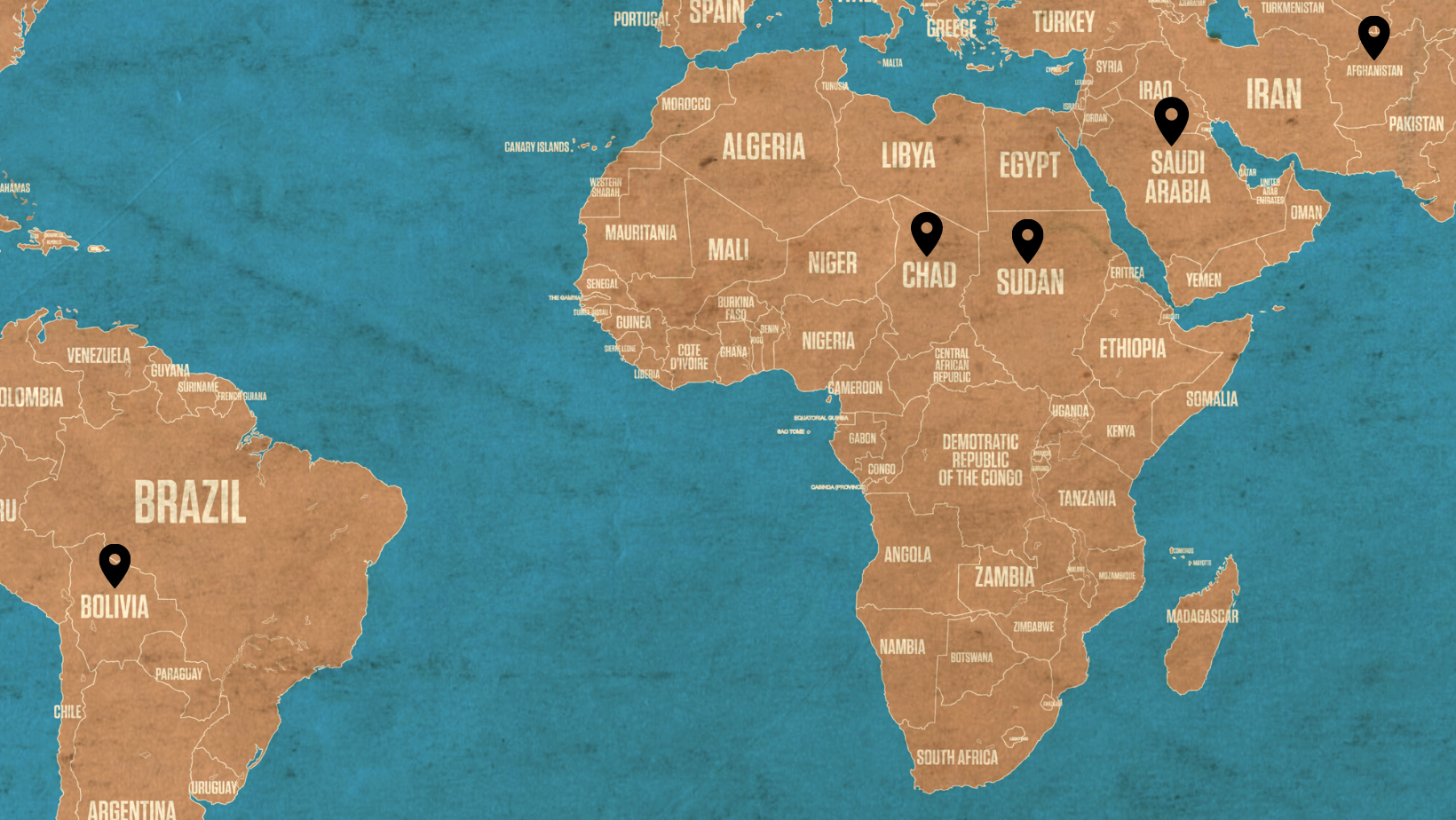
Afghanistan’s Nuristan and Kunar provinces

At the time this was thought to be the heart of Bin Laden country and that he was likely to be found hiding in one of its many cave complexes. We spent weeks on a small military base taking reconnaissance helicopters in and out and did a lot of hiking with different units. Sounds crazy to say it was idyllic at times, but it was. Away from the US military hardware the landscape was otherworldly, completely unspoiled and deserted – and the weather was perfect, never too hot or cold. And the CNN team I was with at the time was fantastic company.

Riyadh and Jeddah, Saudi Arabia

To be completely honest my heart always sank when I went to Saudi Arabia. I was always with an all-male team, and therefore largely excluded (not by them) while we carried out our newsgathering. There were almost never any hotel facilities I was allowed to use other than the all-female washrooms. But there I would find the friendliest, chattiest of women, immaculately groomed and made up under their thick black (and often designer) abayas. Even being arrested by the religious police for lowering my headscarf in the stifling heat of the grounds of the Hilton hotel in Jeddah ended with a pile of hardback books being left for me at reception. In the heat of the moment, we had to sign a confession scribbled down in Arabic on the spot. I still don’t know exactly what it says but it is framed on the wall in my bathroom. And I still have the books.

N’Djamena, Chad

We landed without visas, but had been deployed in a hurry from Baghdad. The correspondent I was travelling with was light years more experienced than I was, our photographer was at least two days away, we hadn’t been home for over two months and it seemed as if every single person I came into contact with just got it immediately. At the time we would have to travel with a voluminous amount of paperwork to account for all our broadcast equipment. Getting through customs – however high or low end the airport facility was – usually took ages, lots of examining and questioning. I remember opening my folder and the customs official just closing it gently over my hand. I still have the tunic that a hotel staff member handed to me on arrival. Almost fifteen years later its colours are vibrant as they were then.

El-Geneina, Darfur

This was the most desolate of landscapes, the most harrowing of stories, the most emotionally and physically exhausting of assignments. But we met some of the world’s finest and most generous humanitarians working with the most indomitable of human spirits. And I will never stop searching for the beguiling flash of Sudanese desert flowers somewhere other than the Sahara.

Los Salares de Uyuni, Bolivia

OK, I never worked in Bolivia but I spent a month there while I was at university. I studied languages and spent most of my so-called sandwich year in South America. And did we give that continent a good going-over. The salt flats of central Bolivia are still the most
otherworldly of sights I have ever encountered. Luminous white desert plains punctuated with blood-red, steaming geyser water. And the capital city of La Paz, set into a mountain like a giant bowl of humanity, is like no other city on earth. Except maybe Kabul, nestled in the middle of three circles of mountains, all sparkling with snow…

Posted on

The inspiration for Demon – Matt Wesolowski

‘We are each our own devil, and we make this world our hell.’ – Oscar Wilde

The inspiration for my latest novel, Demon, comes from a question I was asked by an audience member at an event a few years ago: ‘Can someone be born evil?’

I’ve worked in education for most of my adult life, specialising in helping young people who have emotional, social and behavioural problems. Some of my happiest times and most satisfying experiences have come when working in Pupil Referral Units with volatile young people from some of Newcastle’s most troubled and deprived areas. It’s a tough job, though, and takes a lot out of you on an emotional level, especially considering some of the things you hear about the lifestyles and backgrounds of the pupils. But I managed to connect with them, usually by remembering that there was still a child beneath the sometimes hardened exterior – a child worthy of respect and compassion.

Many of the young people in these sorts of units have come from dark places: childhoods rife with addiction, disorder, and in some cases abuse and neglect. Many of them have done bad things and committed crimes. One thing is almost universal though – they’ve all been labelled in some way: they’re all ‘bad’, they’re all ‘naughty’, and many of them have been written off almost entirely by the adults in their lives.

None of them, however, have been simply ‘born evil’.

There’s no one-size-fits-all reason that explains why young people do bad things; instead there’s a complex array of causes. It was easier in medieval times, when we could simply blame spirits and witchcraft for bad things happening. In Demon, I challenge the notion that we’ve moved on at all from this method – allocating simple causes to complex events. In fact I don’t actually believe we’re much further forward at all, which is why I introduced the trope of ‘demonic possession’ to the book – a convenient medieval explanation for an array of issues, which, alarmingly, is still propagated today by the Catholic Church.

At the heart of Demon is a societal taboo: children who kill. It’s a subject that has fascinated me for many years, but I did not feel educated enough to tackle it. Now, though, my experience working with troubled young people has given me some insight into the issue, which I’ve combined with a lifetime of consuming books, documentaries and, more recently, podcasts on the subject, all of which has helped inform my writing.

Sadly, and despite all my research, I’ve reached no conclusion about what causes children to commit murder. All I can say is there’s no single reason they do so. I know, however, from experience that when children feel like they don’t matter, they’ll do almost anything to try to correct this. When children do terrible things, they suddenly matter again. So when I was writing Demon, I formed a new question: one directed at society in general: what happens before and in the aftermath of a killing committed by a child? What could and should change to prevent the death?

In Demon I want to encourage all of us, as a society, to have to look at ourselves and ask tough questions about our decisions, the votes we cast in elections, and the ill-informed opinions we spout at each other on social media. I want us to reflect on the roles we play in a society where children kill.

I’ve stood at the school gates to pick up my son, in my comfortably upper-working class area, watching smiling children run to their waiting parents clutching paintings, feeling far from the troubles of the estates and those young people I’ve worked with. Yet I’ve seen said parents not even bother looking up from their phones as their children go for that hug. I’ve seen that moment of confusion or disappointment, and wondered about the subtle message that has been sent even here: You don’t matter.

I worry about the impact those moments have. I wonder how many times a day a child doesn’t matter. I wonder whether not mattering can provoke a desire in a child to matter. Because a child who kills matters. When your child does something terrible, suddenly Facebook isn’t important anymore.

Demon also explores the idea of blame, and where it lands in the wake of a tragedy. Who do we blame when children matter for all the wrong reasons? And what kind of justice and punishment do we imagine is appropriate when it comes to children? I know from my own experience that punishment simply doesn’t work. If it does, then why are reoffending statistics so high? With an adult, it’s easy: chuck them in jail and throw away the key, right? But what about when a child commits an unspeakable act? Are they worthy of redemption, or is that it – their life us forfeited? I don’t pretend I have the answers, far from it. In Demon, I’m trying to ask the reader the same question: it’s a tough and knotted one, and one I’m sure they’d rather not answer.

They might well prefer to adopt the alternative explanation for the killing I’ve offered them in the book: demonic possession. All the signs are there – any horror fan will spot them – and they’re the same ones people claimed to see in a young woman in Germany. Interestingly, it wasn’t any of the heartbreaking and well-documented cases of children who kill that was the biggest influence behind Demon; instead it was the case of Anneliese Michel, who died of malnutrition after undergoing sixty-seven exorcisms by German Catholic priests.

This did not happen in medieval times but in 1976.

Anneliese was diagnosed with ‘demonic possession’ after presenting with what was eventually identified as a complicated combination of temporal lobe epilepsy and mental-health issues. The medical and psychological treatment she required was replaced with a simple, ill-informed religious remedy.

In Demon every one of the six characters connected to the death of twelve-year-old Sidney Parsons has some other-worldly experience or sighting to relate, some ancient tale of witches and devils to tell. As with the priests who ‘treated’ Anneliese, perhaps it’s just easier to look outwards than back at ourselves.

But where does that leave us? If you believe a child is possessed by evil – has killed because their soul is corrupt – how do you prevent another child killing? And what punishment fits the crime of being possessed?

I am perhaps utterly unqualified to even discuss these things, because there are no clear answers to the big questions killing by children raises. I’m no better than any other parent, just trying to do their best and not always managing it. So what gives me the right to write a book about such a horrible, heartbreaking and all-too real event?

My answer is that I think it’s a writer’s job to reflect the society in which they live, and that sometimes things happen in that society that can’t be simply and neatly explained. With Demon, I’ve pushed a boat out into an uncertain sea, then cast us adrift. I wonder how different things will feel when we’ve found our way back to shore…

Posted on

Fall – My Inspiration. An interview with West Camel

Fall – My Inspiration.

In the late 1990s, the sprawling Pepys Estate in Deptford, south-east London, built in the optimistic 1960s, was almost crumbling into the River Thames. As part of a regeneration plan, Lewisham Council decided to sell off the estate’s riverside Aragon Tower so a developer could turn it into luxury apartments. But one resident refused to leave. The legal wrangles went on for months, and the refusenik was finally paid a huge sum to move out.

This story of the dilapidated tower with its single resident lingered with me for years. So when I finished my debut novel – the Deptford-set Attend – I decided to write my own version of the Aragon Tower tale. The result was Fall. In it, the Pepys Estate is transformed into a brutalist concrete edifice designed in the 1950s and 60s by genius-slash-benign-dictator architect, Zöe Goldsworthy. The single resident of Marlowe Tower is her son, Aaron, and the developer buying it is his twin brother, Clive.

Written during a time when London was (and is) experiencing an explosion of redevelopment, and just as the Black Lives Matter movement came to the fore, I decided to add a new element to the story, in the form of black twins, Annette and Christine. When they re-enter Aaron and Clive’s lives in the present day, all four characters are taken back to the summer of 1976, and the moment that would define them forever…

***

Deptford is a fascinating mixture of the modern and the historical, which is why I’ve chose to set both my novels there. Several other authors clearly agree with me. Here’s a selection of Deptford-set books you might like to try – after you’ve read Attend and Fall, of course…


A Dead Man in Deptford by Anthony Burgess – a historical novel about the murder of playwright (and Shakespeare’s mate) Christopher Marlowe (cf. Marlowe Tower in Fall).


Blood & Sugar by Laura Shepherd Robinson – eighteenth-century historical crime novel exploring the politics of the slave trade.


The Mermaid and Mrs Hancock by Imogen Hermes Gowar – also set in the eighteenth century, this one sees courtesans and mermaids mix in a historical fantasy.


The Family Arsenal by Paul Theroux – 1970s thriller in which a terrorist cell operates out of a quiet Deptford street.


The Deptford Mice by Robin Jarvis – children’s fantasy books following a community of rodents living in Deptford and warring with rats from the sewers.


Girl, Woman, Other by Bernardine Evaristo – set more in Peckham, Camberwell and Brixton, I include this Booker-winning novel because one character lives on Deptford’s Pepys Estate – the model for the estate in Fall.


Posted on

Thirteen thrillers in three years?

An interview with J.D. Kirk

In September, I had the pleasure of chairing an event at Bloody Scotland, with our own wonderful Antti Tuomainen and Doug Johnstone, and a new author to me, J.D. Kirk … a pseudonym for well-known Scottish children’s writer Barry Hutchison. I was intrigued by Barry’s story, and his route to extremely successful self-publishing, writing no fewer than thirteen adult thrillers inside two years, and topping the digital charts with his popular DS Logan series. He’s just launched a spin-off series, featuring irascible ex-police officer Robert Hoon, and we’ve caught up with him to hear all about it … not to mention how on earth he writes so quickly!

1. What encouraged you to try your hand at adult crime fiction, after a successful career writing children’s books? Do you still write them?

I actually never really set out to be a children’s author. I had an idea for a horror story that just happened to feature a twelve-year-old as the main character, and when HarperCollins picked up the series I just sort of fell into writing for children for the next ten years or so! I had loads of ideas for ‘grown up books’ but was so busy with children’s fiction that I didn’t get a chance to write one until 2016. That was the first in my Space Team comedy sci-fi series, and I haven’t written anything for children since, although I’d quite like to someday.

My first crime fiction book was actually inspired (albeit loosely) by a real life event, when I thought my daughter had gone missing. It turned out she was just hiding behind a bush to wind me up, but it got me thinking about what I would’ve done if she really had disappeared, and the story just grew from there.

2. You’ve published eleven books in your DS Logan series in just under two years. How do you do it?

I’ve actually published twelve now, plus the first Robert Hoon spin-off which is out this month. I’ve written the next Logan book, too, and am working on the second Hoon.

I have a ‘condition’ called aphantasia which means my brain works a bit differently to most people in that I have no visual imagination. I don’t ‘see’ pictures in my head, but instead think exclusively in words. I reckon this gives me an advantage when it comes to writing.

Also, I’m dead fast at typing, which also helps.

3. Tell us about DCI Logan … and what you think makes this series so appealing to readers.

DCI Logan is a pretty traditional crime-fiction police detective in that he is a troubled character who doesn’t necessarily do things by the book all the time. What seems to attract readers, though, is the humour throughout the stories, and the relationships between the characters.

I think a lot of crime fiction can be a bit morbid and depressing. Understandably, I suppose, given the subject matter. The Logan books do tackle dark and gritty subject matters, but there’s a vein of humour running through every story which helps them avoid becoming too bleak.

4. Do you think there is a place for more humour in crime fiction, particularly in the current circumstances/climate? How do you use it as a device?

I think there’s a place for more humour in pretty much every situation, and firmly believe the world would be a much better place if we didn’t take ourselves so seriously.

That said, I didn’t intend the Logan books to be funny. I had plotted out a dark, gripping crime thriller, and then I sat down and wrote the very first line – ‘The total collapse of Duncan Reid’s life began with a gate in the arse end of nowhere’ – and I realised that I probably wasn’t going to be able to play it completely straight, like I had originally intended. And I’m very glad that I didn’t.

Most of the humour, though, comes from the characters and their relationships with each other. They all know each other so well at this point that they bounce off each other nicely.

Although, in the thirteenth book, one of the detectives gets stuck inside a giant road safety mascot costume, so there’s the odd moment of slapstick type stuff, too!

5. Why did choose self-publishing over traditional agreements? You’ve been successful in multiple different forums and through different methods. Which do you prefer and why?

I hadn’t really given any thought to self-publishing until a high school asked me to go in and teach pupils how they could self-publish their own work. I had absolutely no idea how to do such a thing, but they were offering to pay me for the workshops, so I was damn well sure I was going to learn!

I wrote the first Space Team book in two or three weeks, and published it on Kindle. I had no money to spend on it, so self-edited, designed my own covers, etc., thinking that nobody was ever going to really see it, anyway.

Then, within a few weeks, it was massively outselling all my children’s books combined.

So, like with writing for kids, I just sort of fell into it by accident, really.

Since then, I’ve formed my own publishing company with foreign rights agents, a sales team, editors, cover designers, audio narrators, etc., all working to get my books out into the world. It all started just by uploading a Word doc to Kindle, though.

6. You have a new spin-off series being published this month, featuring the shamed copper, Robert Hoon, who is appeared in your previous series. What prompted this new direction, and will we see the return of Logan?

With the Hoon series, I wanted to set myself a challenge. He’s a bloody horrible character when we first meet him in the second book of the Logan series, and he doesn’t change much along the way. And yet, about half of the Logan readers absolutely adore him. The other half very much do not.

So, I wanted to see if I could take what was a fairly two-dimensional ‘angry boss’ character and give him enough depth and substance to have even the naysayers rooting for him. I have no idea yet if it has worked, but I’m looking forward to finding out!

But it definitely isn’t the end for Logan! I have no plans to kill him off or anything.

At least, not yet…

7. Tell us about the first book in the Hoon series, Northwind, and what you have planned.

It’s more of a Jack Reacher style thriller than a police procedural, and sees Hoon head to London to help look for the missing teenage daughter of a former army colleague.

While searching, he stumbles onto something much bigger, and the next two books in the trilogy will show how that plays out.

It’s more action-packed than the Logan books, and Hoon gets to channel his rage into something more productive than randomly swearing at his subordinates.

8. What would you say is the secret to your near-meteoric success? What advice would you give to aspiring writers?

Thank you, though I’m not sure I’d describe it as anything like that. I think persistence is the key. I’ve been a full-time author since 2009, and have written pretty much every day during that time.

Prior to that, I wrote pretty much every day since I was in school, when I first decided that ‘author’ was the job I wanted to do.

Turning up is half the battle. You can’t be a writer if you don’t consistently get words on paper. Even if they’re not brilliant words, that’s infinitely better than no words at all.

9. What book do you wish you’d written?

Harry Potter for the money and the theme park rides, Good Omens because it turned me from a casual reader to a dedicated one, and I’d love to do that for someone else.

10. What do you do in your spare time?

I have two children, a cat, a dog, and elderly parents and in-laws. I have no spare time. If I did, I’d finally learn to play my guitar properly.

11. Funny fact about you?

I’m explosively allergic to red peppers. I discovered this halfway to the United States on a flight when I was eleven years old. It did not make for a pleasant trip.

12. Murder weapon of choice?

Powdered glass. If poured in drinks and consumed, it’s apparently untraceable. I only know that because an old man who used to frequent a bar I worked in repeatedly told me. Usually while eyeing up the drinks of the other patrons.

13. What are you reading now?

The Rabbit Factor by Antti Tuomainen. Maybe you’ve heard of it? It’s very good.

14. Where do you see yourself in five years?

Somewhere warmer. Not too bothered where, just as long as it doesn’t rain as much.

I’d also like to be publishing other authors through my company. I’ve always loved sharing books I’ve enjoyed with people, so I suppose it would be a bit like that, but on the ultimate scale!

Blurb for North Wind

Former soldier. Ex-copper. Current man on the edge.

Shunned by his old colleagues, and dividing his time between a dead-end job and the bottom of a whisky bottle, former Police Scotland Detective Superintendent Bob Hoon’s life is a mess.

Then an old face from Hoon’s Special Forces days turns up asking for help: his teenage daughter has been missing for months, the police have drawn a blank, and he needs the kind of help that only Hoon can provide.

And besides, Hoon owes him one.

From the Highlands of Scotland, to the mean streets of London, Hoon’s relentless hunt for the girl will see him make new friends and encounter old enemies. Enemies who know what happened to the girl. And to hundreds more like her.

But Hoon’s been given something that makes him dangerous, something he thought he’d long-since lost: a purpose.
He may be a disgraced ex-copper, a barely-functioning alcoholic, and a borderline psychopath, but Bob Hoon still believes in justice.

And he’s just the foul-mouthed **** to dish some out.

Posted on

GUEST INTERVIEW: James Delargy and his chilling new thriller Vanished

We are absolutely delighted to have an exclusive interview with James Delargy, author of Vanished, which is out on 30th September (Simon & Schuster). A riveting, atmospheric thriller set in the Australian Outback, its complex narrative is full of eye-watering twists and it will leave you wrong-footed and utterly chilled.

Here’s what it’s about:

When you go looking for a new start, make sure you don’t find a nightmare instead. 

The Kane family, Lorcan, Naiyana and their young son, relocate from Perth to Kallayee, an abandoned mining town in the Great Victoria Desert to start over again, free from their chequered past.

The town seems like the perfect getaway: Peaceful. Quiet. Remote. Somewhere they won’t be found.

But life in Kallayee isn’t quite as straightforward as they hope. There are noises in the earth, mysterious shadows and tracks in the dust, as if the town is coming back to life.

But the family won’t leave. No one can talk sense into them.

And now, no one can talk to them at all.

They’ve simply vanished. 

Now it’s up to Detective Emmaline Taylor to find them… before it’s too late.

The fabulous Caz Frear called it ‘‘Intense, insightful and impossible to put down’, and we couldn’t agree more!

  1. ‘Outback Noir’ has become increasingly popular. What do you think is the appeal, and which books would you recommend?

The appeal of Outback Noir in my opinion is the endless opportunity and the room for manoeuvre that the blank canvas of the vast and mostly empty space provides. There is the inherent danger of the land itself, which is multiplied by the remoteness. There is the magnificent landscape that makes for a very rich well of ideas and offers any number of possibilities to entertain and shock the reader. This plus the threat and knowledge a reader has of what humans might visit upon other humans given seclusion and opportunity. And this breadth of options appeals to me as a writer to, the opportunity to visit anything on the page makes it a dream to write about.

As for top books, the first Outback Noir novel that I was introduced to was The Dry, which was suggested to me by my agent after I had submitted my novel – 55 – to her. I was lost in the magnificence of it and it immediately made me a Jane Harper fan, though if I had to choose one book – and had to choose – then I would plump for The Lost Man, which is a deliciously fantastic piece of storytelling and family dynamics.

As for other novels and novelists in the general Outback Noir arena I would definitely suggest visiting Chris Hammer’s Scrublands, Susan Allott’s The Silence, anything by Mark Brandi or Emma Viskic, and recently a writing friend of mine introduced me to Garry Disher and I quickly fell in love with his Paul Hirschhausen series.

  1. Is writing a second book harder than it looks? What was your experience?

Every book is hard. I haven’t come across one that hasn’t been a struggle at some points. Maybe someday.

In my experience books are about the central idea. If the idea comes quickly, fully enough formed, or has that internal motor that breeds and feeds ideas then the whole process is akin to being on a boat sailing across the ocean. When the ideas are flowing that engine powers the boat along, cutting through the waves or anything that seeks to halt that progress. But if that engine or idea isn’t there then it comes down to sheer exertion to power the boat, getting tossed around on the waves. The process is the same but it is rockier and there is a lot more perspiration and frustration involved.

As for Vanished being a second book, it both is and it isn’t. I have a number of other unpublished novels so my first novel – 55 – was, in fact, the eighth novel that I had completed, so after finishing 55, the issue became: Can I find that inspiration or key that set 55 out from the rest of my work and from the many other novels being published? Could I recapture that inspiration?

The final result isn’t for me to judge but I did find this novel more difficult to plot. For Vanished I wanted the reader to be in the shoes of both sides of the story – both past and present – the detective working the investigation trying to find out what happened to the family, alongside what actually happened to the family. This was the hardest part of the novel to balance, the different storylines and points of view, so when I was outlining it I had to write each person’s story out in full, then try to weave them in together so that the two main timelines fed into each other pushing towards a thrilling climax and the truth of what happened out there, in the desert.

  1. Tell us about your inspiration for Vanished. Does everyone secretly want a chance to start again … to go somewhere new and to forget their pasts? What was your starting point for this book? Was it written in the pandemic, when we all wanted to escape?

The setting of the abandoned mining town of Kallayee plays an integral role in the novel and in fact it was the genesis of the story itself. As a break from what I was working on, I was wasting time doing some random Internet and Wikipedia searches on abandoned railway stations close to where I live – what they looked like then and now – for absolutely no reason other than curiosity. Following this wormhole for a while I ended up on some pages regarding abandoned towns in Western Australia. Which got me thinking; what if someone decided to live in one of these towns? Even a whole family? Why would they want to move there? Why would they need to move there?

This was all I had at the start but the novel quickly expanded from that simple idea of a family moving to an abandoned town into discovering the reason why they had moved and creating the mystery of what had happened to them out there, seemingly all alone, trying to create a new life. The simplicity of the idea – and as mentioned above, the landscape – allowed plenty of scope to create and craft and the novel ended up being a pleasure to write. Eventually.

As for the pandemic, the first draft of the novel was mostly in order before it arrived so it didn’t impact what I was writing but even without it I have always liked to write books about escape in some form and that can be said of a lot of my other unpublished novels, from horror, to zombie, to 1930’s Scotland, to Serbian cops fleeing their homeland to become illegal immigrants in Ireland. And in my opinion that’s what the central job of a book is. To act as an escape. An escape into someone else’s created world, a dip into their imagination. Plus I do enjoy transporting myself to remote locations. It is like a holiday in itself. And we could all do with a holiday right now!

James Delargy was born and raised in Ireland but lived in South Africa, Australia and Scotland, before ending up in semi-rural England where he now lives.

He incorporates this diverse knowledge of towns, cities, landscape and culture picked up on his travels into his writing. He would like to complete a round-the-world series of novels (if only for the chance to indulge in more on-the-ground research).

His debut thriller, 55, was published in 2019 by Simon & Schuster and has been sold in twenty-one territories to date.

Chat to him on Twitter: @jdelargyauthor, or visit his website: Jamesdelargy.com.

Most importantly, buy here:

Bookshop.org – HERE

Waterstones – HERE

Kindle – HERE

Posted on

Ragnar Jónasson’s Dark Iceland series to be adapted by Warner Bros.

Warner Bros. International Television Production Germany (WBITVP Germany) has acquired the exclusive international rights to bestselling Icelandic author Ragnar Jónasson’s Dark Iceland series. The series will be co-produced with Herbert L. Kloiber’s Night Train Media.

Jónasson said: “I am incredibly honoured and thrilled to be working with Warner Bros. ITVP Germany and Night Train Media. It will be a dream come true to see Ari Thór and the ‘Dark Iceland’ series brought to life on the screen, and I believe that in Warner — with its strong vision and long history of fantastic storytelling — we have found the perfect partner for that adventure.”

You can read the full article about the acquisition here:

https://variety.com/2021/tv/global/ragnar-jonasson-dark-iceland-novel-adaptation-warner-bros-1235036095/


Posted on

26 August: Launch event at The Portobello bookshop – Doug Johnstone in conversation with Helen FitzGerald to launch The Great Silence

Doug Johnstone will be celebrating the publication of the third book in his The Skelfs series, The Great Silence. He’ll be in conversation with fellow crime writer Helen FitzGerald.

The event will take place at The Portobello Bookshop at 7pm on the 26th August.

The event will be streamed live from the bookshop to attendees viewing from home. There will also be a small in-person audience of up to 25 people.

There are several ticket options for the event:

Option 1: In person ticket and signed copy of The Great Silence – £8.99

Option 2: Livestream ticket and signed copy of The Great Silence – £8.99

Option 3: Livestream ticket and £3 voucher to use in-store or online – £3

They can all be purchased from:

https://theportobellobookshop.com/event/doug-johnstone-the-great-silence/