Posted on

Q&A with Thomas Enger & Johana Gustawsson

  1. Could you please introduce yourselves and your upcoming release, Son. Ladies first!

Johana: Bonjour! I’m Johana Gustawsson, I am a French writer living in Sweden after more a decade spent in London, where my three sons were born. Son is the first instalment of our new Kari Voss thriller series, where Dr Kari Voss, a social psychologist, gets entangled into the horrific death of two teenagers who used to be her missing son’s best friends. 

Thomas: Hei, hei. I’m Thomas Enger, I’m originally from a small town called Jessheim, but for the bigger (and maybe better) part of my life I’ve been living in Oslo. Having worked as a journalist for many years, I made my debut as an author back in 2010 with my Henning Juul series. Hooff, that makes me feel old.

  1. What would you say were the most rewarding aspects of writing as a duo?

T: I’ve always enjoyed teamwork in general a lot. To create something with another person is so much more fun than just doing it by yourself. It doesn’t mean that it’s half the work, of course, but what I find really enjoyable is just to throw ideas back and forth with someone as brilliant as Johana. Whenever we find ourselves backed into a corner, it’s easier to get out of the predicament as well, whatever it is, when you’re two.

J: Yes, and it’s the stimulation that I love the most. It’s always such an amazing and gratifying feeling to get the creative wheel running so fast that ideas pop every minute! Two brains are always better than one.

  1. Could you talk us through your collaborative writing process? Does one of you handle plotting while the other focuses on character development, for example?

J: Funnily enough, we do it all together: plot, talk about characters, editing. We just split off the research as I love that process to bits and Thomas is not fond of it. It’s almost hard for me to stop researching and start writing! So, I was responsible for most of the science linked to body language and memory, and created notes that Thomas could study. I know, It’s totally geeky! 

T: What I can add is that Johana was the primary writer on the chapters involving Kari, precisely because she had done most of the research, whereas I took more of the lead on some of the other characters. Having said that, we would always edit each other – add stuff, take away stuff – so in some of ‘my’ chapters there is a lot of Johana’s writing as well, and vice versa.

  1. How do you maintain a consistent voice and style in your work?

T: We write differently in our mother tongues; the structure of the sentences can be completely different at times. It’s possible that we sort of grew into a certain way of writing as well, adapting to each other in terms of syntax and grammar. Or maybe we just got very lucky. 

J: We never really thought about it consciously, I think, but maybe we secretly just hoped for the best! As Thomas touched upon, we can easily have a dozen versions of the same chapter, sending it back and forth between us, so I guess our voices somehow ended up as one. 

  1. Are there certain aspects of your collaborative writing that you both prefer over other aspects. For example, certain themes, scenes?

T: I prefer the actual writing the most. Dialogue, in particular. That’s where and how we really get to know the characters, hearing how they talk and seeing how they interact with other people.

J: I like it all but, but, but, I fear the worst when I have handed a chapter to Thomas, and he comes back with a long, over-elaborative sentence. I know then that the ‘but…’ is coming, and that I’ll have to rewrite extensively!

  1. Could you tell us more about your main characters: psychologist Kari Voss and Chief Constable Ramona Norum?

J: Kari Voss is a social psychologist expert on body language and memory who is grieving her missing son. She is very close to her father Hans-Christian, former Chief of the Oslo police, and to chief constable Ramona Norum with whom she has been working many criminal cases. Kari is hard-working, stubborn, and bloody brilliant.  

T: Ramona, I would say, is a modern-day life policewoman in the sense that she juggles the every-day challenges of being a mother of two sets of twins with her partner Linnea, as well as heading up the high-profile investigation of the brutal double murder. Ramona was, actually, in part, based on my sister Hege, who lives in Trondheim with her partner Anita and their five children. Hege is not a policewoman, though, but a brilliant doctor. 

  1. Do you have any rituals or routines that help you get into the collaborative writing zone?

J: To be honest, as soon as we talk plot and solve problems, we are in our creative bubble – it really is a magic thing. Even when my sons interrupt our conversations, popping into my office to ask me this and that, and end up talking to Thomas too, we go back to our mystery solving very quickly. I guess we are on the same work and creative frequency! 

T: I think Stephen King said it the best: ‘Amateurs sit and wait for inspiration, the rest of us just get up and go to work.’  

  1. What’s the best piece of advice you’d give to aspiring co-authors?

J: Write every day. Plan for 15 minutes daily. Sick, tired, drunk, no excuse accepted. Then increase that time until your story takes over and you get addicted to spending time with your characters. 

T: And – read. Read a lot. Read everywhere and all the time. If you find an author or a type of story that you love reading: Study it or study them. There are secrets to be found on every page.

Posted on

Fact or Fiction? Ten Shocking Truths in The Cure

Fact or Fiction? Ten Shocking Truths in The Cure
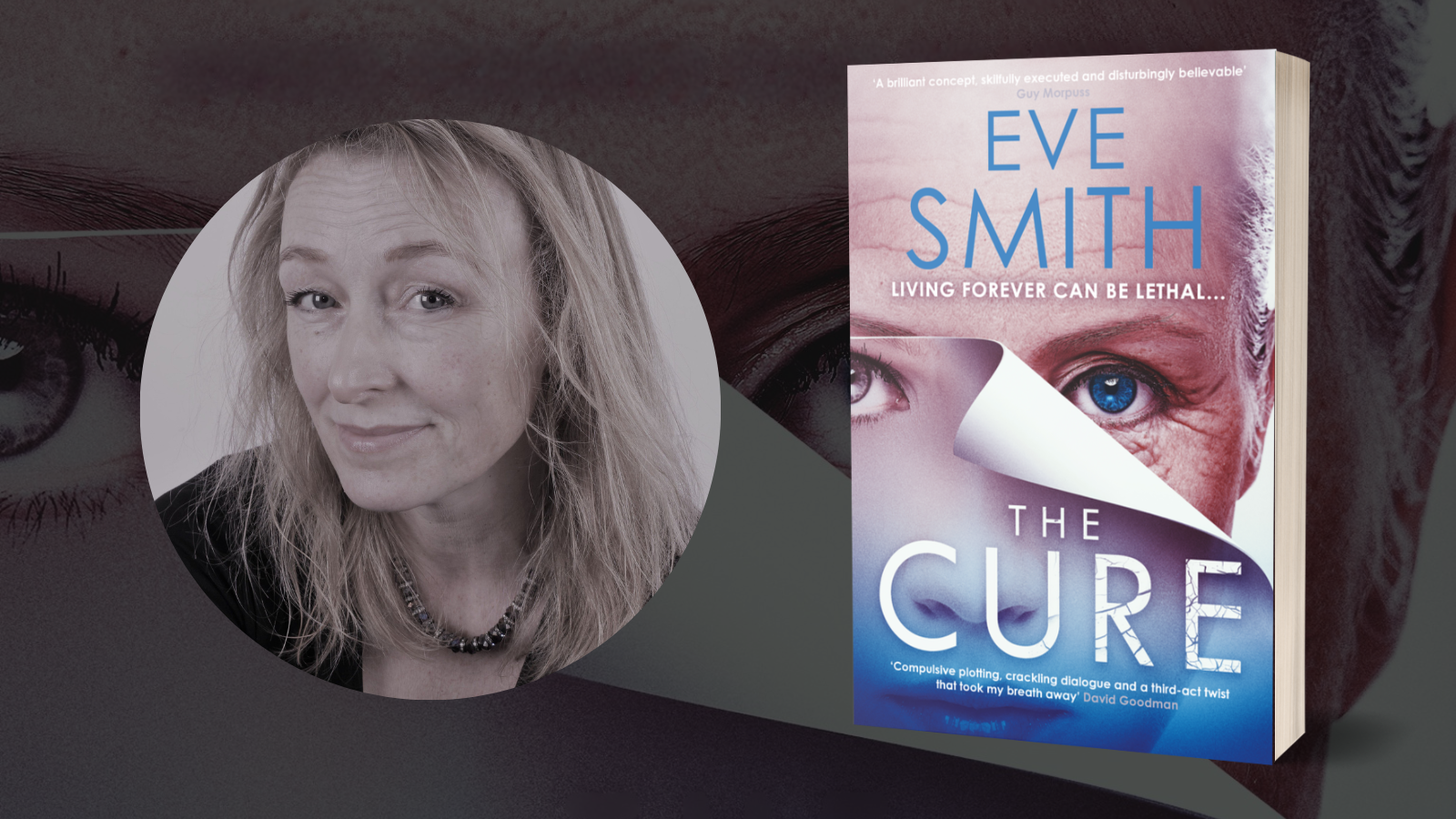
Eve Smith

You might assume that the cure for old age discovered by my protagonist Ruth is entirely fictional. While elements of the ReJuve injection are made up, most of the anti-ageing research in my book is inspired by scientific trials for therapies that have either happened, are currently in development, or on the market now. 


And those aren’t the only events based on fact. Read on for some disconcerting truths in The Cure

1. ‘Modern Day Vampires Source Black Market Blood To Stay Young’
This news article in The Cure was inspired by a real news story about a biotech startup in California that sold teenage blood plasma to elderly clients for thousands of dollars, claiming it would make them younger. 

This claim was based on some grim research experiments that joined old and young rats together, so their blood circulation was shared. Incredibly, the old rats became younger. There’s no evidence that the human blood plasma venture worked, but a study published this year suggests there may be more to ‘young blood’ infusions than we thought…

2. A Nobel Prize-winning scientist had Ruth’s Hitler nightmare.
In The Cure, Ruth has a nightmare about a rejuvenated Hitler praising her for her discovery.

A scientist called Jennifer Doudna famously reported having a similar nightmare. She had developed a groundbreaking gene-editing methodology, and claimed the nightmare was motivated by her fears about the abuse of her discovery, in particular eugenics.

3. One company is already selling a version of my fictional rejuvenation therapy.
For just over a million dollars, you can purchase a procedure called ‘The Terminator’ (yes, really): a series of gene therapies that target critical ageing-related parts of your body. It’s not licensed, and it’s never been tested, but the first person will be trialling it this year.

4. ‘Is Erik Grundleger Unstoppable? The ‘Super’ scientist now wants to bring people back from the dead’

This news article in my book also has its basis in fact. 

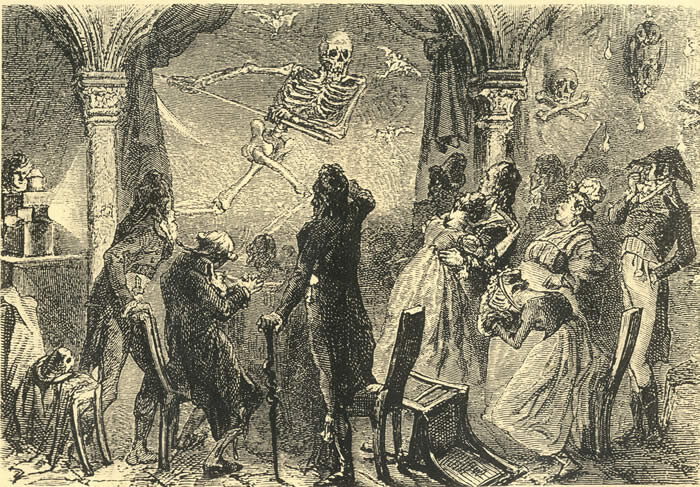
Cryopreservation is where deceased bodies are preserved with a sort of human antifreeze and stored at very low temperatures in tanks. And that’s where they stay until someone figures out how to revive them, and whatever condition they died of can be cured. Cryonics pioneers started operating decades ago in the USA, but a Berlin facility recently opened its doors, so now you can be frozen in Europe, too.
 

5. GigaCities are on the horizon
In my novel, the population growth resulting from extended lifespan has driven the emergence of ‘gigacities’: vast urban areas containing over one hundred million people. While this hasn’t happened yet, there has been a rise in megacities, which have over ten million residents. There are already thirty-five (including Tokyo, Lagos and Shanghai), with an additional fourteen projected by 2050.
6. The genetic disease that killed Ruth’s daughter is real.
In The Cure, Ruth stumbles across a cure for ageing, while researching the cruel disease that killed her young daughter, Lettie. Tragically, the condition I based this on exists.

Progeria is a rare terminal disease that afflicts children, prematurely ageing their bodies at eight to ten times the normal rate. Most die in their teens, often of heart disease, or strokes. There is no cure.

7. Fifty-two countries imposed new death sentences in 2023. 
In my thriller, illegal ‘age traitors’ are sent to an expiration facility to be executed. The procedure I describe is exactly what prisoners on death row are subjected to, who are killed by lethal injection. 

Amnesty International recorded 1,153 executions in 2023, marking the highest number of executions in almost a decade. 

8. The Parcel Poisoner who targets the homeless in my book was based on a serial killer called the Teacup Poisoner.
Graham Young poisoned his victims using a cocktail of homemade poisons, including a tasteless, odourless heavy metal called thallium. A disturbed man with a troubled youth, he had a fascination with Hitler, serial killers, and the occult.

9. The stats about biodiversity loss in the book are already true.
A report from WWF’s Living Planet Index estimates global wildlife populations declined by 73 percent between 1970 and 2020. 

They attribute this decline predominantly to human-driven habitat loss, pollution and climate change. Which makes you wonder, what will happen when the human population reaches 10 billion, which the UN predicts will occur by 2058? And that’s before we factor in the impacts of a cure for ageing.

10. The first genetically manipulated babies have been born.
The genetic modification of human babies is illegal in this country, and most nations have very strict protocols because of the dangers of unknown adverse effects. But in 2018, one Chinese scientist announced that he had edited the genes of twin baby girls as well as a third baby, before birth. He was sentenced to three years in prison.


Eve Smith is the author of The Cure.

Posted on

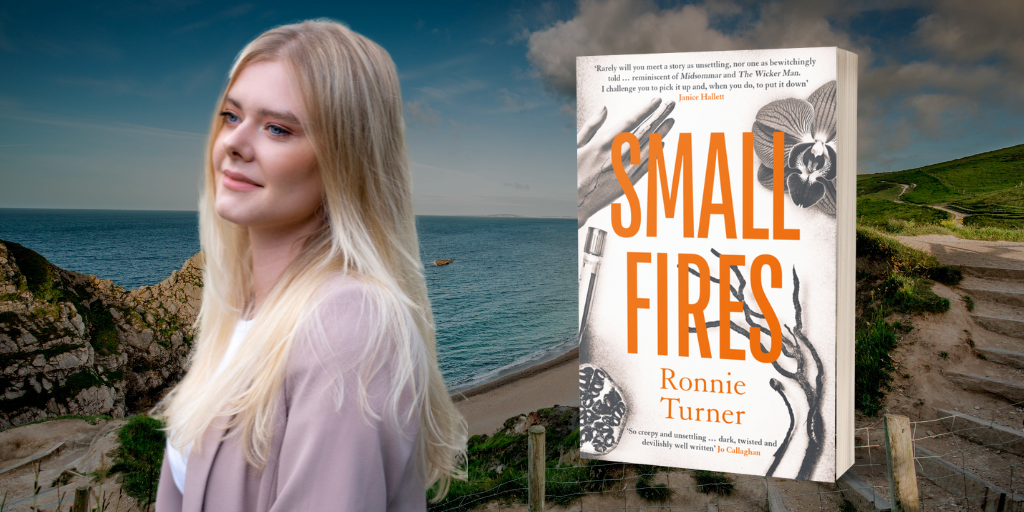
Cornish Folkore and Small Fires – Ronnie Turner

Cornish Folkore and Small Fires

Ronnie Turner

In my second novel Small Fires, I’ve paid homage to storytelling across all many mediums. I’ve tipped my hat to stories from Greek mythology, from the Bible, from legends across the world. But I have also been hugely inspired by Cornish folklore and legend, and I’ve used it to enrich the lore of my fictional island – Godforgotten – in this book. Here are five ways that I’ve woven the Duchy (now my home) into the novel.

The Legend of the Giant Bolster and Agnes

Legend says that a cruel Cornish giant fell in love with a beautiful woman called Agnes. He pursued her relentlessly, until one day she devised a clever plan to stop her pursuer. She asked him to fill a hollow in the cliff above Chapel Porth beach with his blood to prove his love for her and win her love in return. But what Bolster did not know was that there was a crack in the hollow and as the hours passed, his blood flowed out into the ocean until he eventually died and Agnes, by might of her mind, won her freedom. 

A chapter entitled ‘A Women, Burning’ is entirely inspired by this wonderful legend. You might recognise Bolster and Agnes in my characters Silas and Gaia.

Did you know the village of St Agnes (aptly named) has an annual festival and parade to celebrate this classic Cornish story? It’s wonderful and I try to attend every year!

The Legend of the Giant of St Michael’s Mount

This legend stretches as far back as the sixth century, when a giant called Cormoran lived on St Michael’s Mount, and regularly terrorised the folk of Marazion, stealing their livestock. One day, a humble boy called Jack crept up the Mount in the night and vanquished the giant, freeing the Cornish folk from their foe. Henceforth, he was called Jack the Giant Slayer.

This legend inspired the chapter ‘Knocking in the Earth’, in which I pay homage to Cormoran and Jack and weave this legend into a frightening story told between sisters on the shore of Marazion, with the Mount watching them in the distance.


The Cornish Knockers

Otherwise known as Buca, the Cornish Knockers are malevolent spirits or ‘fairy folk’ who lived in the tin mines and knocked on supports to bring the ceilings down and  cause harm to the miners. They have many names, and take many forms in different parts of the world, but they are prominent in Cornish folklore for being sinister and mischievous.

I bring the knockers into the chapter ‘Knocking in the Earth’ to give you a glimpse of my two Cornish sisters, Lily and Della, their heritage and the darkness of their relationship.


The Celtic Goddess, Aine

Aine, also known as Áine or Anu, is a prominent figure in Celtic mythology as the goddess of love, fertility, and sovereignty. She is revered for her beauty, power and grace.

I wove this figure into the folklore of my fictional island in the chapter ‘Aine’s Well’, exploring what it means to be a mother, and to love and be loved – a strand to give some light and redemption to what is otherwise a very dark tale.


Kennel Vale

Moving away from folklore and legend to a very true historical event at Kennell Vale, a beautiful woodland with a dark past as a gunpowder mill. In 1838, five mills exploded in succession, killing one man and seriously injuring another. Ghosts are rumoured to roam Kennell Vale and many sightings have been recorded.


This location features in a chapter called ‘Soul Factory’, and, once again, is a backdrop for my Cornish sisters, Lily and Della, and their strange childhood.

Small Fires, by Ronnie Turner, is out today.

Posted on

January 2025 Kindle Monthly Deals

UK Kindle Monthly Deals

All of the below titles are UNDER £1.50 throughout the month of January.

Click on the images below to get your copies now!

Australia & New Zealand Kindle Monthly Deals

All of the below titles are UNDER $2 throughout January

Click the images below to get your copies now!

Posted on

Olivier Norek’s Between Two Worlds is a Times and Sunday Times Crime Book of the Year.

Olivier Norek, whose historical novel The Winter Warriors will be published by Open Borders Press in September 2025, has had his crime novel Between Two Worlds named a Crime Book of the Year for The Times and The Sunday Times. The article calls Between Two Worlds “an exceptional novel”. For the full listing, see the article here: The Ten Best Crime Books of 2024.

Posted on

Katrín Júlíusdóttir’s Top Places to Visit in Iceland

On and off the beaten track…

1. Public swimming pools. You can find a public pool in every town around the country and every neighbourhood in the Capital, Reykjavík. The pools are heated and most of them have a wonderful spa area. It is truly magical to enjoy the warmth of an outdoor hot tub on a dark, cold winter night.

2. Harbours. Breathing in the fresh air and listening to the seagulls on the rugged Icelandic coast is just the best, and the sea seems to stretch endlessly into the distance. One of my favourites is Stykkishólmur Harbour, a beautiful port located on the Breiðafjörður Fjord, on the north coast of the Snaefellsnes peninsula in western Iceland.

3. Dimmuborgir (Dark cities/forts). Close to Mývatn in the North of Iceland, these are dramatically shaped lava fields where you can let your imagination loose amongst the caves and strange rock formations. I like it best when the weather is foggy or even rainy – it’s possible that you will see elves going about their day, but you must believe they are there. Pssst… they are there!

4. Húsavík. The oldest settlement in Iceland, Húsavík is a beautiful seaside town in the North East of Iceland, with great whale watching, delicious food and postcard-perfect scenery. I always recommend visiting Geosea, a geothermal sea bath with the best view out to the ocean.

There are many, many more wild, extraordinary places to visit in Iceland, particularly if you want to get away from the more visited spots. Message me on social media and I’ll give you some great tips!


Katrín Júlíusdóttir’s award-winning debut mystery, Dead Sweet, translated by Quentin Bates, is out in paperback on 7th December 2024.

Posted on

December ’24 Kindle Monthly Deals

UK Kindle Monthly Deals

The below title is ONLY 99p for the month of December! Click the jacket to get your copy now!


Australia & New Zealand Kindle Monthly Deals

All of the below titles are UNDER $2 for the month of December! Click the images to get your copies now!


USA & Canada Kindle Monthly Deals

All of the below titles are UNDER $2 for the month of December. Click on the images to get your copies now!

Posted on

Five Facts – The Inspiration for Yule Island – Johana Gustawsson

Five Facts

The Inspiration for Yule Island

Johana Gustawsson

  1. A secluded Swedish island: A dear friend of mine came to see me as I was unpacking my boxes in my new Swedish home and she said to me: ‘Johana, I’ve come here with best reasons why you should write about the Swedish east coast. Just down the beach, five minutes by boat from here, there’s a small pedestrian island home to just over 250 inhabitants and it has its own haunted mansion.’ And the first seed of Yule Island was planted. 
  1. A haunted house: While doing some research, I discovered that this haunted mansion located in the heart of the pedestrian island of Storholmen, was built at the beginning of the 20th century by Gunnar Kassman, a wealthy Swedish banker who reminded me of the Great Gatsby, as he and his wife organised lavish parties for the Stockholm elite in their magnificent residence, which, legend says, is now haunted by the late Mrs Kassman. And there seems to be some truth to this story.
  1. A pirate treasure-hunt gone wrong: The former owner of my own home on the island of Lidingö, east of Stockholm, had left some furniture, including a magnificent 17th-century dressing table with a set of silver brushes. While I was unpacking, Alexander, one of my twin boys, dressed as a pirate, dropped one of the brushes. A friend of mine, who was helping us move in, picked it up and handed it to Alex, saying: ‘I don’t think there’s a treasure map in there… but maybe an SOS?’ And another crucial element of Yule Island was born. What kind of SOS…? A message from the past?
  1. Viking rites: Having been fascinated by Greek and Roman mythology from a very early age, writing about Sweden drew me into the cauldron of Norse myths and Viking legends. And it was while reading an article about the ‘draugr’, the undead who refuse to rest in their graves, that a large part of the puzzle within the pages of Yule Island took shape. 
  1. A cameo: A body is found in the frozen sea of a bay located in the north of Lidingö Island, opposite Yule Island. My house makes a cameo in this scene: it’s the green and red house that one of the bathing grandmothers talks about.

Yule Island, by Johana Gustawsson, translated by David Warriner, is out today in paperback. Signed copies are available from your favourite bookshop!

Posted on

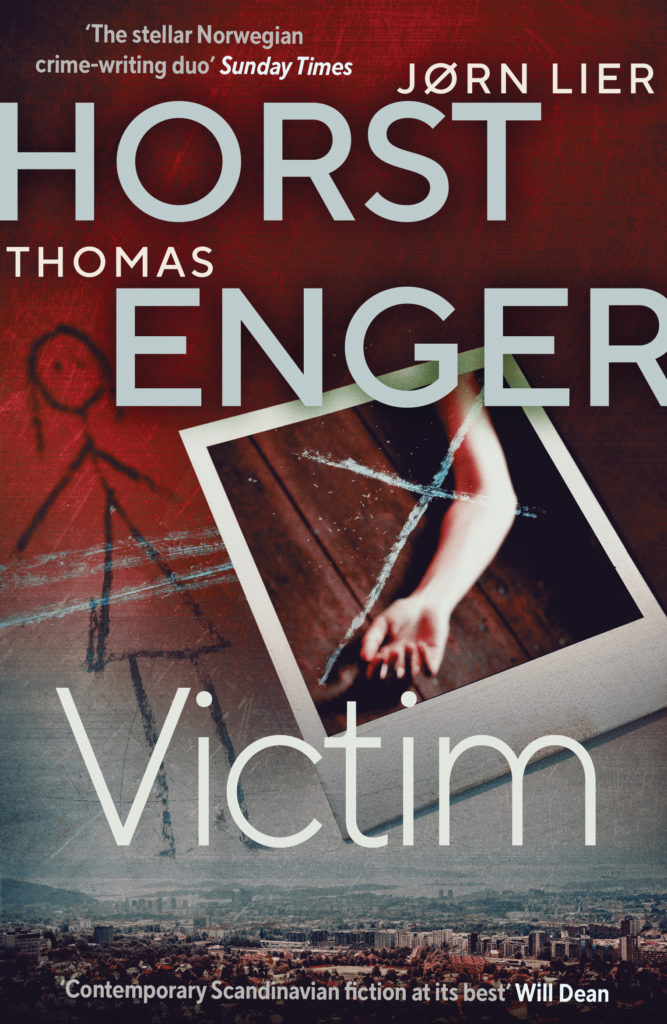
A murderer amongst us… by Jørn Lier Horst

Anonymous letters. I’ve received a few…

It’s strange that a letter without a sender’s name can somehow feel more personal. As an investigator, I’ve received letters like these, not only directed at me and the cases I’ve worked on, but also filled with the most imaginative views of the world – also sent because I’m an author. 

These letters – long and conspiratorial, full of loose threads, or short, terse messages – have an almost obsessive quality, and there’s something fascinating yet deeply unsettling about a sender who has a story to tell but doesn’t want to divulge their identity.

Receiving anonymous letters is like looking into a reflection of your own life, seen through an unfamiliar lens. You don’t know the angle from which the sender views you, or why they chose to write specifically to you. Each letter becomes a kind of riddle – one you can never quite solve because there are missing pieces that will never materialise. I’ve wondered if being an author makes me seem like a key figure in others’ dramas, someone they feel can provide answers to everything that eludes them.

One summer, a letter like this arrived every single week. Every one of them carried the same warning about a murderer being amongst us — and they suggested that this was something that I not only knew about, but had actively covered up. After months of these regular arrivals, they suddenly stopped, as if the sender had simply lost interest or their mission had been accomplished.

There was no threat in the letters, just an unsettling feeling of invasion, a kind of warning that someone was watching what I did. I never found out who was behind the letters, but I would have liked to ask a few questions – not least to understand what made this person spend so much time on me.

There’s something about these letters that goes beyond the message itself. They have a unique psychological effect – a tiny grain that burrows under your skin, a reminder that others are witnessing what you do, keeping an eye on you, watching. And it was precisely this anonymous invasion of privacy that laid the foundation for the fifth book about Alexander Blix and Emma Ramm.

The plot in Victim is based on the last case Blix was responsible for as a police investigator. It was a missing persons case, where single mother Elisabeth Eie disappeared. But the investigation was set aside when Blix himself was arrested for avenging his daughter’s murder in book four. Now his days mostly consist of quiet walks with his dog. Until he finds an anonymous letter with a photo in his mailbox – a photo of a murdered woman. Elisabeth Eie is no longer a missing person case; it’s murder…

Translated text from the letters

Jørn Lier Horst says: there is a murderer among the people

The demon created humanity.

The best crime novels shed light on current social issues.

Envelopes