




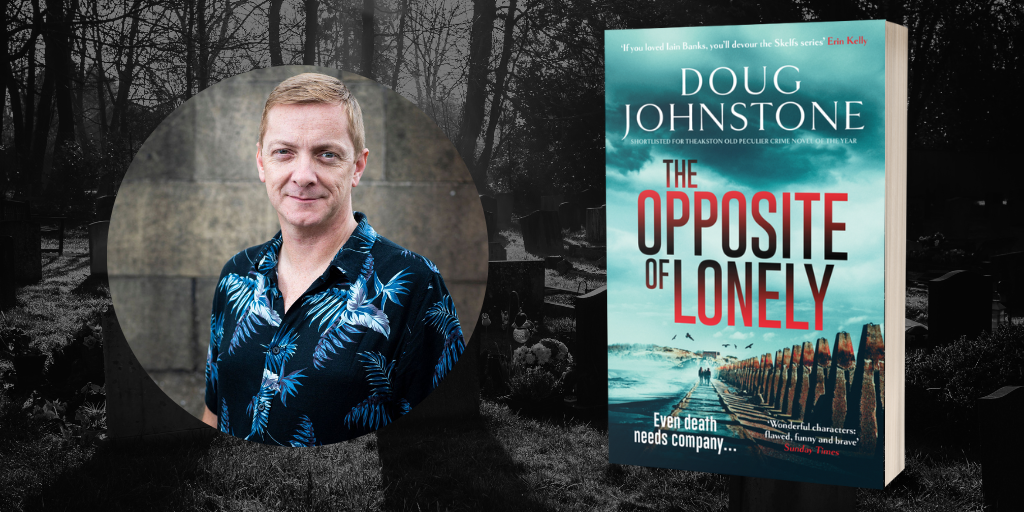
The inspiration behind the latest book in the Skelfs series – The Opposite of Lonely – comes from a whole host of places, as it always does with these crazy, diverse, complex books. If you don’t know, the books are about three generations of women from the Skelf family who have to take over the running of both a funeral-director firm and private-investigator business when the patriarch of the family dies.
This is a great set-up that allows me to investigate pretty much anything I want, and that’s just as true of this book as its predecessors. The novel opens with a potential disaster at a funeral on Cramond Island off the coast of Edinburgh. Cramond is a tidal island, and let’s just say someone doesn’t read the tide timetable very well.
This opening kicks off a storyline that concerns a group of itinerant people who have parked their caravans and campers on the shore next to Cramond Village, drawing criticism from the locals and authorities. These people aren’t ethnic Travellers, more just people who prefer the travelling lifestyle, and I’ve long been fascinated by that idea.
This was crystallised when a similar group arrived in my local community and were met with extreme online and in-person reactions. I found that really depressing, that local folk just disregarded and abused them. What happened to the idea of live and let live? I wondered if that anger was partly a result of jealousy – these were people who seemed more free than the rest of us. They were also vulnerable, so an easy target.
In The Opposite of Lonely two of the travellers are victims of an arson attack, and Dorothy, the head of the Skelfs, investigates. What she finds is more dangerous and poisonous than even she could’ve expected.
Without giving anything away, that storyline is to do with abuse of power. This ties into one of the other plot lines in the book, where Dorothy’s granddaughter Hannah investigates a former astronaut being abused by conspiracy theorists. The ex-astronaut, Kirsty, is a hero of Hannah’s, and she is drawn into her orbit despite her better judgement, with dangerous consequences.
This story partly stems from my interest in something called the overview effect, where astronauts return to earth having had a profound, almost religious, experience in space. The psychological effects of going to space haven’t really been investigated, and I found it fascinating to dig into what that might do to a normal person. Needless to say, it’s a crime novel, so it doesn’t end up with a happy-ever-after.
There’s so much else that inspired this book, same as all of the books in the series. But the overall themes have remained the same throughout – looking at issues of power, forgiveness, empathy and, above all, human connection. I hope this book lives up to its predecessors, but I’ll let the readers be the judge of that.


