Posted on

Q&A with Thomas Enger & Johana Gustawsson

  1. Could you please introduce yourselves and your upcoming release, Son. Ladies first!

Johana: Bonjour! I’m Johana Gustawsson, I am a French writer living in Sweden after more a decade spent in London, where my three sons were born. Son is the first instalment of our new Kari Voss thriller series, where Dr Kari Voss, a social psychologist, gets entangled into the horrific death of two teenagers who used to be her missing son’s best friends. 

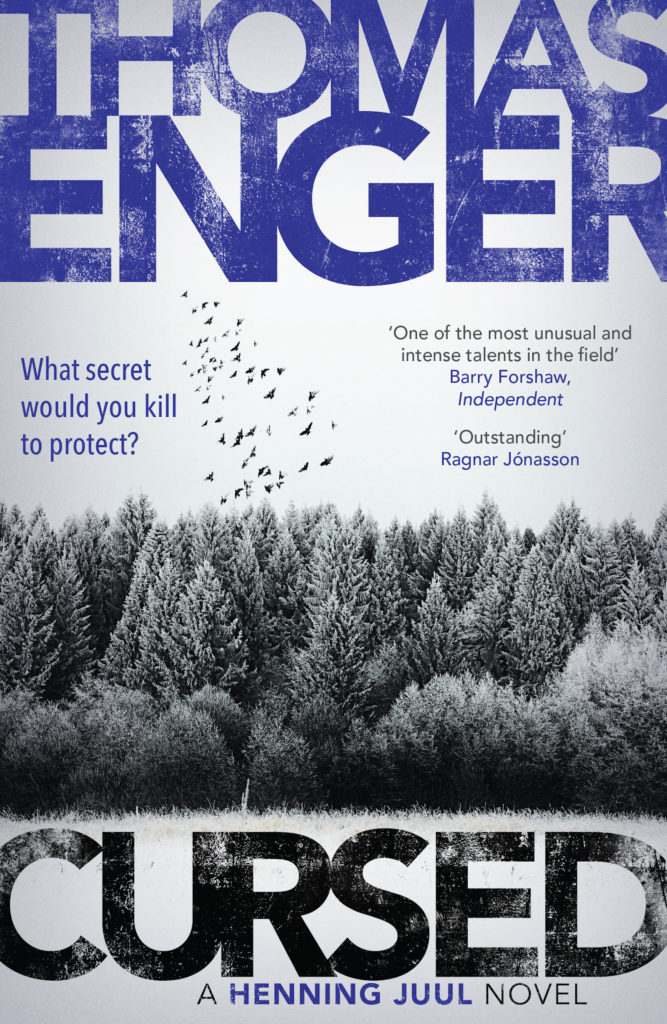
Thomas: Hei, hei. I’m Thomas Enger, I’m originally from a small town called Jessheim, but for the bigger (and maybe better) part of my life I’ve been living in Oslo. Having worked as a journalist for many years, I made my debut as an author back in 2010 with my Henning Juul series. Hooff, that makes me feel old.

  1. What would you say were the most rewarding aspects of writing as a duo?

T: I’ve always enjoyed teamwork in general a lot. To create something with another person is so much more fun than just doing it by yourself. It doesn’t mean that it’s half the work, of course, but what I find really enjoyable is just to throw ideas back and forth with someone as brilliant as Johana. Whenever we find ourselves backed into a corner, it’s easier to get out of the predicament as well, whatever it is, when you’re two.

J: Yes, and it’s the stimulation that I love the most. It’s always such an amazing and gratifying feeling to get the creative wheel running so fast that ideas pop every minute! Two brains are always better than one.

  1. Could you talk us through your collaborative writing process? Does one of you handle plotting while the other focuses on character development, for example?

J: Funnily enough, we do it all together: plot, talk about characters, editing. We just split off the research as I love that process to bits and Thomas is not fond of it. It’s almost hard for me to stop researching and start writing! So, I was responsible for most of the science linked to body language and memory, and created notes that Thomas could study. I know, It’s totally geeky! 

T: What I can add is that Johana was the primary writer on the chapters involving Kari, precisely because she had done most of the research, whereas I took more of the lead on some of the other characters. Having said that, we would always edit each other – add stuff, take away stuff – so in some of ‘my’ chapters there is a lot of Johana’s writing as well, and vice versa.

  1. How do you maintain a consistent voice and style in your work?

T: We write differently in our mother tongues; the structure of the sentences can be completely different at times. It’s possible that we sort of grew into a certain way of writing as well, adapting to each other in terms of syntax and grammar. Or maybe we just got very lucky. 

J: We never really thought about it consciously, I think, but maybe we secretly just hoped for the best! As Thomas touched upon, we can easily have a dozen versions of the same chapter, sending it back and forth between us, so I guess our voices somehow ended up as one. 

  1. Are there certain aspects of your collaborative writing that you both prefer over other aspects. For example, certain themes, scenes?

T: I prefer the actual writing the most. Dialogue, in particular. That’s where and how we really get to know the characters, hearing how they talk and seeing how they interact with other people.

J: I like it all but, but, but, I fear the worst when I have handed a chapter to Thomas, and he comes back with a long, over-elaborative sentence. I know then that the ‘but…’ is coming, and that I’ll have to rewrite extensively!

  1. Could you tell us more about your main characters: psychologist Kari Voss and Chief Constable Ramona Norum?

J: Kari Voss is a social psychologist expert on body language and memory who is grieving her missing son. She is very close to her father Hans-Christian, former Chief of the Oslo police, and to chief constable Ramona Norum with whom she has been working many criminal cases. Kari is hard-working, stubborn, and bloody brilliant.  

T: Ramona, I would say, is a modern-day life policewoman in the sense that she juggles the every-day challenges of being a mother of two sets of twins with her partner Linnea, as well as heading up the high-profile investigation of the brutal double murder. Ramona was, actually, in part, based on my sister Hege, who lives in Trondheim with her partner Anita and their five children. Hege is not a policewoman, though, but a brilliant doctor. 

  1. Do you have any rituals or routines that help you get into the collaborative writing zone?

J: To be honest, as soon as we talk plot and solve problems, we are in our creative bubble – it really is a magic thing. Even when my sons interrupt our conversations, popping into my office to ask me this and that, and end up talking to Thomas too, we go back to our mystery solving very quickly. I guess we are on the same work and creative frequency! 

T: I think Stephen King said it the best: ‘Amateurs sit and wait for inspiration, the rest of us just get up and go to work.’  

  1. What’s the best piece of advice you’d give to aspiring co-authors?

J: Write every day. Plan for 15 minutes daily. Sick, tired, drunk, no excuse accepted. Then increase that time until your story takes over and you get addicted to spending time with your characters. 

T: And – read. Read a lot. Read everywhere and all the time. If you find an author or a type of story that you love reading: Study it or study them. There are secrets to be found on every page.

Posted on

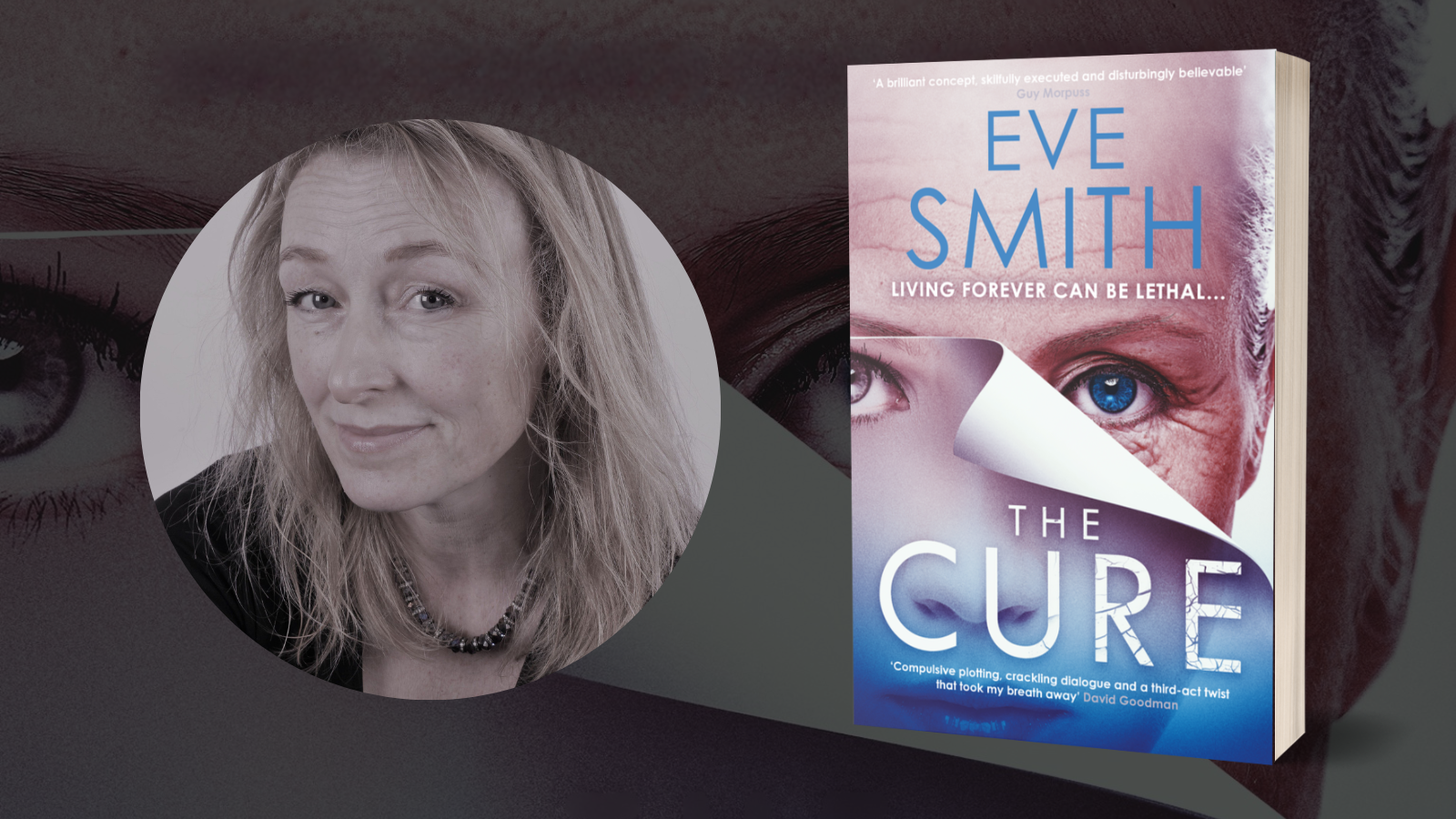
Fact or Fiction? Ten Shocking Truths in The Cure

Fact or Fiction? Ten Shocking Truths in The Cure
Eve Smith

You might assume that the cure for old age discovered by my protagonist Ruth is entirely fictional. While elements of the ReJuve injection are made up, most of the anti-ageing research in my book is inspired by scientific trials for therapies that have either happened, are currently in development, or on the market now. 


And those aren’t the only events based on fact. Read on for some disconcerting truths in The Cure

1. ‘Modern Day Vampires Source Black Market Blood To Stay Young’
This news article in The Cure was inspired by a real news story about a biotech startup in California that sold teenage blood plasma to elderly clients for thousands of dollars, claiming it would make them younger. 

This claim was based on some grim research experiments that joined old and young rats together, so their blood circulation was shared. Incredibly, the old rats became younger. There’s no evidence that the human blood plasma venture worked, but a study published this year suggests there may be more to ‘young blood’ infusions than we thought…

2. A Nobel Prize-winning scientist had Ruth’s Hitler nightmare.
In The Cure, Ruth has a nightmare about a rejuvenated Hitler praising her for her discovery.

A scientist called Jennifer Doudna famously reported having a similar nightmare. She had developed a groundbreaking gene-editing methodology, and claimed the nightmare was motivated by her fears about the abuse of her discovery, in particular eugenics.

3. One company is already selling a version of my fictional rejuvenation therapy.
For just over a million dollars, you can purchase a procedure called ‘The Terminator’ (yes, really): a series of gene therapies that target critical ageing-related parts of your body. It’s not licensed, and it’s never been tested, but the first person will be trialling it this year.

4. ‘Is Erik Grundleger Unstoppable? The ‘Super’ scientist now wants to bring people back from the dead’

This news article in my book also has its basis in fact. 

Cryopreservation is where deceased bodies are preserved with a sort of human antifreeze and stored at very low temperatures in tanks. And that’s where they stay until someone figures out how to revive them, and whatever condition they died of can be cured. Cryonics pioneers started operating decades ago in the USA, but a Berlin facility recently opened its doors, so now you can be frozen in Europe, too.
 

5. GigaCities are on the horizon
In my novel, the population growth resulting from extended lifespan has driven the emergence of ‘gigacities’: vast urban areas containing over one hundred million people. While this hasn’t happened yet, there has been a rise in megacities, which have over ten million residents. There are already thirty-five (including Tokyo, Lagos and Shanghai), with an additional fourteen projected by 2050.

6. The genetic disease that killed Ruth’s daughter is real.
In The Cure, Ruth stumbles across a cure for ageing, while researching the cruel disease that killed her young daughter, Lettie. Tragically, the condition I based this on exists.

Progeria is a rare terminal disease that afflicts children, prematurely ageing their bodies at eight to ten times the normal rate. Most die in their teens, often of heart disease, or strokes. There is no cure.

7. Fifty-two countries imposed new death sentences in 2023. 
In my thriller, illegal ‘age traitors’ are sent to an expiration facility to be executed. The procedure I describe is exactly what prisoners on death row are subjected to, who are killed by lethal injection. 

Amnesty International recorded 1,153 executions in 2023, marking the highest number of executions in almost a decade. 

8. The Parcel Poisoner who targets the homeless in my book was based on a serial killer called the Teacup Poisoner.
Graham Young poisoned his victims using a cocktail of homemade poisons, including a tasteless, odourless heavy metal called thallium. A disturbed man with a troubled youth, he had a fascination with Hitler, serial killers, and the occult.

9. The stats about biodiversity loss in the book are already true.
A report from WWF’s Living Planet Index estimates global wildlife populations declined by 73 percent between 1970 and 2020. 

They attribute this decline predominantly to human-driven habitat loss, pollution and climate change. Which makes you wonder, what will happen when the human population reaches 10 billion, which the UN predicts will occur by 2058? And that’s before we factor in the impacts of a cure for ageing.

10. The first genetically manipulated babies have been born.
The genetic modification of human babies is illegal in this country, and most nations have very strict protocols because of the dangers of unknown adverse effects. But in 2018, one Chinese scientist announced that he had edited the genes of twin baby girls as well as a third baby, before birth. He was sentenced to three years in prison.


Eve Smith is the author of The Cure.

Posted on

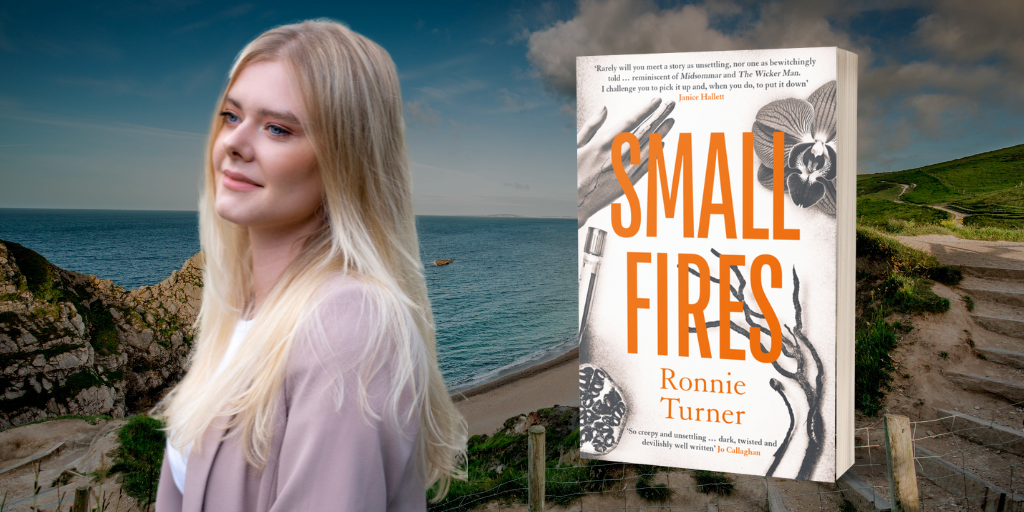
Cornish Folkore and Small Fires – Ronnie Turner

Cornish Folkore and Small Fires

Ronnie Turner

In my second novel Small Fires, I’ve paid homage to storytelling across all many mediums. I’ve tipped my hat to stories from Greek mythology, from the Bible, from legends across the world. But I have also been hugely inspired by Cornish folklore and legend, and I’ve used it to enrich the lore of my fictional island – Godforgotten – in this book. Here are five ways that I’ve woven the Duchy (now my home) into the novel.

The Legend of the Giant Bolster and Agnes

Legend says that a cruel Cornish giant fell in love with a beautiful woman called Agnes. He pursued her relentlessly, until one day she devised a clever plan to stop her pursuer. She asked him to fill a hollow in the cliff above Chapel Porth beach with his blood to prove his love for her and win her love in return. But what Bolster did not know was that there was a crack in the hollow and as the hours passed, his blood flowed out into the ocean until he eventually died and Agnes, by might of her mind, won her freedom. 

A chapter entitled ‘A Women, Burning’ is entirely inspired by this wonderful legend. You might recognise Bolster and Agnes in my characters Silas and Gaia.

Did you know the village of St Agnes (aptly named) has an annual festival and parade to celebrate this classic Cornish story? It’s wonderful and I try to attend every year!

The Legend of the Giant of St Michael’s Mount

This legend stretches as far back as the sixth century, when a giant called Cormoran lived on St Michael’s Mount, and regularly terrorised the folk of Marazion, stealing their livestock. One day, a humble boy called Jack crept up the Mount in the night and vanquished the giant, freeing the Cornish folk from their foe. Henceforth, he was called Jack the Giant Slayer.

This legend inspired the chapter ‘Knocking in the Earth’, in which I pay homage to Cormoran and Jack and weave this legend into a frightening story told between sisters on the shore of Marazion, with the Mount watching them in the distance.


The Cornish Knockers

Otherwise known as Buca, the Cornish Knockers are malevolent spirits or ‘fairy folk’ who lived in the tin mines and knocked on supports to bring the ceilings down and  cause harm to the miners. They have many names, and take many forms in different parts of the world, but they are prominent in Cornish folklore for being sinister and mischievous.

I bring the knockers into the chapter ‘Knocking in the Earth’ to give you a glimpse of my two Cornish sisters, Lily and Della, their heritage and the darkness of their relationship.


The Celtic Goddess, Aine

Aine, also known as Áine or Anu, is a prominent figure in Celtic mythology as the goddess of love, fertility, and sovereignty. She is revered for her beauty, power and grace.

I wove this figure into the folklore of my fictional island in the chapter ‘Aine’s Well’, exploring what it means to be a mother, and to love and be loved – a strand to give some light and redemption to what is otherwise a very dark tale.


Kennel Vale

Moving away from folklore and legend to a very true historical event at Kennell Vale, a beautiful woodland with a dark past as a gunpowder mill. In 1838, five mills exploded in succession, killing one man and seriously injuring another. Ghosts are rumoured to roam Kennell Vale and many sightings have been recorded.


This location features in a chapter called ‘Soul Factory’, and, once again, is a backdrop for my Cornish sisters, Lily and Della, and their strange childhood.

Small Fires, by Ronnie Turner, is out today.

Posted on

Orenda Books signs Essie Fox’s decadent, captivating historical thriller Dangerous

Orenda Books signs Essie Fox’s decadent, captivating historical thriller Dangerous

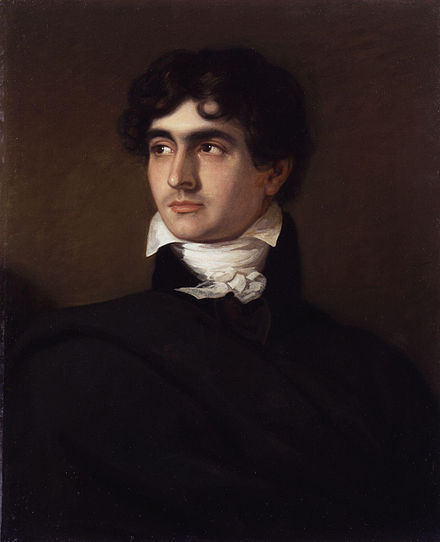
Karen Sullivan, publisher of Orenda Books, is delighted to announce the acquisition of World English Language rights for Essie Fox’s Dangerous, in a deal negotiated with David Headley at DHH Literary Agency.

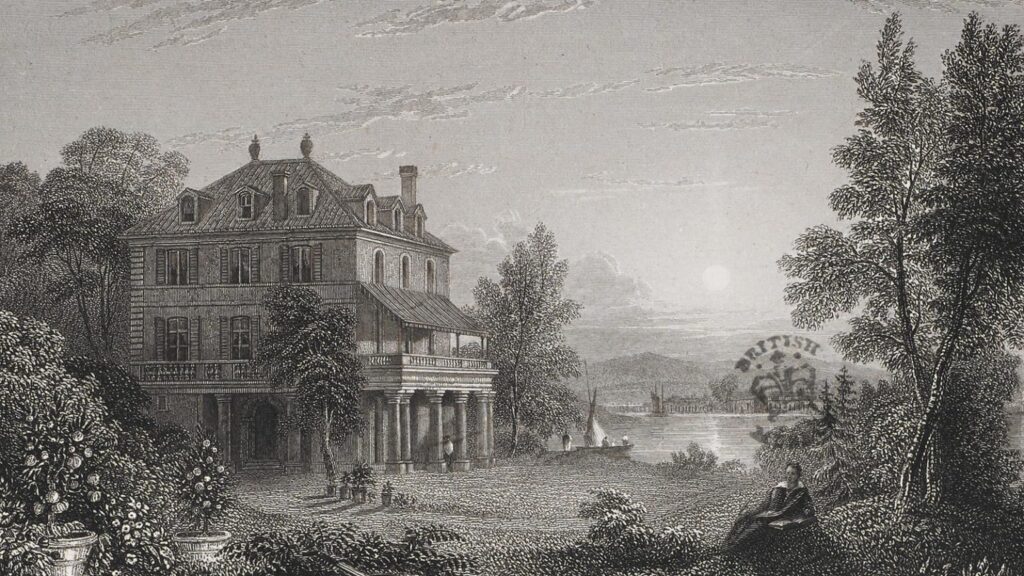
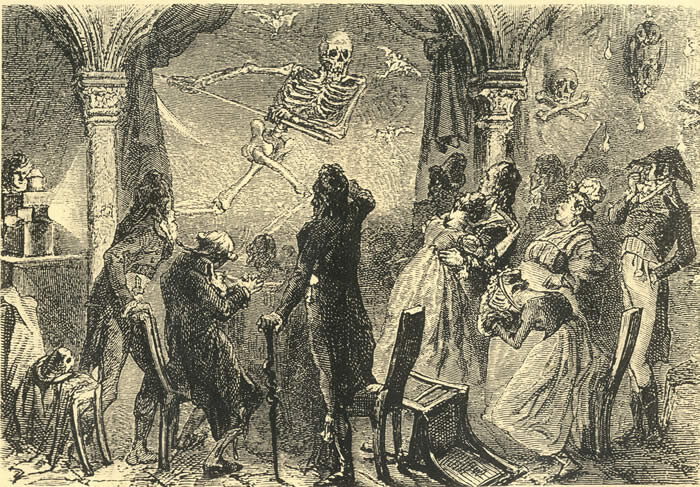
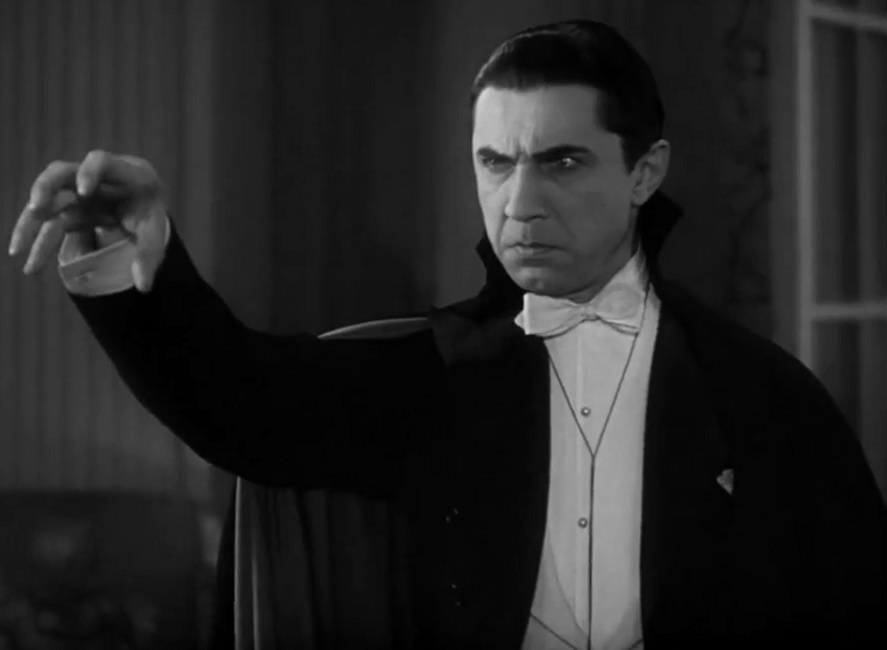
The book opens in 1819, when the disgraced Lord Byron is living in exile in a palazzo on the Venetian Grand Canal with his menagerie of pets and an illegitimate daughter, revelling in the freedoms of the city. But when he is associated with the deaths of local women, found with wounds to their throats, and then a novel called The Vampyre is published under his name, rumours begin to spread that Byron may be the murderer…

Already convinced that his life is cursed, Byron is further dismayed to read the book and realise that the blood-sucking villain of the title has been based on his own tarnished reputation. As events escalate and tensions rise – and his own life is endangered, as well as those he holds most dear – Byron is forced to play detective, to discover who is really behind these heinous crimes. Meanwhile, the scandals of his own infamous past come back to haunt him…

Karen says, ‘Lord Byron is unquestionably one of the greatest-ever poets, his life marked and marred by scandal, as he defied societal norms and unapologetically pursued passion, his troubling misogyny as shocking then as it is today. And yet he remains a figure of some allure, his decadent lifestyle still paradoxically fascinating. Essie has dropped us into his opulent world, a lavishly described piece of historical fiction that is as dark and seductive as the reputation of the poet himself. The canals of Venice come alive, as Byron struggles to clear his name, and to find a murderer – or is it a vampire? – implicating and impersonating him.

‘Rich in gothic atmosphere and drawing on real events and characters from Byron’s life, Dangerous is a riveting, dazzling historical thriller, where fact and fiction collide, audacious crimes are committed, revenge and vampiric myths take centre stage, and passionate love affairs, imprisonment and the strange story of a mummified corpse on the monastery island of Lazzaro all build to a crescendo of suspicion and high-stakes mystery.

‘Byron’s character is uncannily drawn, his Venice both visceral and sumptuous, and Essie drops the reader straight into the heart of an extravagant mystery, a perilous investigation, and the threat of the supernatural hanging low over it all. Her language is elegant, pitch perfect, completely and utterly redolent of the age, of the man. I was transported, angered, saddened and entranced and completely gripped by this extraordinary book, with its unexpected flashes of wit, and on the 200th anniversary of his death, I can think of no better time to announce its publication.

‘Despise the man or adore him, readers will be enchanted by this fictional portrayal of an astonishing period of Byron’s life, and it is, quite simply, a masterpiece.’

Essie says, ‘I’m so delighted that Orenda will be publishing my first historical crime thriller – a fiction based on fact – and one that also reflects my passion for the gothic. It was a dream to imagine a memoir that reveals secrets of Byron’s life in Venice, in which his personal connection to a novel called The Vampyre threatens to trap him in a web of murderous deceits.’

David Headley says, ‘This is a timely book, a beautifully told story focusing on a strange and intriguing period of Byron’s life in Venice, reimagined as a truly captivating fictional mystery. In Essie’s hands, it’s simply magical.’

Dangerous, by Essie Fox, will be published in glorious hardback by Orenda Books, in April 2025. For more information, please contact Karen Sullivan: Karen@orendabooks.co.uk.

Posted on

The Inspiration behind The Opposite of Lonely by Doug Johnstone

The inspiration behind the latest book in the Skelfs series – The Opposite of Lonely – comes from a whole host of places, as it always does with these crazy, diverse, complex books. If you don’t know, the books are about three generations of women from the Skelf family who have to take over the running of both a funeral-director firm and private-investigator business when the patriarch of the family dies.

This is a great set-up that allows me to investigate pretty much anything I want, and that’s just as true of this book as its predecessors. The novel opens with a potential disaster at a funeral on Cramond Island off the coast of Edinburgh. Cramond is a tidal island, and let’s just say someone doesn’t read the tide timetable very well.

This opening kicks off a storyline that concerns a group of itinerant people who have parked their caravans and campers on the shore next to Cramond Village, drawing criticism from the locals and authorities. These people aren’t ethnic Travellers, more just people who prefer the travelling lifestyle, and I’ve long been fascinated by that idea.

This was crystallised when a similar group arrived in my local community and were met with extreme online and in-person reactions. I found that really depressing, that local folk just disregarded and abused them. What happened to the idea of live and let live? I wondered if that anger was partly a result of jealousy – these were people who seemed more free than the rest of us. They were also vulnerable, so an easy target.

In The Opposite of Lonely two of the travellers are victims of an arson attack, and Dorothy, the head of the Skelfs, investigates. What she finds is more dangerous and poisonous than even she could’ve expected.

Without giving anything away, that storyline is to do with abuse of power. This ties into one of the other plot lines in the book, where Dorothy’s granddaughter Hannah investigates a former astronaut being abused by conspiracy theorists. The ex-astronaut, Kirsty, is a hero of Hannah’s, and she is drawn into her orbit despite her better judgement, with dangerous consequences.

This story partly stems from my interest in something called the overview effect, where astronauts return to earth having had a profound, almost religious, experience in space. The psychological effects of going to space haven’t really been investigated, and I found it fascinating to dig into what that might do to a normal person. Needless to say, it’s a crime novel, so it doesn’t end up with a happy-ever-after.

There’s so much else that inspired this book, same as all of the books in the series. But the overall themes have remained the same throughout – looking at issues of power, forgiveness, empathy and, above all, human connection. I hope this book lives up to its predecessors, but I’ll let the readers be the judge of that.