Posted on

Orenda Books summer reading feature (part 2)

Kjell Ola Dahl’s summer reading picks

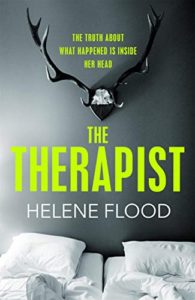
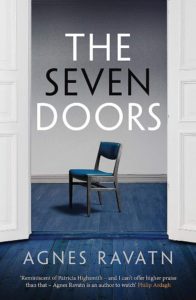
I read Norwegian fiction mostly so I have to search a bit to find what is translated into English. Among those I found I recommend The Therapist by Helene Flood, a tremendous psychological thriller, and The Seven Doors by Agnes Ravatn, a nice mix of whodunnit and psychological thriller. Or you could pick up something by Gunnar Staalesen, e.g. Wolves in the Dark or Fallen Angels. Get these and you’ll be fully entertained this summer.


Simone Buchholz’ summer reading pick

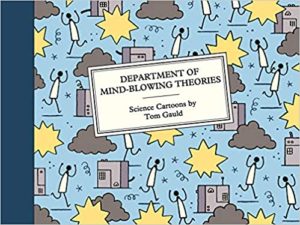
Department of Mind-Blowing Theories – Tom Gauld

If you need one thing to mentally survive the last complicated part of this f***ing pandemic, then it’s the hilarious smartness of Tom Gauld’s brain and pen, and all his crazy assistants (only God knows who they might be).


David F. Ross’ Sumer reading picks

My summer reads are perhaps a bit narrow in terms of subject matter; all include music as a route to the good life before the inevitable come-down; ambition and loss; young idealism and obsession, etc. Perhaps they’re a bit stereotypically male. Perhaps not.

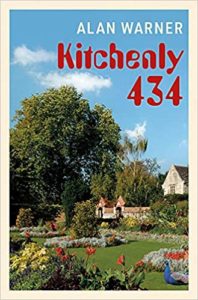
Kitchenly 434 – Alan Warner

What the butler saw. The undisciplined life of globe-spanning seventies rock god Marko, as viewed from the perspective of Crofton, the ever-faithful ‘help’, who tends to Kitchenly Mill Race, Marko’s rambling Tudorbethan pile.

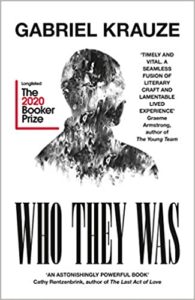
Who They Was – Gabriel Krauze

This is a blisteringly authentic debut that has drawn favourable comparisons with A Clockwork Orange for its depiction of young men growing up and blowing up in the pressurised urban war zones of a big city. Longlisted for the 2020 Booker Prize.

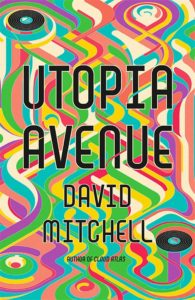
Utopia Avenue – David Mitchell

The first David Mitchell book I’ve read (although not sure why I’ve avoided the others for so long). A story founded on the intoxicating notion that the future will be shaped by young people and the power of music. Hope I die before I get old? Yep, fucking right on!


Lilja Sigurdardóttir’s summer reading picks

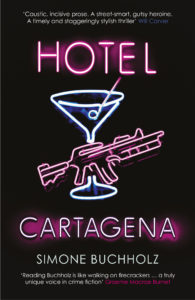
I have to recommend that people postpone reading until they have finished watching Katla on Netflix. (Blowing my own trumpet here!) But after that I think people should go for some of the amazing Orenda books on offer; next on my reading list is Simone Buchholz’s Hotel Cartagena. I love the Chastity Riley series. She is one of my fave characters, and there is something Chandleresque about Simone’s writing that is so cool.
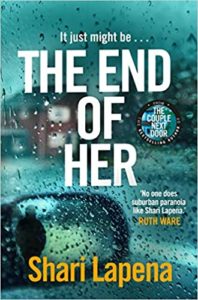
My current read is The End of Her by Shari Lapena. She is the queen of domestic noir and I really enjoy her books.


Posted on

Orenda Books summer reading feature (part 1)

Louise Beech’s Summer Reading picks

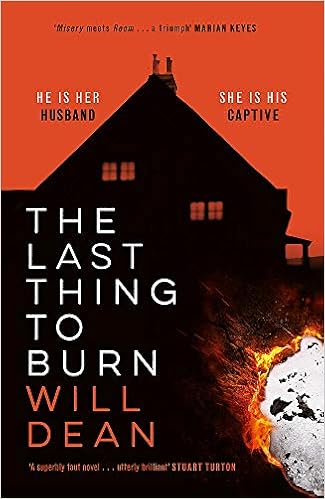
The Last Thing To Burn – Will Dean

The Last Thing to Burn: Gripping and unforgettable, one of the most highly anticipated releases of 2021: Amazon.co.uk: Dean, Will: 9781529307054: BooksI found this a devastatingly beautiful and powerful novel. It’s so much more than a thriller, though yes, it is one – the kind that has you glued to the page, having to read just one more. (For the record, I read it in two sittings.) As with Dean’s previous books the language is what sets it apart. He has a gift for keeping it simple, and yet it is deviously layered too. The setting is claustrophobic, the characters pulse off the page, and it’s dark, dark, dark, the way I like even my summer reads. But it’s hopeful too. It is excellent, and I strongly recommend it.
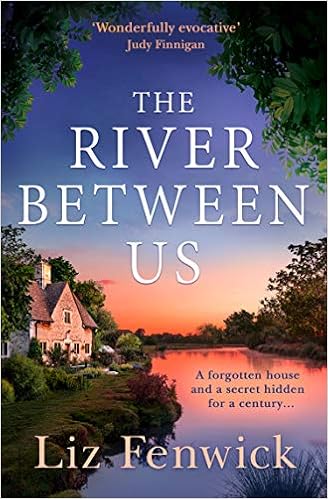
The River between Us – Liz Fenwick

The River Between Us: Perfect escapist historical women's fiction about a hidden romance from the bestselling author of The Path to the Sea: Amazon.co.uk: Fenwick, Liz: 9780008290573: BooksIn complete contrast to the darkness of Dean’s book is Fenwick’s captivating and beautiful tale. Once again, she has proved she is the mistress of pure escapism. Spanning generations, with an achingly intense love story and unearthed secrets about ancestry at its core, this novel is just what the world needs right now. The immersive dual timeline whisks you away, and the country setting is perfect for this time of year. It’s a glorious summer read and is definitely one to look out for in 2021.

 

Rod Reynold’s Summer Reading Picks

Dead Man’s Grave – Neil Lancaster.

Dead Man’s Grave: A breathtaking, chilling, Scottish crime fiction mystery thriller (DS Max Craigie Scottish Crime Thrillers, Book 1) by [Neil Lancaster]I’m reading this at the moment and it is the definition of a page-turner. Creepy, intriguing and compelling.


Winter Counts – David Heska Wanbli Weiden

Winter Counts: Amazon.co.uk: Weiden, David Heska Wanbli: 9780062968944: BooksA beautifully written thriller with a highly original setting and cast of characters. Terse, tense and packed with heart.


Vanda Symon’s Winter Reading picks

As I’m based in New Zealand, here’s my winter reading…

Written In Bone: hidden stories in what we leave behind by [Sue Black]Nothing combats bone-chilling cold like talk about bones! I’m enjoying anthropologist Professor Dame Sue Black’s Written in Bone. The case studies and very human stories she weaves around them are fascinating.


The Liar's Dictionary: A winner of the 2021 Betty Trask Awards by [Eley Williams]I adore words and their origins and playing with them, so I got immense pleasure from The Liar’s Dictionary by Eley Williams. In this novel we have two viewpoints – nineteenth-century Peter Winceworth inserting fictitious words into a new encyclopaedic dictionary, and the present day Mallory, tasked with finding these Mountweazels. But of course it’s not that straightforward.
 

Michael J. Malone’s Summer Reading picks

A Rattle of Bones – Douglas Skelton

A Rattle of Bones: A Rebecca Connolly Thriller (Book 3) by [Douglas Skelton]This has the Highlands of Scotland, a plot that zips along, fascinating characters – and did I mention the Highlands of Scotland? Dare I say it … a rattling good read (out 5 August).


The Blood Divide – A A Dhand

The Blood Divide: The must-read race-against-time thriller of 2021 by [A. A. Dhand]If I read a better thriller this year I’ll be surprised – and delighted. From the first page you know you’re in the hands of a master of their craft. Loved it!


Posted on

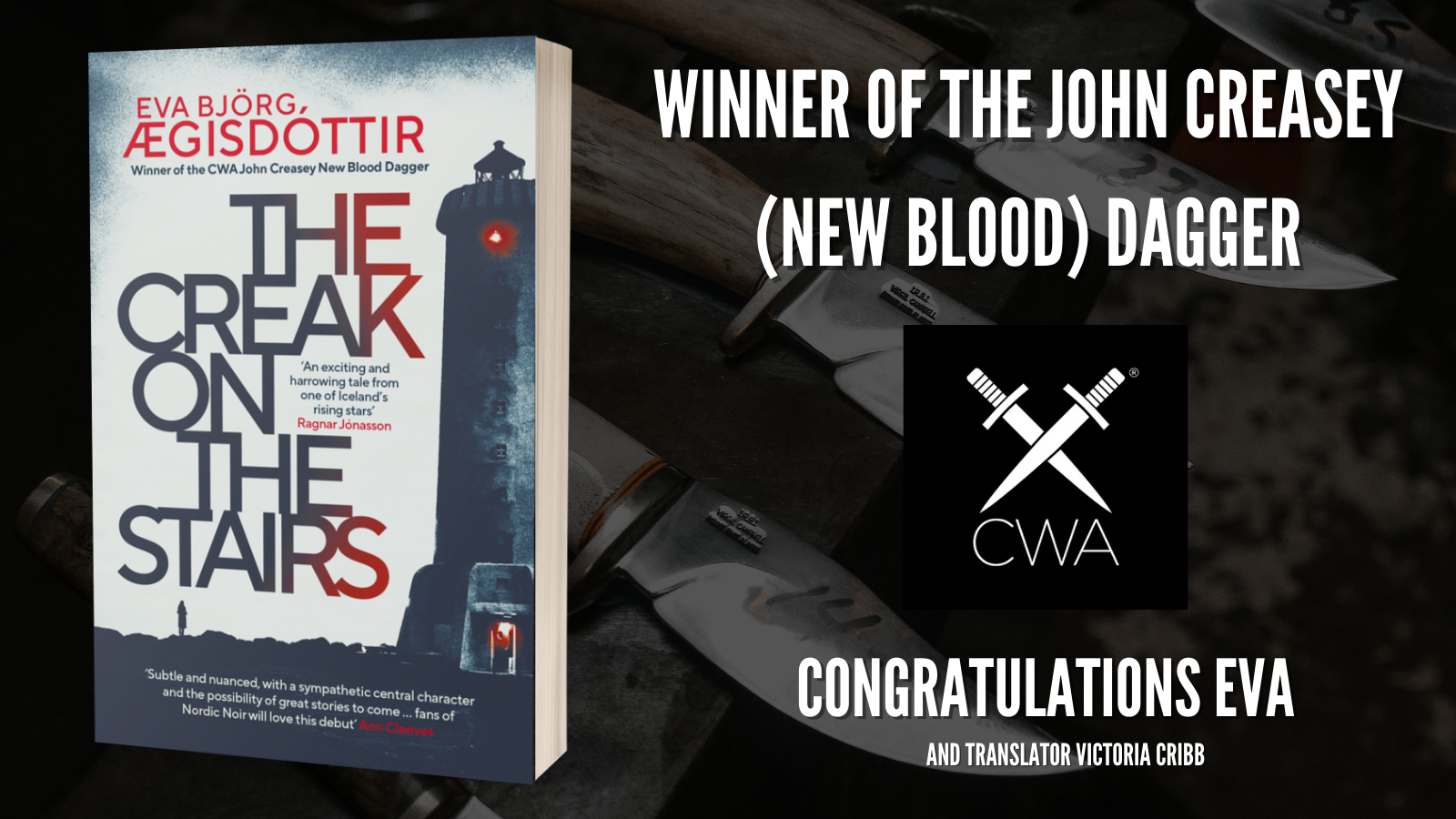
Eva Björg Ægisdóttir has WON the CWA John Creasey (New Blood) Dagger for her chilling The Creak on the Stairs, beautifully translated by Victoria Cribb

We are absolutely thrilled to announce that our wonderful debut Eva Björg Ægisdóttir has WON the CWA John Creasey (New Blood) Dagger for her chilling The Creak on the Stairs, beautifully translated by Victoria Cribb. Not only is it an immense honour for such a young writer to achieve this award, but the fact that the book is translated makes it even more special. Eva is a tremendous talent, and we look forward to publishing further books in the Hidden Iceland series, as her star continues to rise.

Congratulations, too, to the shortlisted authors, and to Roxanne Bouchard (and translator David Warriner) and Agnes Ravatn (and translator Rosie Hedger), who were shortlisted for the Translation Dagger – a staggering achievement in a very competitive field.
Posted on

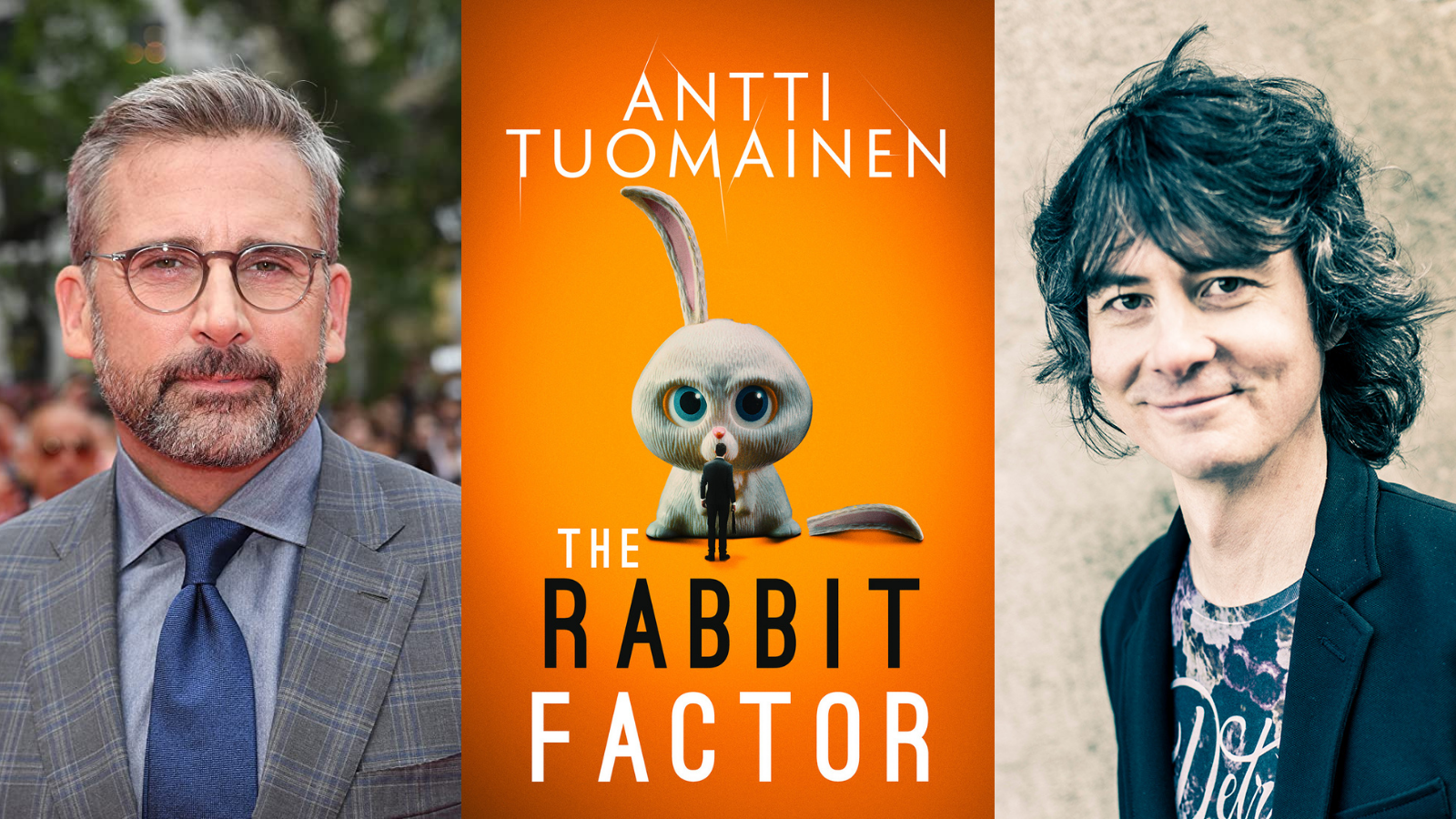
Orenda Books signs Antti Tuomainen’s The Rabbit Factor trilogy … currently being adapted for the screen by Amazon Studios and starring Steve Carell


Orenda Books, is thrilled to announce the acquisition of WorldEnglish Language rights ex USA/Can for Finnish Antti Tuomainen’s The Rabbit Factor, in a three-book deal negotiated with Federico Ambrosini of the Salomonsson Agency.

Karen says, ‘Antti is a longstanding, immensely talented member of the team, and it has been an utter joy to publish his darkly funny, poignant, original thrillers, all of which have received widespread critical acclaim. I did not hesitate in buying The Rabbit Factor, the first in Antti’s first-ever series, and both of its follow-ups. Warmly funny, and rich with quirky characters and absurd situations, The Rabbit Factor is triumph of a dark thriller, its tension matched only by its ability to make us rejoice in the beauty and random nature of life…

‘The story features Henri, an insurance actuary, who controls his life meticulously, calculating everything down to the last decimal. And then, for the first time, Henri is faced with the incalculable. After suddenly losing his job, Henri inherits an adventure park from his brother – its peculiar employees and troubling financial problems included. The worst of the financial issues appear to originate from big loans taken from criminal quarters … and some dangerous men are very keen to get their money back.

But what Henri really can’t compute is love. In the adventure park, Henri crosses paths with Laura, an artist with a chequered past, and a joie de vivre and erratic lifestyle that bewilders him. As the criminals go to extreme lengths to collect their debts and as Henri’s relationship with Laura deepens, he finds himself faced with situations and emotions that simply cannot be pinned down on his spreadsheets

‘We have been absolutely dying to share the news that this madcap book has been optioned by Amazon Studios, but the news is now out and Henri will be played by Steve Carell. Todd Lieberman and David Hoberman are producing, and Alex Young will executive produce for Mandeville Films. Antti and his agent Federico will also act as executive producers on the project. The Rabbit Factor has now been sold in fifteen countries, and is tipped to become a global bestseller. I honestly can’t wait!

Antti says:I couldn’t be happier. The Rabbit Factor and the whole insurance mathematician Henri Koskinentrilogy have found the perfect home with Karen Sullivan and Orenda Books. I’m looking forward to unleashing this quiet, rational and deeply introverted Finnish mathematician to the unsuspecting UK public. Knowing Karen and her formidable publishing powers, I know we will have lots of fun along the way.’ 

Federico says, ‘I am thrilled to have OrendaBooks publish Antti Tuomainen’s new novel The Rabbit Factor. Book by book, Karen Sullivan and her team have managed to raise Tuomainen’s popularity in English, where he has been hailed as “the funniest writer in Europe” by The Times. In the hands of such a professional and energetic team, I am convinced The Rabbit Factor and the rest of the trilogy will be yet another success.

The Rabbit Factor will be translated by David Hackston, and published in hardback in October 2021 and paperback in spring 2022 by OrendaBooks, with a second book, The Moose Paradox in Autumn 2022. For more information, please contact Karen@orendabooks.co.uk.

Posted on

Michael Stanley interview with Crime Fiction Lover

You can read the full Crime Fiction Lover review of Facets of Death here. In the meantime, here’s what the authors had to say when Crime Fiction Lover interviewer Sonja van der Westhuizen spoke to them…

First of all, what are crime fiction lovers going to love about Facets of Death?
Followers of Kubu will enjoy his backstory. In the contemporary books he seems very much in charge, looked up to, happily married. But that wasn’t always the case. He had a tough start and a lot of learning – both personally and professionally – to get there.

New readers will enjoy the thriller aspects. The crime is a huge and complex diamond heist from the richest mine in the world. Kubu and his boss, Assistant Superintendent Mabaku, deduce that it’s an inside job, and there’s a race against time to catch the culprits. That fails because the robbers are all killed by the South African police, and every time they feel they are getting closer, another murder takes place snapping the thread they’re following.

What made you decide to jump back in time and tell the origin story of this much-loved detective?
Kubu wasn’t supposed to be the protagonist of our first book, A Carrion Death. That was supposed to be the ecology professor who discovered the body. However, since it was clearly a murder, we needed a detective, and Kubu climbed into his Land Rover, fully formed and larger than life, and headed into the desert. Much to our surprise, after the first couple of chapters, he’d taken over the book! So there was actually a gap in his background for us, which was, in a way, also a gap in his character. We thought it would be fun for ourselves and our readers to fill that in. We know him better now.

Crime fiction across the world is often used to address social, economic and political issues. Do you think it’s important to address these issues in your novels?
All our novels have a contemporary southern African theme as the backstory. Blood diamonds, the plight of the Kalahari Bushmen, the growing Chinese influence, and so on. So, yes, we do think crime fiction can highlight these issues in a way that’s still gripping and entertaining.

Smuggling is a huge issue in this part of the world, and covers everything from cigarettes to drugs and rhino horn. Rhino-horn smuggling is something we feel very strongly about and our standalone thriller Dead of Night was motivated by that. The good side of the diamond mines is that Botswana benefitted substantially, and much of the money went into infrastructure and jobs for the local people. However, there were aspects of imperialism also.

Michael worked for the parent company of the diamond giant De Beers for ten years so has some insight into Botswana diamond mining.

In our interview with you a few years back you explained the mechanics of the writing process between the two of you. Have the lockdown conditions of the last year influenced your working methods while writing Facets of Death?
Since we always work together remotely, nothing much changed at the writing level. However, there was a big impact. For example, we always visit and spend time in the places we write about. We get different perspectives and ideas by doing that. When we’re there, we write a lot about the area. Most of that never finds its way into the book, but it makes us feel more comfortable with the setting, and we believe it gives the reader a better sense of place. In the book we’re writing now, we haven’t been able to do that because for much of the time the borders between South Africa and Botswana have been closed, and it’s caused us some issues. Hopefully, we’ll be able to correct that this year.

In crime fiction there is a tendency to classify books from geographical areas into sub-genres, such as Nordic noir. Do you think this is also applicable to African and, in particular, South African fiction? 
For the most part, Nordic Noir represents a style of story-telling, a type of setting, more than it does where the writers come from. In general, African crime writing doesn’t exhibit a similar thread. The continent is too huge and too diverse for that.

Perhaps one exception is South African crime writing, which to a large extent has been inextricably tied to apartheid, either pre-democracy (The Kramer and Zondi series by James McClure) or post-democracy (Deon Meyer, Mike Nicol, and so on).

This is one reason why we set our stories in Botswana. There are so many issues facing southern Africa unrelated to apartheid that the only way to tell them was to leave South Africa. The same issues affect South Africa, but any book set in South Africa inevitably links back to apartheid.

African crime fiction has, tongue-in-cheek, been called Sunshine noir. What would you consider to be the characteristics of Sunshine noir?
For quite some time, writers from the Nordic countries have entertained us with their stories, as well as through the various TV and movie spin-offs. Part of the appeal, we suppose, is that there is predictability with respect to character and environment: relatively dour people wrapped up to keep out the cold!

In reality, the incidence of serious crime in these countries is very low. In Iceland, for example, there are more murders in one of Yrsa Sigurdardottir’s books than actual murders in a year in the country.

So we, also tongue-in-cheek, think that Nordic crime novels should be shelved under fantasy.
So where can we find a lot of nasty criminals? In hot places, of course. Cold never brings out the violence in people. Heat does. So Sunshine noir embraces crime in hot places, where the sun shines hot. As we say, the darkest shadows are where the sun shines brightest!

Why should international readers pick up a crime fiction novel set in Africa? What sets it apart and will attract readers to it?
The variety. There’s a whole continent here of different beliefs, cultures and landscapes, different environments and issues. Characters are shaped by all of these, and they give the reader a new perspective. Human nature is the same, of course. You’ll know how the detective thinks, but may be surprised by what he think about. In addition, readers may be surprised by both the differences and similarities in police procedures.

Apart from anything else, it’s a great way to travel, and there aren’t too many options right now!

Our readers might be familiar with the more well-known South African crime writers, but are there any new and upcoming South African – and African – crime writers we should be watching out for?
There certainly are, and some of them are very good! Sifiso Mzobe’s debut novel Young Blood won prizes in South Africa and is about to be released in the US for the first time.

Then there’s Kwei Quartey. He lives in Los Angeles, but his work is set in Ghana and he spends much time there. The first book in his new series, The Missing American, set in Accra with female PI, Emma Djan, has been shortlisted for the prestigious Edgar this year.

Or how about going to Nigeria to try Leye Adenle’s novels around a well-connected woman who makes it her business to look after for sex workers?

Back in South Africa, there’s Angela Makholwa with her dark comedies. The Black Widow Society says it all.

Posted on

Online launch of Jubilant June

As part of a massive Jubilant June campaign – with three heart-warming, soul-soothing summer reads – Orenda Books is celebrating the launch of Katie Allen’s poignant debut Everything Happens for a Reason, Helga Flatland’s stunning One Last Time, translated from Norwegian by Rosie Hedger, and Louise Beech’s utterly beautiful, prejudice-busting, heartbreaking This Is How We Are Human.

A highly anticipated follow-up to her indie-favourite A Modern Family, Helga Flatland’s One Last Time, translated by Rosie Hedger, is an elegant, perceptive, warmly funny novel focusing on fractured family relationships that come under the spotlight when a woman – grandmother and mother – discovers she has terminal cancer. Winner of the Norwegian Booksellers’ Prize and a number-one bestseller in Norway, this is an exquisitely moving book and a perfect example of why Joanna Cannon has dubbed Helga the ‘Norwegian Anne Tyler’.

Ex-Guardian columnist, Katie Allen’s immensely accomplished debut, Everything Happens for a Reason, was inspired by her own experience of still birth, and is both a profoundly moving portrait of grief and a quirky, laugh-out-loud story about a woman becomes obsessed with the idea that saving a young man’s life on the day she discovered she was pregnant is the ‘reason’ why her baby was born sleeping. Fans of Rachel Joyce and Eleanor Oliphant will love the zany characters, the moving themes and the gloriously uplifting messages.

Award-winning Hull author Louise Beech has written the searingly emotive and mesmerisingly beautiful This Is How We Are Human, sure to be her breakthrough novel with 100 five-star reviews on Goodreads before publication. In this breathtaking book, we meet Sebastian, an autistic young man who yearns for a relationship and all that this entails. Driven by love and a desire to make her son happy, his mother hires a high-class escort, whose own determination to get through the night, to pay for her father’s medical bills and her own nursing degree is absolutely heartrending. When these three lives collide, everything is changed. For everyone. This is a timely, thought-provoking story about love in its many forms. We are enchanted.

We are thrilled to announce that eminent broadcaster and journalist Alex Clark will be chairing the event.

This event is free to attend, however we do encourage you to support the authors in any way you can and all of the authors’ books are available in good bookshops and online now. Signed copies of ALL THREE BOOKS are available from our bookshop: HERE and from Dulwich Books at https://dulwichbooks.co.uk

Email cole@orendabooks.co.uk to book your place.

You will receive a confirmation email once you register, and on the day of the event itself will be sent details for attendance. Please ensure you have downloaded Zoom. We will be taking questions on the day of the event via the chat function.

Katie Allen

Everything Happens for a Reason is Katie’s first novel. She used to be a journalist and columnist at the Guardian and Observer, and started her career as a Reuters correspondent in Berlin and London. The events in Everything Happens for a Reason are fiction, but the premise is loosely autobiographical. Katie’s son, Finn, was stillborn in 2010, and her character’s experience of grief and being on maternity leave without a baby is based on her own. And yes, someone did say to her ‘everything happens for a reason’.

Katie grew up in Warwickshire and now lives in South London with her husband, children, dog, cat and stick insects. When she’s not writing or walking children and dogs, Katie loves baking, playing the piano, reading news and wishing she had written other people’s brilliant novels.

Follow Katie on Twitter @KtAllenWriting and on her website: katieallenauthor.com.

Louise Beech

Louise Beech is a prize-winning author, whose debut novel How To Be Brave was a Guardian Readers’ Choice for 2015. The follow- up, The Mountain in My Shoe, was shortlisted for Not the Booker Prize. Her next books, Maria in the Moon and The Lion Tamer Who Lost, were widely reviewed, critically acclaimed and number- one bestsellers on Kindle. The Lion Tamer Who Lost was shortlisted for the RNA Most Popular Romantic Novel Award and the Polari Prize in 2019.

Her novel Call Me Star Girl won Best magazine Book of the Year, and was followed by I Am Dust. Her short fiction has won the Glass Woman Prize, the Eric Hoffer Award for Prose, and the Aesthetica Creative Works competition, as well as shortlisting for the Bridport Prize twice. Louise lives with her husband on the out- skirts of Hull and loves her job as a Front of House Usher at Hull Truck Theatre, where her first play was performed in 2012.

Follow Louise on Twitter @LouiseWriter and visit her website: louisebeech.co.uk.

Helga Flatland

Helga Flatland is already one of Norway’s most awarded and widely read authors. Born in Telemark, Norway, in 1984, she made her literary debut in 2010 with the novel Stay If You Can, Leave If You Must, for which she was awarded the Tarjei Vesaas’ First Book Prize. She has written four novels and a children’s book and has won several other literary awards.

Her fifth novel, A Modern Family (her first English translation), was published to wide acclaim in Norway in August 2017, and was a number-one bestseller. The rights have subsequently been sold across Europe and the novel has sold more than 100,000 copies. One Last Time was published in Norway in 2020, where it topped the bestseller lists.

Alex Clark

Alex Clark is a journalist and broadcaster, often seen in the pages of the Guardian, the Observer and the Times Literary Supplement, and heard on BBC R4 programmes such as Front Row and Open Book. An experienced chair of live events, she has also worked as an artistic director at the Bath Festival is a Patron of the Cambridge Literary Festival. The literary awards she has judged include the Man Booker Prize and the Orwell Prize. Alex lives in Kilkenny, Ireland.

Posted on

Michael Stanley in conversation with Yrsa Sigurðardóttir to celebrate the launch of FACETS OF DEATH

Orenda Books has teamed up with Jonathan Ball Publishing in South Africa, to celebrate publication of Michael Stanley’s chilling, sophisticated, warmly funny and absolutely nail-biting thriller Facets of Deathprequel to the award-winning Detective Kubu series. The Times said, ‘The local colour is as delightful as the intriguing investigation’.

 It’s Sunshine Noir meets Nordic Noir, as the Queen of Icelandic Suspense, Yrsa Sigurðardóttir, guides the proceedings, introducing readers to the South African writing team who make up Michael Stanley – Michael Sears and Stanley Trollip – and quizzing them about the Botswanan setting, the breathtaking plot and everyone’s favourite detective, David ‘Kubu’ Bengu, who makes his first appearance in Botswana CID! Yrsa will also give us a preview of her chilling new thriller, The Doll, out in July.

This event is free to attend, however we do encourage you to support the authors in any way you can and all of the authors’ books are available in good bookshops and online now. Signed copies of Facets of Death are available EXCLUSIVELY from our bookshop: HERE. For South African readers, there will be copies available from Jonathan Ball HERE.

Email: cole@orendabooks.co.uk to book your place.

You will receive a confirmation email once you register, and on the day of the event itself will be sent details for attendance. Please ensure you have downloaded Zoom. We will be taking questions on the day of the event via the chat function.

Michael Stanley

Michael Stanley is the writing team of Michael Sears and Stanley Trollip. Both were born in South Africa and have worked in aca- demia and business. Stanley was an educational psychologist, specialising in the application of computers to teaching and learn- ing, and is a pilot. Michael specialised in image processing and remote sensing and taught at the University of the Witwatersrand.

On a flying trip to Botswana, they watched a pack of hyenas hunt, kill, and devour a wildebeest, eating both flesh and bones. That gave them the premise for their first mystery, A Carrion Death, which introduced Detective David ‘Kubu’ Bengu of the Botswana Criminal Investigation Department. It was a finalist for five awards, including the Crime Writers’ Association Debut Dagger. The series has been critically acclaimed, and their third book, Death of the Mantis, won the Barry Award for Best Paper- back Original mystery and was shortlisted for an Edgar award. Deadly Harvest was shortlisted for an International Thriller Writers award. Dying to Live is their latest Detective Kubu book.

They have also written a thriller, Dead of Night, in which investigative journalist, Crystal Nguyen, heads to South Africa for National Geographic and gets caught up in the war against rhino poaching and rhino-horn smuggling.

For information about Botswana, the book and its protagonist, please visit www.michaelstanleybooks.com. You can sign up there for an occasional newsletter. They are also active on Facebook at face- book.com/MichaelStanleyBooks, and on Twitter as @detectivekubu.

Yrsa Yrsa Sigurðardóttir

Author of the bestselling Thora Gudmundsdóttir crime series and several standalone thrillers, Yrsa Sigurðardóttir was born in Reykjavik, Iceland, in 1963 and works as a civil engineer. She made her crime fiction debut in 2005 with Last Rituals, the first instalment in the Thora Gudmundsdottir series, and has been translated into more than thirty languages. Her work stands ‘comparison with the finest contemporary crime writing anywhere in the world’ according to the Times Literary Supplement. In 2011 her standalone horror novel I Remember You was awarded the Icelandic Crime Fiction Award and was nominated for The Glass Key, and has been made into a film starring Jóhannes Haukur. In 2015 The Silence of the Sea won the Petrona Award for best Scandinavian crime novel, and The Legacy, the first novel in the Freyja and Huldar series, was nominated for The Glass Key and won the Icelandic Crime Fiction Award. All of her books have been European bestsellers.

Posted on

Writing books inspired by truth… and the ones I love by other authors by Louise Beech

This Is How We Are Human wasn’t my story, but it touched me deeply and was one I absolutely had to tell. I’d been there before, writing books that were inspired by truth, but generally it was from my own. Not with book seven.

When I wrote my debut, How to be Brave, back in 2012 I was developing it from a short story and also from a play, an extract of which was performed at a small festival in Hull. It was inspired by the real-life difficulty I had when my daughter Katy, having been diagnosed with Type 1 Diabetes aged just seven, later had a complete breakdown and refused her life-saving injections. The only way I could get her to have them was via storytelling – and the only story good enough to keep her attention was that of my grandad’s survival at sea during the second world war. We not only bonded over the shared discovery of our ancestry, but Katy found the courage to fight, just as Grandad Colin had done for fifty days on a cramped lifeboat, under searing heat, with little food and water.


My third novel, Maria in the Moon, was actually the first one I wrote way back in 2007 after the devastating floods in Hull. We were living in temporary accommodation after our home was submerged beneath four feet of sewage-rich, muddy rainwater. I created Catherine-Maria at a rickety, makeshift, metal desk because mine had been destroyed. I poured my pain into her experience, her voluntary work at Flood Crisis, her despair at what the water had taken, and what it flushed out from her past.


My own life has infiltrated some of my other novels, even in small ways. My voluntary work with children going through the care system helped shape The Mountain in my Shoe, and my own care records helped me create young Conor’s documents. I also moulded him around quirks and characteristics my own son had at that age.


My radio work inspired Call Me Star Girl. I’ve volunteered at community radio and then at BBC Radio Humberside for over ten years, and often thought – when doing the night-time show – how spooky the studio is when it’s d
ark. The huge windows become mirrors and you can only see yourselves rather than the passers-by. You’re very isolated, just around four of you, and thousands of faraway listeners. The corridor to the toilets is spooky and deserted too. I often wondered what it would be like to be trapped in the building for a whole night, for whatever reason. And so, I created Stella, a radio DJ doing her final show, entombed in the studio with a killer on the loose.


My role as a theatre usher had me create I Am Dust.  Ushers steal about backstage, in the shadows, barely noticed. Invisible, we see everything. I’ve read theatre books where the actors are the protagonists and I wanted to give voice to those who work behind the scenes. When I wrote Chloe, and the musical world of the iconic show ‘Dust’, I wanted to create a claustrophobic place where only the theatre building exists.

In some ways, these are Own Voices stories, told from the perspective of a working class, northern woman. #OwnVoices is a fantastic movement; it’sa term coined by the writer Corinne Duyvis and refers to an author from a marginalized or under-represented group writing about their own experiences/from their own perspective, rather than someone from an outside perspective writing as a character from this group. It means that we hear first-hand the direct experience from those who don’t often have much of a voice.

I’m lucky enough to have a voice now. To have a platform. But when it came to sharing a story inspired by real-life young autistic man’s experience, I knew this would be my biggest challenge yet. This was a story about someone from an under-represented group, but it was not an #OwnVoices story. It wasn’t mine. Was it my place to even presume I could attempt to tell it?

I was having lunch one day with my dear friend Fiona, and she was very emotional, sharing with me that her twenty-year-old son Sean, who’s autistic, was struggling. He desperately wanted to meet a girl, have sex, find love, all the things most young men want. But being on the spectrum meant girls often found him either too different or were unsure how to treat him. Fiona said there was no help or advice, and she wished this topic was talked about more. When I said I would like to write a fictionalised version of Sean’s experience, she was delighted. ‘Please do,’ she begged me. ‘Your writing and Sean’s story … it would be perfect.’

I knew I had to do this one justice. Had to get every nuance of This Is How We Are Human right. A few people thought I shouldn’t write it, especially when I mentioned autism. But Fiona insisted that I was giving Sean a voice – after all he didn’t want to write it, but he was happy for it to bewritten. This isn’t an #OwnVoices story, and I don’t claim it is. But I worked closely with both Fiona and Sean. We got together and acted out scenes. I listened carefully to how Sean spoke, what he thought, and how he felt. Fiona read each chapter as I went and offered guidance and feedback. It was a truly emotional journey. I couldn’t have done it without the two of them. In fact, I never would have written it at all but for them.


If you want to read some fantastic #OwnVoices books, here are a few of my favourites…

Kate Fox is a ‘gentle activist’ and campaigner for the voices of northerners, the working class, women, and the neurodiverse. She is a Cultural Ambassador for the National Autistic Society. Her poetry collection, The Oscillations (2021, Nine Arches Press), is beautiful, rich, funny and sad, and I dip into it whenever I want to look at the world through her clever and witty eyes.


Shtum is a heart-wrenching and honest novel written by Jem Lester, inspired by his experiences with his own autistic son. He said, ‘A lot of the behaviours and the feelings that Jonah inspires in the book are very close to my feelings, because I couldn’t really see the point of reinventing an autistic character when I had one so close to home.’


Diary of a Young Naturalist by Dara McAnulty was one of my favourites of last year. Dara is autistic and a teacher once told him he couldn’t write. Did he ever prove them wrong. This glorious book, with writing that is wise and beautiful, chronicles Dara’s experiences as he turns fifteen, and describes his love of and connection with nature, this love of wildlife intense and inspiring.


What Cares The Sea? is the true account by the other man lost at sea with my grandad, Kenneth Cooke. It’s out of print and hard to get hold of, but there are a few copies floating around. It’s a brutal, searing, honest account of isolation, bravery, survival against the odds, and friendship.


Posted on

Michael Stanley’s Sunshine Noir

To the lovers of Nordic Noir, we can only say ‘The shadows are darkest where the sun shines the hottest.’ Welcome to the world of Sunshine Noir. Take off your parka and mukluks, toss aside your mittens and ushanka hat, and settle under a sun umbrella to enjoy hot stories from around the planet.

Sunny South Africa

Deon Meyer takes us to the scorching Karoo for Fever. This is more a post-apocalyptic coming of age story than a traditional mystery or thriller. The Times and Steven King both raved about it. The small community remaining after a deadly pandemic sets up their new home near the Gariep dam, hopeful that the water and hydroelectricity will help them keep the remnants of the old civilisation, but also build a better one.

For a traditional thriller, try his Thirteen Hours, but have plenty of time. You won’t stop reading until the last page.


Sweltering Greece

Put on your dark glasses and indulge in armchair travel with Jeff Siger’s Murder in Mykonos, the first of the Chief Inspector Andreas Kaldis mysteries, all set in Greece. Unpopular with the powers that be, Kaldis is sent to peaceful, tourist haven Mykonos. When two young women are murdered, the pressure is on, not only to solve the murders, but also to save the island’s tourist industry.


Nigeria

Femi Kayode’s Lightseekers is a stunning debut. The first line paints the scene: ‘The October sun is as hot as the blood of the angry mob.’ Three young men are mercilessly beaten before being set alight. The question is not who committed the crime, but why and who was behind it. One of the grieving fathers hires Philip Taiwo, an investigative psychologist who specialises in the motives behind crimes and mob violence. He soon finds he’s taken on far more than he bargained for.


Bombay, India

Step back a hundred years and meet Perveen Mistry, Bombay’s only female lawyer, as she makes her debut in Sujata Massey’s multiple-award-winning The Widows of Malabar Hill. When she raises questions about the validity of a will, Mistry is thrown into the complexity of religious and legal diversity in a country struggling to free itself of British rule.


Ghana

The Missing American is the first novel in Kwei Quartey’s new series featuring female private investigator, Emma Djan. The plot revolves around the activities of the young men who make fortunes scamming people on the internet with the assistance of witchcraft from traditional priests. Along the way, one of their targets goes missing. Emma has to find out how and why. It’s up for an Edgar award this year.


Istanbul, Turkey

Step back another hundred years, and watch Investigator Yashim become embroiled in a plot to overthrow the Ottoman Empire in Edgar-winning The Janissary Tree by Jason Goodwin, the first of five Investigator Yashim novels. You will be able to hear the sights and sounds of the city, smell the spices of the souk, as the wily inspector plies his trade.


Meanwhile, back in South Africa…

Mike Nicol’s crime fiction is a treat. Take Power Play. Staccato prose, tense plotting, intriguing characters. Don’t even think of crossing one of Nicol’s villains. The sun beats down on beautiful Cape Town, but this isn’t the city tourists see. Abalone smugglers. Secret agents with hidden agendas. Chinese smugglers. Rival gangs for whom murder is just part of the job. And a nod to Shakespeare thrown in.


Down Under, Australia

In Ned-Kelly-Award-winner Candice Fox’s first novel in her Crimson Lake series, itself titled Crimson Lake, ex-detective, Ted Conkaffey, teams up with private investigator and convicted murderer, Amanda Pharrell, to help her solve a case of deception and obsession. What a pair! Beware of crocodiles when you set out your deck chair on the beach to read the story.


Florida: the Sunshine State

Pick up Jonathon King’s Edgar-Award-winning The Blue Edge of Midnight, the first of the Max Freeman Mysteries. Ex-cop Freeman exiles himself to the steamy Florida Everglades, wracked with guilt over the death of a twelve-year-old. When he finds the body of a young girl in the swamp, he becomes the prime suspect and has to dig into his own past to prove his innocence.

Posted on

Katie Allen’s Inspiring Books

I’m Katie, debut author with Orenda, still in disbelief that my first novel Everything Happens for a Reason is coming out this June.

I live in South London with my husband, two children, cat, dog and stick insects. I used to be a reporter at the Guardian and now I like to make things up instead. Having said that, the starting point for Everything Happens for a Reason is autobiographical. As happens to my main character, my son Finn died just before he was born. When I was at home on maternity leave without him, I wrote to him, imagining what we might be doing if things had gone differently. That later sparked the idea of writing my novel as emails from a grieving mother.

While trying to write in that form, I sought out other epistolary novels – ones written as letters or diary entries. I’m sharing my favourites here, as well as other books that inspired me thanks to their humour, voice and great characters. And I’ve snuck in a new one from a fellow #TeamOrenda writer because it’s giving me lots of food for thought for my next book.

The Trick of It by Michael Frayn

Writing letters to an old friend in Australia, a British academic tells the story of how he meets and falls for the woman novelist he has studied and taught on throughout his career. The academic and his subject become closer and a toxic mix of idolisation, envy and distrust develops. Our narrator also longs to write fiction, wishes he could crack “the trick of it”. The letters are natural, hilarious, touching and, at times, dark. Wonderfully done.

The Art of Fiction by David Lodge

I found my way to Frayn’s The Trick of It via this book by novelist David Lodge. A collection of essays on topics such as Surrealism, the Unreliable Narrator and Ending, the book is packed with examples from writers including Orwell, Ishiguro and Austen. It’s less a how-to guide and more an entertaining eye-opener to the tricks of the greats. For readers and writers alike.


Incendiary by Chris Cleave

This story of a fictional terror attack on London is told by a grieving wife and mother in letters to Osama bin Laden. The plot is twisty and intriguing and the feel is apocalyptic given the scale of the attack that launches the story. But it’s the voice that made this book so superb for me. The letters are packed with turns of phrase that are simultaneously unique, funny and devastating, and everything is told with such directness that I have rarely felt so close to a narrator.

Where’d You Go, Bernadette by Maria Semple

This funny, moving novel is written as a mix of emails, articles, first-person accounts and other documents. Semple gives us just enough of each character’s perspective and weaves everything together into a great page turner. The eponymous Bernadette is a wonderfully cynical character with a heart and her story is a clever reflection on missed opportunities and our conflicted feelings about fitting in.


Adrian Mole: The Cappuccino Years by Sue Townsend

I re-read this part of the Adrian Mole series while writing my book because I wanted to pick apart how Adrian sounds and feel in his thirties – a similar age to my narrator Rachel. I love the way returning to Adrian Mole is like meeting an old friend whose jokes I already know or anticipate, but I laugh at them just as hard anyway.


Moominpappa at Sea by Tove Jansson

A book for children and adults alike, this is the darkest tale in the Moomin series. It’s effectively the account of a father’s existential crisis – though children probably see it as an adventure story. Moominpappa’s family have grown up, worse still, they have grown independent. His realisation that he is no longer the chief protector is beautifully shown in a scene where the rest of the family put out a fire without his knowing. His response? To move the entire family to a remote, rocky island, where once again he is needed. My book is largely about our search for purpose – aren’t so many books? – and Moominpappa’s quest to make his life make sense was an unexpected source of inspiration.

May We Be Forgiven by A. M. Holmes

Full of dark humour and big themes of family tensions, this is one of my favourite books. It was on my desk throughout writing Everything Happens for a Reason. If I felt stuck, I would pick it up and read a few pages as a break and as inspiration. Holmes has a way of paring back and saying just what’s needed and of saying the unexpected, in dialogue particularly. Her characters can be brutally honest but are also vulnerable and kind.

I met her at an event in London when I had just started writing my book and told her she had inspired me to try writing a novel. She made me promise I would see it through to the end.

There’s Only One Danny Garvey by David F. Ross

I just love everything about this book. The writing is a beautiful mix of poetic and blunt, the characters are flawed but loveable, the setting is vivid, the backstories are so complex. The book I am working on now is also about someone returning to where they grew up so I had mixed feelings when I started David’s brilliant book – so much there to inspire me but it’s also mightily intimidating! I tell everyone to read this book – consider yourself told too.