



This Is How We Are Human wasn’t my story, but it touched me deeply and was one I absolutely had to tell. I’d been there before, writing books that were inspired by truth, but generally it was from my own. Not with book seven.
When I wrote my debut, How to be Brave, back in 2012 I was developing it from a short story and also from a play, an extract of which 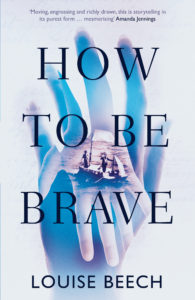 was performed at a small festival in Hull. It was inspired by the real-life difficulty I had when my daughter Katy, having been diagnosed with Type 1 Diabetes aged just seven, later had a complete breakdown and refused her life-saving injections. The only way I could get her to have them was via storytelling – and the only story good enough to keep her attention was that of my grandad’s survival at sea during the second world war. We not only bonded over the shared discovery of our ancestry, but Katy found the courage to fight, just as Grandad Colin had done for fifty days on a cramped lifeboat, under searing heat, with little food and water.
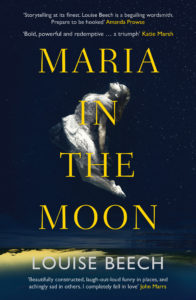 My third novel, Maria in the Moon, was actually the first one I wrote way back in 2007 after the devastating floods in Hull. We were living in temporary accommodation after our home was submerged beneath four feet of sewage-rich, muddy rainwater. I created Catherine-Maria at a rickety, makeshift, metal desk because mine had been destroyed. I poured my pain into her experience, her voluntary work at Flood Crisis, her despair at what the water had taken, and what it flushed out from her past.
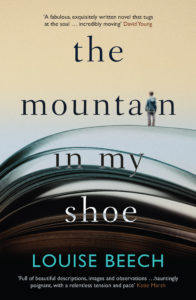 My own life has infiltrated some of my other novels, even in small ways. My voluntary work with children going through the care system helped shape The Mountain in my Shoe, and my own care records helped me create young Conor’s documents. I also moulded him around quirks and characteristics my own son had at that age.
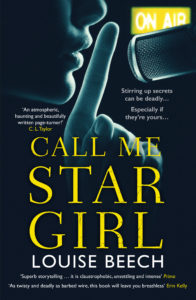 My radio work inspired Call Me Star Girl. I’ve volunteered at community radio and then at BBC Radio Humberside for over ten years, and often thought – when doing the night-time show – how spooky the studio is when it’s d
ark. The huge windows become mirrors and you can only see yourselves rather than the passers-by. You’re very isolated, just around four of you, and thousands of faraway listeners. The corridor to the toilets is spooky and deserted too. I often wondered what it would be like to be trapped in the building for a whole night, for whatever reason. And so, I created Stella, a radio DJ doing her final show, entombed in the studio with a killer on the loose.
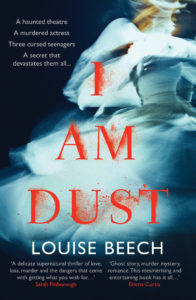 My role as a theatre usher had me create I Am Dust. Ushers steal about backstage, in the shadows, barely noticed. Invisible, we see everything. I’ve read theatre books where the actors are the protagonists and I wanted to give voice to those who work behind the scenes. When I wrote Chloe, and the musical world of the iconic show ‘Dust’, I wanted to create a claustrophobic place where only the theatre building exists.
In some ways, these are Own Voices stories, told from the perspective of a working class, northern woman. #OwnVoices is a fantastic movement; it’sa term coined by the writer Corinne Duyvis and refers to an author from a marginalized or under-represented group writing about their own experiences/from their own perspective, rather than someone from an outside perspective writing as a character from this group. It means that we hear first-hand the direct experience from those who don’t often have much of a voice.
I’m lucky enough to have a voice now. To have a platform. But when it came to sharing a story inspired by real-life young autistic man’s experience, I knew this would be my biggest challenge yet. This was a story about someone from an under-represented group, but it was not an #OwnVoices story. It wasn’t mine. Was it my place to even presume I could attempt to tell it?
I was having lunch one day with my dear friend Fiona, and she was very emotional, sharing with me that her twenty-year-old son Sean, who’s autistic, was struggling. He desperately wanted to meet a girl, have sex, find love, all the things most young men want. But being on the spectrum meant girls often found him either too different or were unsure how to treat him. Fiona said there was no help or advice, and she wished this topic was talked about more. When I said I would like to write a fictionalised version of Sean’s experience, she was delighted. ‘Please do,’ she begged me. ‘Your writing and Sean’s story … it would be perfect.’
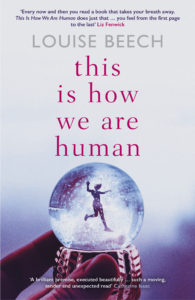 I knew I had to do this one justice. Had to get every nuance of This Is How We Are Human right. A few people thought I shouldn’t write it, especially when I mentioned autism. But Fiona insisted that I was giving Sean a voice – after all he didn’t want to write it, but he was happy for it to bewritten. This isn’t an #OwnVoices story, and I don’t claim it is. But I worked closely with both Fiona and Sean. We got together and acted out scenes. I listened carefully to how Sean spoke, what he thought, and how he felt. Fiona read each chapter as I went and offered guidance and feedback. It was a truly emotional journey. I couldn’t have done it without the two of them. In fact, I never would have written it at all but for them.
If you want to read some fantastic #OwnVoices books, here are a few of my favourites…
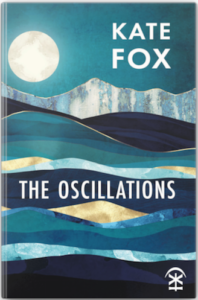 Kate Fox is a ‘gentle activist’ and campaigner for the voices of northerners, the working class, women, and the neurodiverse. She is a Cultural Ambassador for the National Autistic Society. Her poetry collection, The Oscillations (2021, Nine Arches Press), is beautiful, rich, funny and sad, and I dip into it whenever I want to look at the world through her clever and witty eyes.
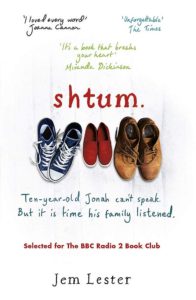 Shtum is a heart-wrenching and honest novel written by Jem Lester, inspired by his experiences with his own autistic son. He said, ‘A lot of the behaviours and the feelings that Jonah inspires in the book are very close to my feelings, because I couldn’t really see the point of reinventing an autistic character when I had one so close to home.’
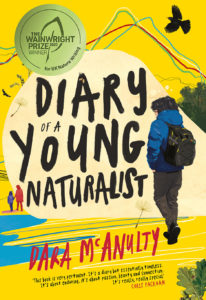 Diary of a Young Naturalist by Dara McAnulty was one of my favourites of last year. Dara is autistic and a teacher once told him he couldn’t write. Did he ever prove them wrong. This glorious book, with writing that is wise and beautiful, chronicles Dara’s experiences as he turns fifteen, and describes his love of and connection with nature, this love of wildlife intense and inspiring.
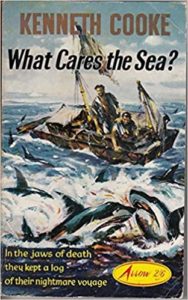 What Cares The Sea? is the true account by the other man lost at sea with my grandad, Kenneth Cooke. It’s out of print and hard to get hold of, but there are a few copies floating around. It’s a brutal, searing, honest account of isolation, bravery, survival against the odds, and friendship.


