




Antti Tuomainen introduces his latest novel The Beaver Theory
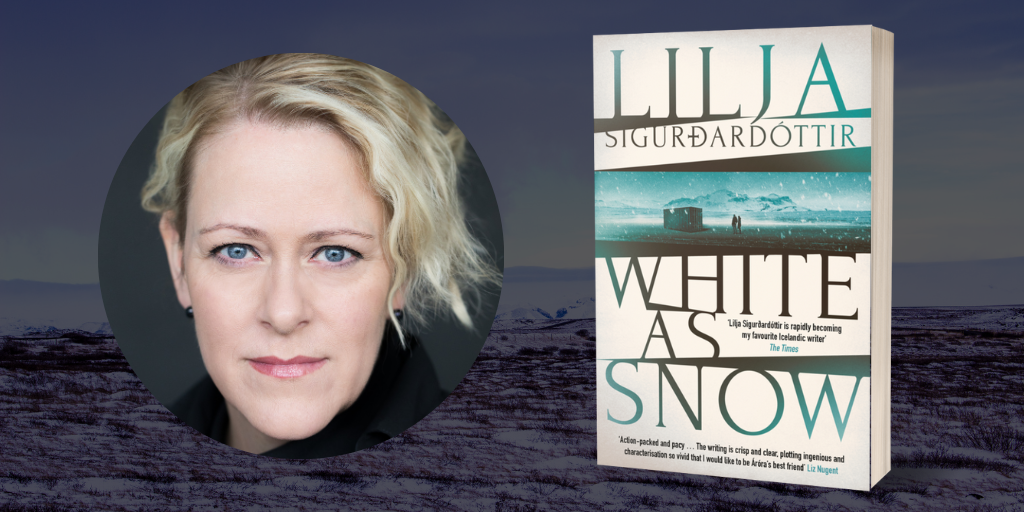
When most people think of Iceland, they conjure up images of stunning landscapes, geysers, and the magical Northern Lights. This pristine imagery, however, stands in stark contrast to the inspiration behind my latest English release, White as Snow (originally Náhvít jörð in Icelandic).
The story commences with a chilling discovery – an abandoned shipping container on the outskirts of Reykjavík. Inside? The bodies of four young women, and another barely clinging to life. As Detective Daníel delves into the investigation, Áróra is pulled into a web of intrigue and peril as she does a background check on a mysterious man. These parallel tracks soon intertwine, leading to unexpected and dangerous junctures.
The haunting backdrop for this novel is human trafficking – a grim reality more common in Iceland than one might expect. While the shocking element of the shipping container filled with bodies is borrowed from international incidents, the core of the story draws from real Icelandic cases of sex trafficking. To imbue authenticity and depth into the narrative, I conducted interviews with two survivors. Their harrowing experiences, along with tales from other sources, stunned me with their eerie similarities. This uniformity suggests that sex trafficking in Iceland isn’t just isolated incidents but possibly a facet of an organised network.
Iceland, with its low murder rates and close-knit communities, often exudes an aura of being near crime-free. Yet, these revelations about trafficking throw that perception into disarray. The tales of these women and countless others like them are a stark reminder that no country is immune to the dark shadows of human exploitation.
Penning White as Snow was no easy feat. The subject matter, raw and unsettling, led to many sleepless nights. Yet, there’s a glimmer of hope – by illuminating this issue through fiction, I aim to spark a dialogue, to raise awareness, and to ultimately contribute to the eradication of such heinous crimes.To every reader, I hope White as Snow not only entertains but also educates and inspires action. Because the world we envision – a world free from the clutches of human trafficking – begins with awareness and ends with collective action.


1. My first job was as a gravedigger and cemetery attendant.
2. I was a traitor in the first Norwegian celebrity season of The Traitors (but I was exposed in Episode 6).


3. The National Police Directorate in Norway has a meeting room named after me – Room 205 is ‘Lier Horst’.
4. I own a hotel in the Norwegian mountain town of Vaagaa, where you can stay in my room when I’m not there.


5. I am co-host of the weekly, live television show Crimewatch Norway (Åsted Norge).
Jørn Lier Horst is co-author of Stigma, with fellow Norwegian crime-writer Thomas Enger.


I’ve always loved Victorian novels and the history that made them, especially the worlds of dramatic entertainments – whether the sideshows of quack doctors who travelled round the rural fairgrounds, or the glamorous theatres where pantomimes could last for hours and had the most impressive sets, not to mention casting stars to help draw in an audience.

One of my novel’s characters is a girl called Tilly Lovell who doesn’t grow a single inch after the age of five – much like the real Princess Lottie who, at the age of fourteen, was only twenty inches tall and weighed no more than nine pounds. Princess Lottie was a member of a theatrical troop that performed as Harvey’s Midges, and that is all I know of her. However, this photograph brings her to vivid life, as do others I discovered of some of the real people who went on to inspire those invented in my fiction.
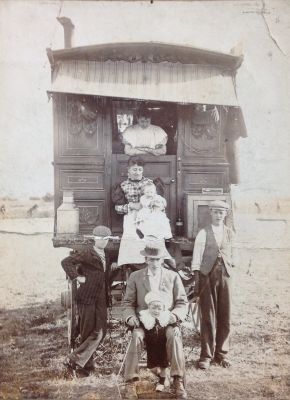
The famous Lord George Sanger was a circus manager, with his adult profession influenced by a childhood with his roguish showman father. The younger Sanger trained his own performing troop of mice, and this aspect of his story I have echoed when describing my character called Ulysses. There is also the tale told by Tilly and her sister of having seen a dead man’s face outside the window of their vardo, which was another memory from Sanger’s autobiography – when he claimed that one night a pair of grave-robbers were riding on his father’s fairground wagon, and the corpse that they had stolen and stored up on the roof started slipping from its wrappings in a most alarming manner.
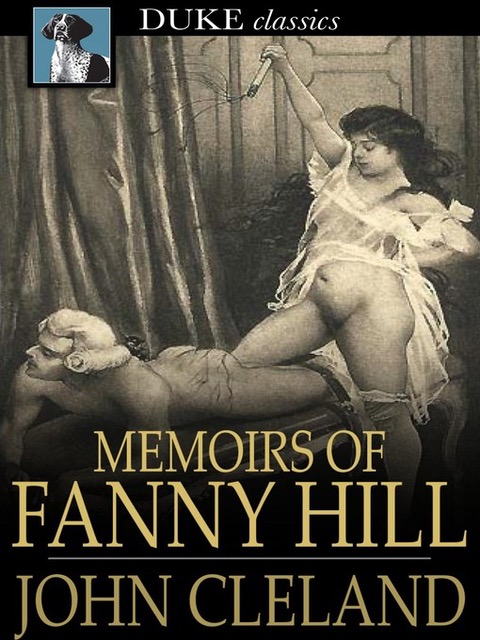
Another real character deserves a novel of his own; but, for the purposes of this one, he once owned the Chiswick house where my Lovell sisters live with an Italian called Captain (after escaping their exploitative drunkard of a father who tours his daughters round the showgrounds to sell his ‘miracle elixir’). In Linden House they are told how the now absent Thomas Wainewright killed some of his relatives by the means of poisoned powder kept concealed inside a ring. This is mirrored in the book when Keziah finds a ring that may well have held the poison, which is subsequently used to dramatic effect. Also drawn from Wainewright’s life is the fact that his family published the first editions of the scandalous book: The Memoirs of Fanny Hill. Still available today, the book is highly entertaining and extraordinarily explicit. Quite the sexual education for Tilly and Keziah Lovell.

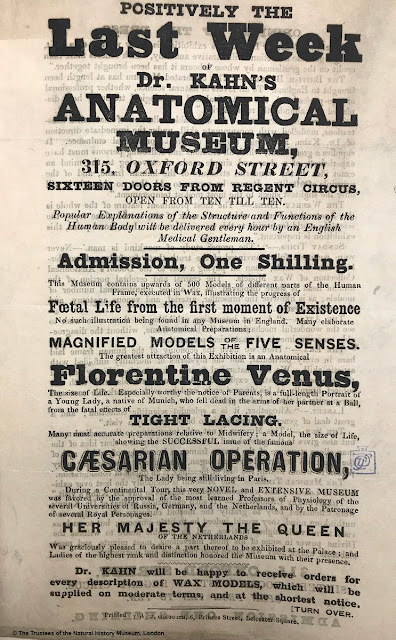
The Oxford Street Museum, where Theo Seabrook is employed by Doctor Eugene Summerwell, was another real venue run by a Doctor Joseph Kahn. Known at the time as a gloomy sepulchre of horror, it claimed to educate the masses on reproduction and good health, for which it also sold medicinal pamphlets and quack cures. Titillation for the masses came with displays of wax models which exhibited the ravages of venereal disease. There were also displays of so-called freaks of nature, while the Anatomical Venus represented a woman whose torso was exposed to reveal the inner workings of the organs of the body; even a baby in the womb. The museum was closed down and its exhibits were destroyed after complaints from the Society for the Suppression of Vice. However, such collections were very popular at the time. Today, for those inclined to see a similar display, Viktor Wynd’s Museum of Curiosities, Fine art, and UnNatural History is situated in East London. For somewhat less bizarre, but equally macabre displays, there are the specimens on show in the Hunterian Museum, which is currently owned by the Royal College of Surgeons.
Surgeons working at the time when this novel takes place were very often known as butchers. Many operations were performed with no sedation before an audience of students. The gruesome scene in which my character of Theo recollects one surgeon having claimed to amputate an injured leg in less than seven seconds flat is based on a true story.

Somewhat less bloody but perhaps equally cruel entertainments were to be found in the freakshows of anatomical ‘wonders’. Living human exhibits such as Joseph Merrick, known as the Elephant Man, would be toured around the showgrounds where their appearances drew responses of pity, shock, and disgust.
[Fedor Jeftichew with hairy face]

My own imaginary Aleski with his dense growth of body hair is partly based on the real Fedor Jeftichew. Fedor was called ‘The Dog Faced Boy’ and was displayed all over Europe. He was then hired by P. T. Barnum who took him to America, claiming the boy was raised by wolves, and still so wild he only barked or growled in conversation. (In fact, he was well-educated, speaking fluently in Russian, German, and English.) My Aleski also talks about a Julia Pastrana, another real and unnaturally hirsute young woman who was born in Mexico. It was claimed that Julia had an ape for a father, and when she died in childbirth the showman who had ‘owned’ her (likely to be the baby’s father) had Julia and her dead child embalmed to carry on his touring. The greed for money and fame was what produced the real monsters, more of whom are found within the pages of my book.
But, despite the gothic horrors and the darkness of this story I also hope to shed some light on the bonds formed by friends and a protective ‘family’ – with the hope that being ‘different’ does not always have to mean a life of pain and suffering.
Essie Fox is author of The Fascination, published on 22nd June, by Orenda Books.
For more detailed information about the themes and real stories discovered in The Fascination, please visit Essie Fox’s website: www.essiefox.com, or The Virtual Victorian, a historical blog based on ‘facts, fancies, and fabrications’ relating to the era. www.virtualvictorian.blogspot.com
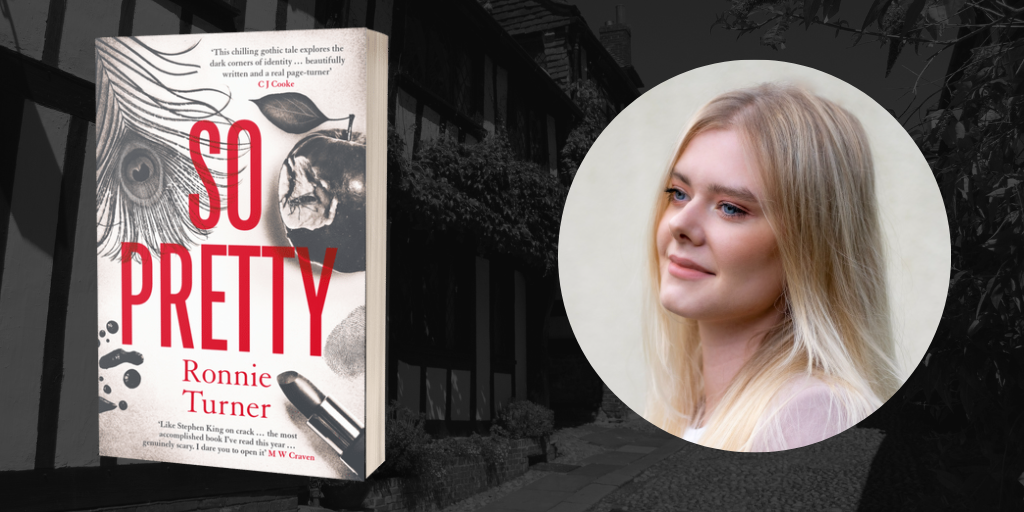
Waterstones senior bookseller and author of the haunting gothic thriller So Pretty chooses her favourite creepy, unsettling books.
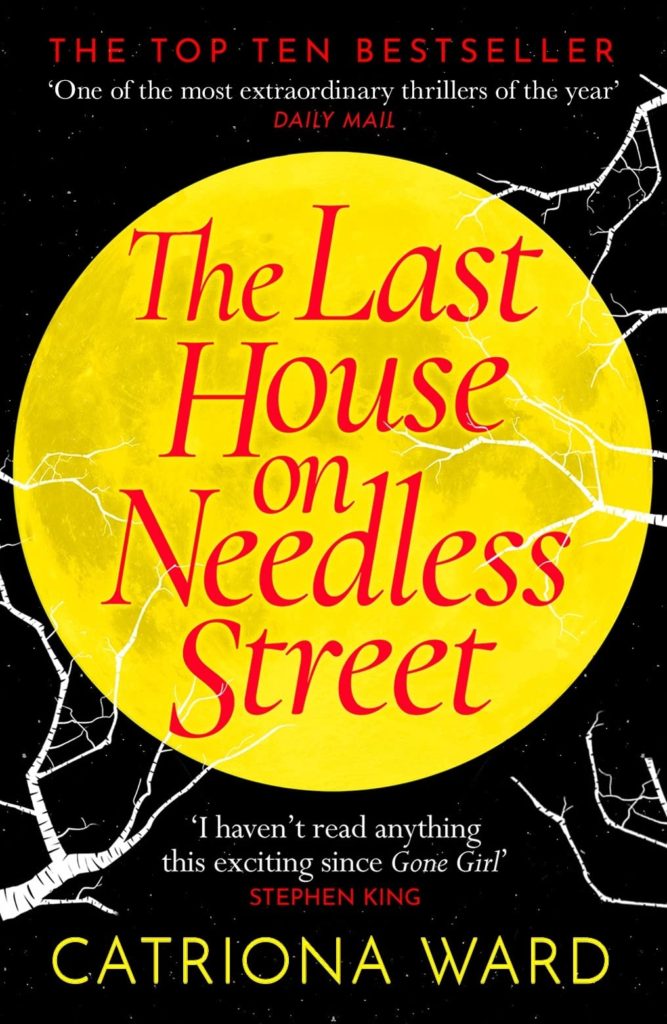
The Last House on Needless Street by Catriona Ward (General Fiction/Crime)
This book is electrifying. When a young girl goes missing, local man Ted becomes the prime suspect. He is a strange man, reclusive, quiet. He knows no one and no one knows him. Ten years later, frightening secrets begin to surface. Is Ted a murderer? What hides inside the last house on needless street? This is a nerve-shredding novel with shades of Stephen King.
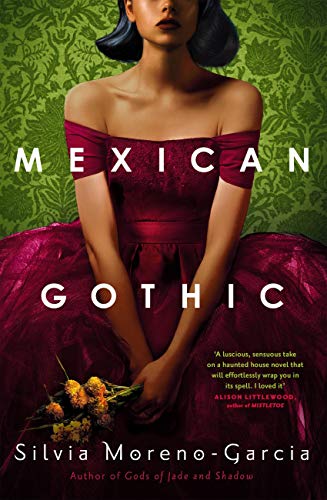
Mexican Gothic by Silvia Moreno-Garcia (Horror/Fantasy)
A wealthy socialite receives a distress call from her cousin claiming her husband is trying to murder her and that ghosts roam through her home. But this is so much more than a simple haunting; something else moves about this dark house. I read this book in one sitting. A menacing blade runs through the story and the prose has an elegance and subtly terrifying power. Think Daphne Du Maurier’s Rebecca with Guillermo Del Toro’s Crimson Peak.
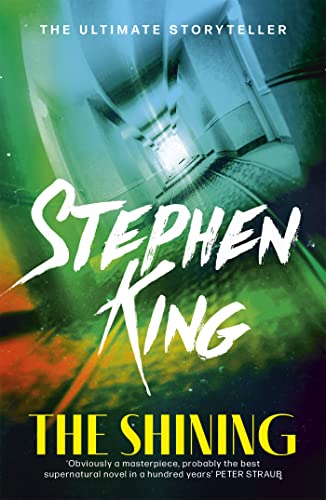
The Shining by Stephen King (Horror/Fantasy)
This is a classic. You probably know everything you need to about this titan of a book. I don’t scare easily but this really got to me. Fear creeps with this book. It is slow, subtle, you almost don’t know you are afraid until you realise you’ve kept the lights on to go to sleep. It’s superbly done and one of King’s best.
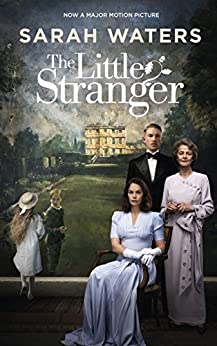
The Little Stranger by Sarah Waters (General Fiction)
Gloriously creepy. This is a gothic ghost story that packs a huge punch. It looks at family trauma and loneliness, and will chill the marrow of your bones.
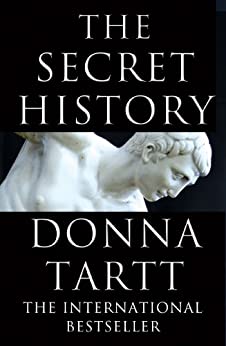
The Secret History by Donna Tart (General Fiction/Dark Academia)
If you enjoy your ‘creepy books’ sans ghosts, monsters and magic, try this modern classic. It’s the magnum opus for dark academia. It’s the story of a lonely boy who finds himself drawn to a strange band of students whose morals bend frighteningly close to the perverse. This is a hypnotic novel that explores the dark side of human nature and draws fascinating parallels to classical Greek literature. (If you’ve already enjoyed this, check out If We Were Villains by M.L. Rio)
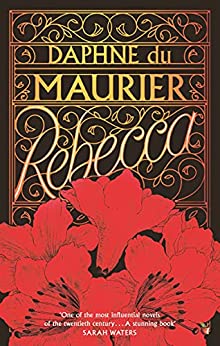
Rebecca by Daphne Du Maurier (General Fiction/Gothic Romance)
One of my absolute favourite gothic novels. An atmospheric, claustrophobic setting, mysterious characters who keep their secrets close and writing that is lyrical and quietly unsettling. This is a mighty book. I’ve read it twice and still I know there is more yet to discover inside its pages.
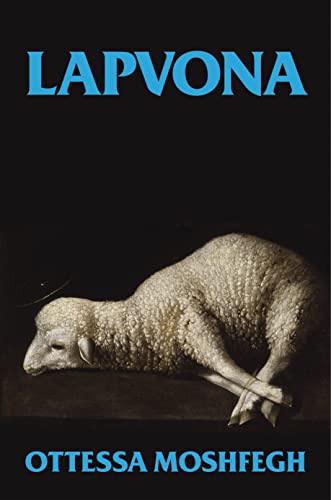
Lapvona by Ottessa Moshfegh (General Fiction)
This is one of the most challenging books I’ve ever read. It tests its reader, demands their full attention and doesn’t release its claws until the last page. The language is magnetic, spare and beautiful. With some very dark themes, at times I felt uncomfortable reading this. If you like to challenge yourself or you just enjoy weird, unsettling books that make you feel like you have bugs inside your skin, this is perfect.
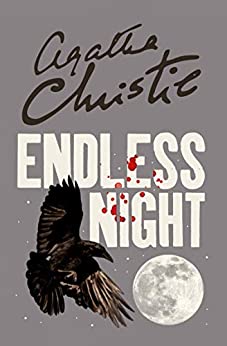
Endless Night by Agatha Christie (General Fiction/Mystery)
A true favourite of mine. I remember reading this for the first time when I was about fourteen on a camping trip. It’s particularly disturbing for Christie, with a contemporary feel, and I think it holds a great appeal for modern mystery fans, as well as young readers who are new to this iconic author.
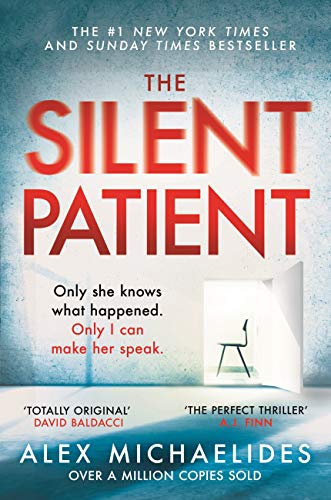
The Silent Patient by Alex Michaelides (General Fiction/Crime)
A sharp and clever thriller about a woman who murders her husband and then never speaks another word. It’s fast-paced and very creepy. I also love the references to Greek Myth.
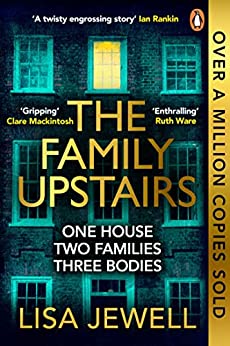
The Family Upstairs by Lisa Jewell (General Fiction/Crime)
I sped through this book SO quickly. It’s brilliantly written with a lurking sense of evil that bring your eyes close to the page. Cults, family trauma and twists aplenty. There is also a sequel if you enjoy this gem.
The Bookseller in me always wants find the perfect book for any reader, so I’ve very sneakily added a couple of recommendations for readers of Young Adult and ages 9-12, which I absolutely adore. Something for all tastes.
Miss Peregrines’ Home for Peculiar Children by Ransom Riggs
Wranglestone by Darren Charlton
The Deathless Girls by Kiran Millwood-Hargrave
Dead Good Detectives by Jenny Mclachlan
Skulduggery Pleasant by Derek Landy
The Monsters of Rookhaven by Padraig Kenny
Karen Sullivan, publisher of Orenda Books, is delighted to announce the acquisition of World English Language rights for Jenny Lund Madsen’s debut Danish thriller, Thirty Days of Darkness and a sequel, in a two-book Frankfurt pre-empt negotiated with Sophia Hersi Smith at the Copenhagen Literary Agency.
Copenhagen author Hannah is the darling of the literary community and her novels have achieved massive critical acclaim. But nobody actually reads them, and frustrated by writer’s block, Hannah has the feeling that she’s doing something wrong. When she expresses her contempt for genre fiction, Hanna is publicly challenged to write a crime novel in thirty days. Scared that she will lose face, she accepts, and her editor sends her to Húsafjöður – a quiet, tight-knit village in Iceland, filled with colourful local characters – for inspiration. But two days after her arrival, the body of a fisherman’s young son is pulled from the water … and what begins as a search for plot material quickly turns into a messy and dangerous investigation that threatens to uncover secrets that put everything at risk … including Hannah herself.
Karen says, ‘If ever there was a book destined for our list, this is it. Atmospheric, dramatic and full of nerve-jangling twists, Thirty Days of Darkness is also an outrageously funny literary satire with the convergence of (or battleground between) literary and crime fiction at its heart. Hannah is a masterful character – snobby, alcoholic, world-weary and selfish, yet strangely likeable – and her public spat with a bestselling crime writer is hilarious. The entire novel is clever, literary, thoughtful and beautiful but it is also, perhaps most importantly, an absolutely brilliant Nordic Noir thriller, full of darkness, brooding tension and unsettling turns, with an exceptionally plotted mystery. The conceits, the fact that Hannah travels to a tiny fishing village in Iceland to write her crime novel, the evocative, exceptional writing, all play directly into familiar territory for us and we are going to have so much fun publishing this ultimate meta thriller.
‘Jenny is one of Denmark’s most acclaimed screenwriters (Rita and Follow the Money) and Thirty Days of Darkness, the first in a series, won the Harald Mogensen Prize for Best Danish Crime Novel of the Year and was shortlisted for the coveted Glass Key Award. This superb blend of comedy and dark, dark Nordic crime, currently in production for a TV series, is perfect for Orenda.’
Jenny says, ‘I’m extremely proud that Thirty Days of Darkness will now join the ranks of the brilliant crime novels and thrillers published by Orenda Books, and I couldn’t be more excited for publication day. I hope readers will enjoy my Danish-Icelandic crime story with a twist and that they fall for our unlikely heroine Hannah, the literary novelist-cum-investigator.’
Sophia says ‘Thirty Days of Darkness is a brilliant debut and Jenny Lund Madsen is a breath of fresh air on the crime novel scene! We cannot wait for Orenda Books to introduce English-speaking readers to this darkly funny and deeply original Nordic Noir.’
Thirty Days of Darkness will be translated by Megan E. Turney and published by Orenda Books in hardback in May 2023. For more information, please contact Karen@orendabooks.co.uk.
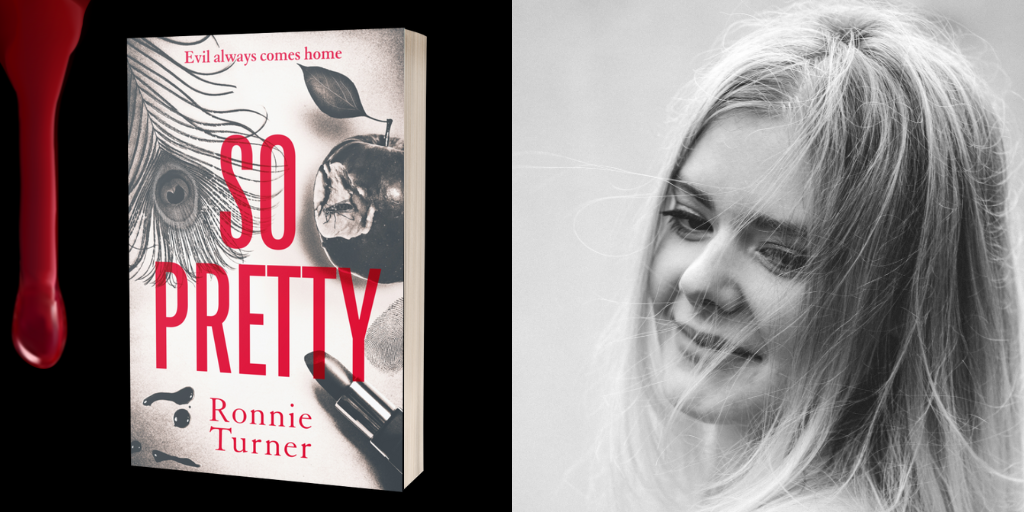
Karen Sullivan, publisher of Orenda Books, is delighted to announce the acquisition of World English Language rights for Ronnie Turner’s So Pretty and a second (untitled) sequel, in a two-book deal negotiated with Emily Glenister at DHH Literary Agency.
Teddy Colne arrives in the small town of Rye, hoping to settle down and leave his past behind him. But fear blisters through the streets, and the locals warn him to avoid a shop known only as Berry & Vincent, where people have been known to come to a bad end. Teddy, however, is desperate to discover why everyone fears the proprietor of this establishment, and takes a job behind its dusty, creepy windows. Ada moved to Rye with her young son to escape a damaged childhood and years of never fitting in, but she’s lonely, and ostracised by the community. Ada is ripe for affection and friendship, and everyone knows it. As old secrets bleed out into this town, so too will a mystery about a family who vanished fifty years earlier, and a community living on a knife-edge. Teddy looks for answers, thinking he is safe, but some truths are better left undisturbed, and his past will find him here, just as it has always found him before. And before long, it will find Ada too.
Karen says, ‘I am beyond excited to share this disturbing, idiosyncratic and wonderfully lyrical novel with readers worldwide. As they say, I have “history” with Ronnie. I met her when she was just sixteen, at the Penzance Literary Festival and, even then, saw the huge potential in her writing. When So Pretty was sent in on submission, I read it instantly and remain awed and fully mesmerised by Ronnie’s extraordinary writing and blown away by this original, elegant, quirky and gloriously visceral novel. There is a pervasive, brooding tension that is both unsettling and deeply compelling, and its complex themes continue to provoke thought long after the final page is turned. Ronnie is an Orenda author if ever I saw one, and I am truly thrilled to publish her sublime work. Still in her early twenties and now a Waterstones bookseller, Ronnie is an exciting and original talent, and I have no doubt that readers will be as entranced as we are.’
Ronnie says, ‘I am super excited to join the Orenda Family and work with the mighty Karen Sullivan. She is an utter powerhouse, and I have been in awe of her and all of Orenda for many years. I feel very lucky to have her championing my work, and to have found the perfect home for So Pretty, a novel which looks at identity, obsession and the perilous bonds of family. I know Karen, West Camel, Emily and I will make a great team and I’m so looking forward to this journey together, and to seeing So Pretty in the hands of readers very soon.’
Emily says ‘I have been dying to work with Karen Sullivan for a long time and when Ronnie sent me So Pretty, it had Orenda’s name all over it, so it made perfect sense that Karen loves it as much as I do. Ronnie is a fiercely talented writer, whose star is well and truly on the rise. She excels at the weird, wonderful, and downright unsettling. Watch this space, publishing!’
So Pretty will be published in January 2023 by Orenda Books. For more information, please contact Karen@orendabooks.co.uk.
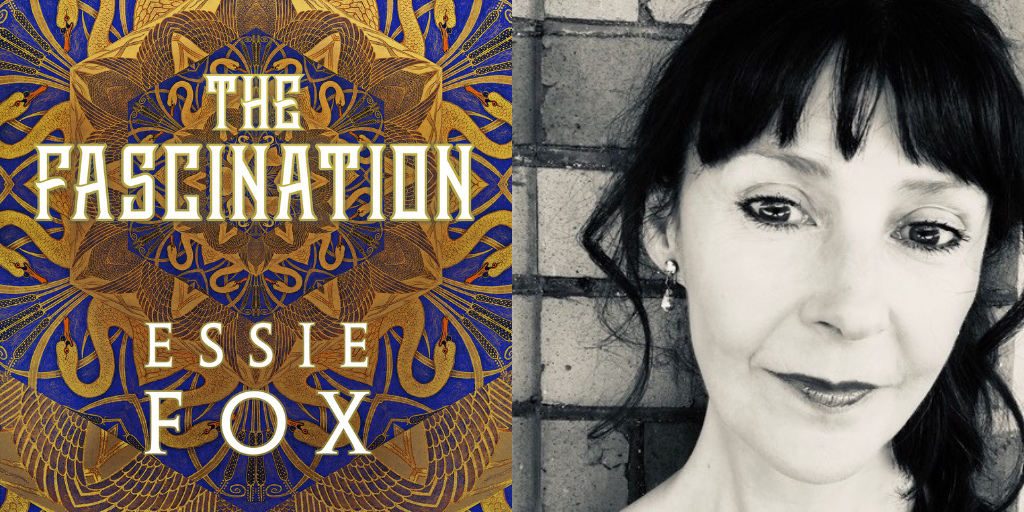
Karen Sullivan, publisher of Orenda Books, is delighted to announce the acquisition of World English Language rights for Essie Fox’s The Fascination, in a deal negotiated with David Headley at DHH Literary Agency.
Set in a Victorian world of human phenomena, and encompassing rural fairgrounds, the glamour of London theatres, and an Oxford Street Museum of morbid curiosities, The Fascination tells the story of twin sisters, Keziah and Tilly Lovell, identical in every way, except that Tilly hasn’t grown a single inch since she was five. Coerced into promoting their father’s quack elixir, the girls are eventually sold to a mysterious Italian, known only as ‘Captain’. In a second strand we meet Theo, an orphan raised by his wealthy – and resentful – grandfather in an opulent country home. When his grandfather remarries, Theo is forced to leave his home without a penny to his name and takes on work as an assistant in Dr Summerwell’s Museum of Anatomy. And it is here that the lives of the two sisters and Theo collide, with devastating effect.
Karen says, ‘The Fascination is a glorious, glittering evocation of Victorian London and its obsession with ‘deformo-mania’; it’s sumptuous, visceral and exquisitely written, populated by superbly drawn, often unscrupulous characters, and powered by an unexpected, brooding tension … and multiple layers of intrigue and deception. At its heart are universal themes of love and loss, and, perhaps most powerfully, an examination of what it means to be unique, to fall outside the physical norm, to be excluded and exploited, and yet retain a fierce and independent spirit. Essie Fox is renowned for her atmospheric, bewitching explorations of Victoriana, and this extraordinary, evocative novel showcases a writer at the height of her powers.
‘This is masterclass historical fiction, with themes and writing that embrace everything we want to do at Orenda Books. We are elated to welcome Essie to our team, and cannot wait for readers to enter the spellbinding world of The Fascination.’
Essie says, ‘The Fascination has been my passion for the last few years. It’s a story that was forming, even while I was writing other novels; something bursting to get out. So, it was an absolute delight for me when Karen at Orenda shared my enthusiasm, and had such vision for the project. I hope that readers will now take as much pleasure from the story as I felt when writing it.’
David Headley says, ‘Well-known to the publishing industry, Orenda Books is an absolute powerhouse, so when Karen said she wanted to work with Essie on her new book, it just made perfect sense. It is a privilege to represent Essie and her writing, which only goes from strength to strength. I know that The Fascination has found its perfect home, and I can’t wait to see it in readers’ hands.’
The Fascination will be published in hardback in June 2023 by Orenda Books. For more information, please contact Karen@orendabooks.co.uk.

Karen Sullivan, Publisher of Orenda Books
For anyone with optimum ability – physical, mental and otherwise – it’s difficult to imagine what it might be like when things we’ve always taken for granted are no longer there, to countenance a life without ease.
That was certainly the case for me. I – and then my children – rarely experienced anything other than mild illness, but then two things changed that.
When he was approaching two years old, my middle son experienced a serious brain infection as a rare side effect of the MMR vaccine. He was left profoundly deaf in his left ear, and that put us both on a steep learning curve. I was a young mother, completely out of my depth, and pretty much unable to grasp the implications let alone the mitigations that needed to be put in place – sitting at the front of the class with his ‘hearing ear’ facing the teacher; a red-flag alert when he swam competitively, because he couldn’t hear the whistle; a grudging acceptance that he wasn’t ignoring me when I spoke to him. He genuinely couldn’t hear me. Even still, there was so much we didn’t consider. When he was preparing for his first year at the University of Edinburgh, he had to ‘tick the disabled box’, something he was reluctant to do, something he had literally never done, and the services and products on offer filled me with guilt. They could, for example, provide a vibrating pillow that worked as an alarm. It honestly never once occurred to me that he wouldn’t be able to hear an alarm. Rightly or wrongly, we operated as usual and most of his friends – even close ones – were unaware that he was deaf.
But it got me thinking, which got us talking. Where’s the shame in admitting that you’re different? That your needs are different? As someone who has always encouraged my sons to be themselves, to be unafraid of being different, I was surprised and a little saddened that this particular difference was somehow embarrassing for him to admit. When he was applying for his first jobs as a trainee lawyer, he outright refused to ‘tick the disabled box’, and I didn’t really know what to think about that. He got a job; I doubt they know that one ear doesn’t work.
That’s an invisible disability, I guess. Like chronic illness or pain or emotional illnesses or anything else that makes us less or un able. And that’s where the second thing comes in. It’s no secret that I became seriously ill when I caught Covid in March of 2020, and it changed my life completely. I suffered not just from Long Covid, with overwhelming, crippling fatigue, brain fog and memory loss (to the extent that I had to surround myself with notebooks and write down everything, when previous to this, my entire business and home life was held there), arthritis in my fingers, and staggering digestive pain and headaches that would appear for no reason. I also cried a lot. And slept. My abilities were disabled, so that, in itself, becomes disability, right? With every subsequent case of Covid (and I’ve had alarmingly many) and even vaccine, I was flattened completely. Disabled. Unable.
In publishing, we talk about diversity all the time, and getting recognition for groups of people who are not represented the way they should be, but that focus has been far too heavily weighted in favour of class and ethnicity. True diversity means representation in books, in marketing, in everything, for all groups of people, including those who are disabled – visibly or invisibly, obviously or hidden – and we, as an industry, definitely fall short on that front.
A number of our Orenda team have disabilities, including chronic illness, and we are, as a result, collectively compassionate, and eager to ensure that our events, for example, are accessible, that our working practices are fair and inclusive, that our books are representative. But it wasn’t until Covid stopped me in my tracks that I realised the immense importance of including characters and situations that might fall outside the ‘able norm’ in our books.
When people see themselves represented in books, they feel seen and reading becomes more relevant and immersive. When we read about people whose lives are different from ours, who face challenges that we cannot even begin to imagine, we learn. We understand more deeply; we can take a literary walk in another person’s shoes. And only then can there be the change we need to see in our society. It took a personal experience of being unable for me to understand the importance of this; the importance of awareness, of compassion, of inclusion, of representation … of the need to include accurate portrayals of disability and the disabled in our books, and to keep this in mind in everything we do. I would, personally, devour a book that encompassed my experience; my son and I would both be riveted to a book about ‘invisible deafness’, and we would urge others to read it too.
We’re actively seeking change, within the parameters of our determination to publish bold, original, thought-provoking fiction, and we urge other publishers to do the same. Indies are well placed to forge a path, and that is exactly what we’ll do here at Orenda Books … an accessible path, of course.
I’ve taken some big risks with my novels, not only in that I write in almost a different genre every time, but because of the topics I’ve chosen to explore. I don’t like to make things easy for myself when I create fiction – I enjoy being challenged, pushed, and learning something new. This is why I’ve often written outside my own limited experience. Yes, most of my novels have a little of me in them, I admit, a little of the emotional aspects of my life, but who doesn’t feature in their own work? It’s impossible to hide fully in our prose.
Writing outside of what I know – so to speak, if we throw the ‘write what you know’ advice on its head – has meant exploring a variety of disabilities in some way. I didn’t randomly choose these conditions; they were often visited upon me. When I created Sebastian, a readers’ favourite from This Is How We Are Human, and perhaps my proudest character – I based him on a dear friend of mine. Sean is a real-life young man who is autistic, and he’s very vocal about this, very proud, and very annoyed when people get him wrong. Who wouldn’t be? So when I put him on the page, albeit as a fictional creature, I knew I had to get it JUST right. Sean made sure I did. He acted out certain scenes with me before I wrote them, which I then recorded and listened back to, to make sure the way he spoke was accurate. He also read the finished thing and gave further advice.
I worried that taking on the whole spectrum of autism, especially when I haven’t lived it, might be met with criticism. And I would have understood that. We need to hear the ‘own voices’ of those living different lives to ours, those in the minority, those on the fringes of society, those often misunderstood, those without a voice. That’s the priority. But Sean assured me that he was being heard via my pen, so to speak; he didn’t know how to write but I knew what he wanted to be said, and I can.
One condition that I’ve explored twice now is Type 1 Diabetes, which my daughter was diagnosed with aged just seven, after almost going into a coma. It felt absolutely natural to explore this complex illness that involves numerous daily blood test and injections, and that can render the sufferer unconscious during the dreaded hypo. In How to be Brave nine-year-old Rose is based on my daughter and what she went through after diagnosis, and in The Lion Tamer Who Lost Andrew, one half of my tragic gay relationship, has been diabetic since he was a child. Was it easier to write what I knew? Of course it was. There wasn’t any research, and I wasn’t afraid of judgement, having experienced this. But it almost felt lazy, which is ridiculous because it was very emotional to look back on a painful time in my life and paint a person going through the same.
In my current novel, Nothing Else, a main character realises that she is beginning to lose her hearing. This is doubly difficult for her, because she loves music, and is a beautiful pianist. Some of my research involved chatting to my sister who can communicate via BSL (British Sign Language) and she explained to me how that works and who uses it. I also have a friend who uses a hearing aid and she described exactly what everyday world sounds are like for her. But really, the main requirement for writing the unknown, aside from research, is having an open mind and some empathy. We’ve probably all lost something we loved or been forced to give up something we didn’t want to, and these experiences can shade our story with the necessary layers.
Watch out for a future character who is a wheelchair user and is on the receiving end of pity he neither wants nor deserves. My own mother has used a wheelchair for the last three years and it’s really opened by eyes to how unseen these people are, not only physically, because we have to look down to speak with them and because we can miss them in a crowd, but due to a lack of access, a lack of consideration, and through pure ignorance, often speaking to a carer rather than the person sitting before us. I realised how many simple things I’m able to do – get on a train without assistance, go into a shop that has a step leading to it, go into a bar that’s underground, fit through every door. This gave me a great deal of compassion for my character.
Are there any topics or people I wouldn’t write about? I’d like to think not. But I’d only do it if I felt I could do it sensitively, with respect, with a great deal of research, and with my heart in the right place.


