




All of the below titles are only 99p!
Click the image to get your copy now!


All of the below titles are only 99p!
Click the image to get your copy now!
Karen Sullivan, Publisher of Orenda Books, is delighted to announce that Christopher MacLehose will be leading Orenda’s first-ever imprint.
MacLehose, whose Mountain Leopard Press list was sold by Welbeck to Hachette in December 2022, will now publish Open Borders Press as an associate list of Orenda Books. Orenda and the new imprint have much in common, sharing a culture and approach, and MacLehose says that Open Borders Press is grateful to be able to take advantage of Orenda’s dynamic and responsive operation.
Having commissioned translations from thirty-seven languages during his years as a publisher, MacLehose will continue to look for authors of exceptional quality from all over the world.
The list will endeavour to match the success of the Harvill Press and MacLehose Press models in publishing the best literary fiction and non-fiction, much of it in translation, as well as crime fiction (exclusively in translation) written by outstanding storytellers. The quality of the translations and of every aspect of the design of the books will be paramount.
Koukla MacLehose, who founded the celebrated scouting agency that bore her name, will work with the Press.
The first title under the new imprint, Andrey Kurkov’s Our Daily War, a sequel to the international bestselling Diary of an Invasion – a deeply personal account of the continuing war in Ukraine – will be published in the summer.
Karen Sullivan says, ‘I have long admired Christopher, both for the energy and ingenuity he brings to the industry, but also for his unerring eye, his profound and purposeful support of literature in translation, and his uncanny ability to seek out literary gems. It is an honour and a joy to work closely with him, and his publishing vision for Open Borders Press very much reflects Orenda’s ethos and complements our output.
‘As we approach our tenth anniversary, it feels like the right time to embrace this opportunity, and we are looking forward to what is bound to be an indomitable partnership. OBP’s first published title, Andrey Kurkov’s Our Daily War, is a powerful, insightful and unexpectedly humorous book, and being involved in publishing Ukraine’s finest writer is an absolute privilege.’
You can reach Christopher MacLehose on Christopher@maclehose.net or +44 7711 696098
Andrey Kurkov’s Our Daily War will be published in hardback in July 2024.

All of the below titles are only $1.49 throughout the month of February
Click on the images to buy now!

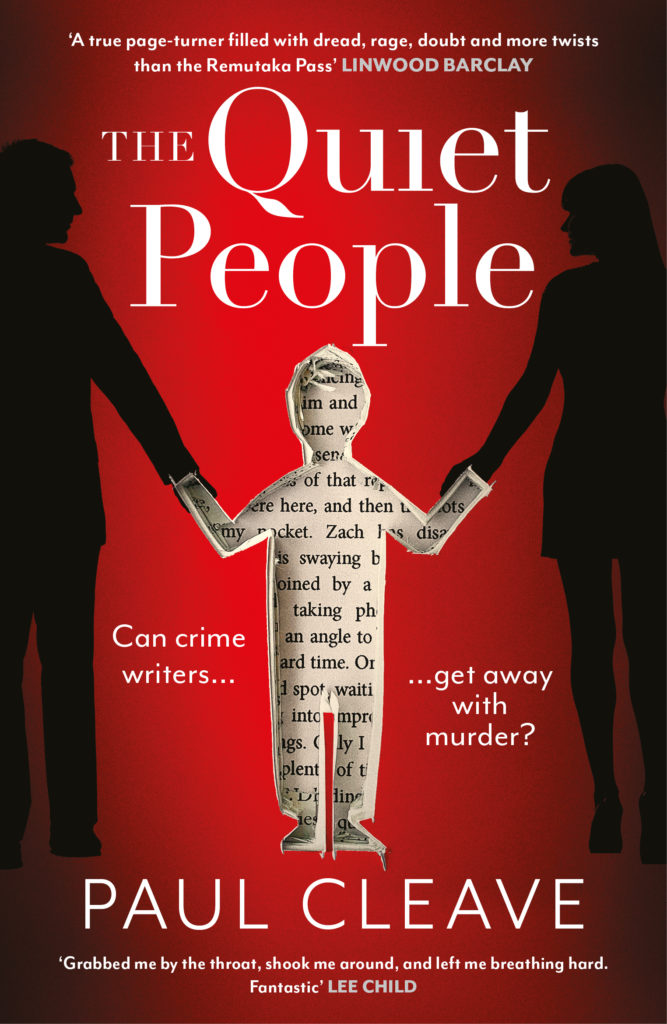

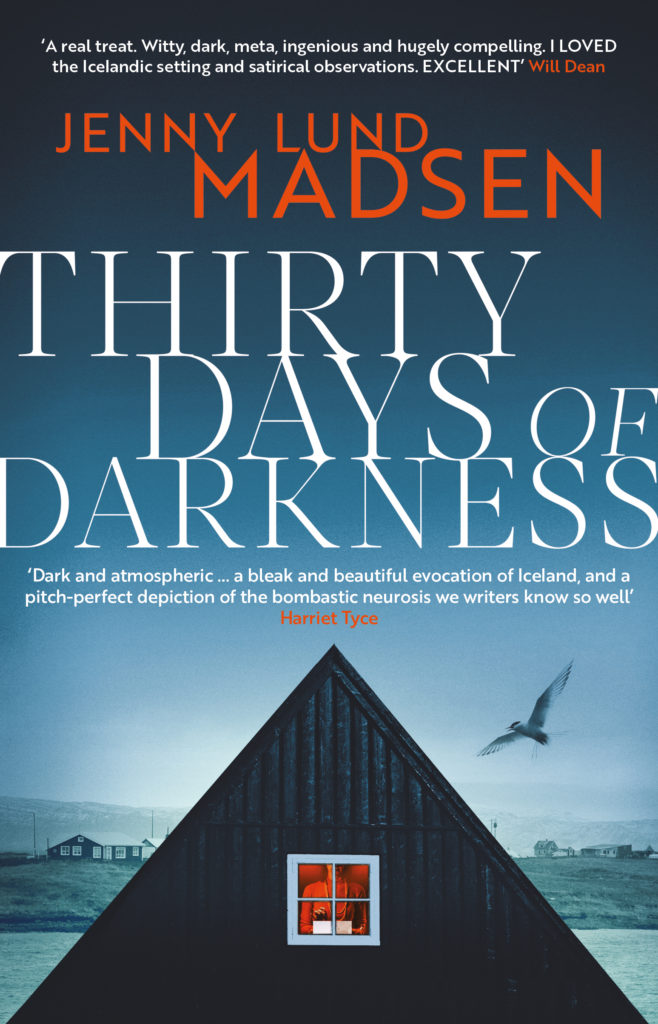
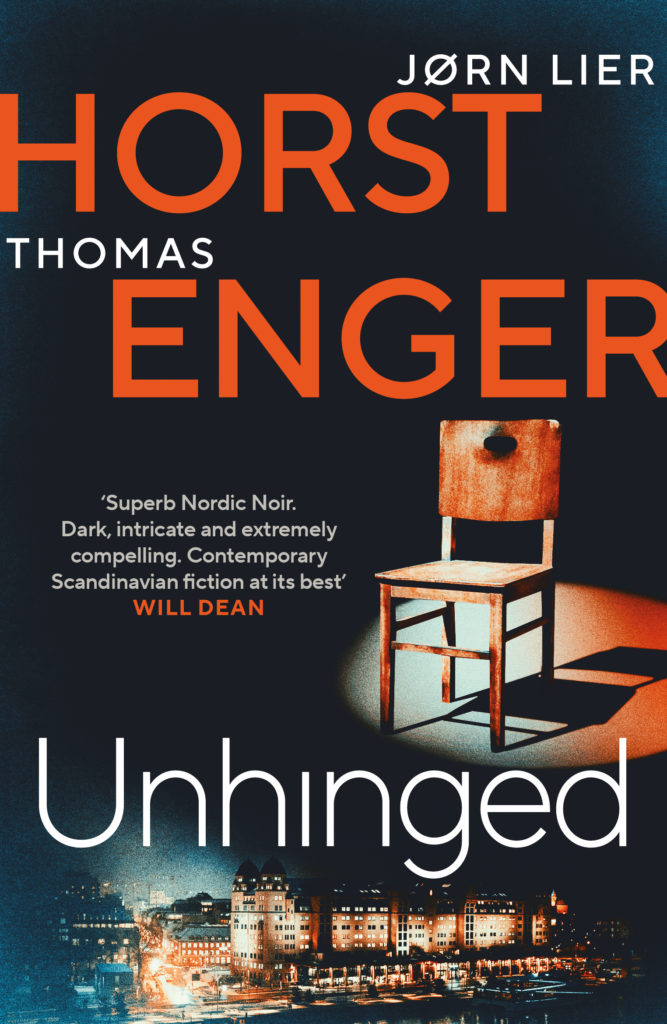


All of the below titles are only $1.49 at Amazon Australia and New Zealand.
Click the banner to get your copy now!


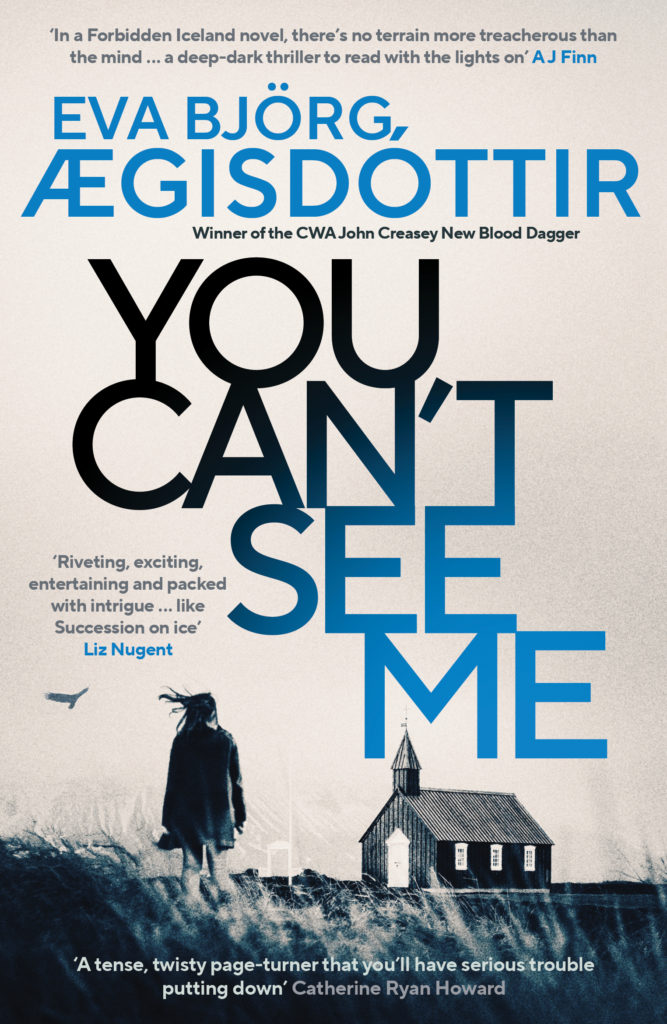


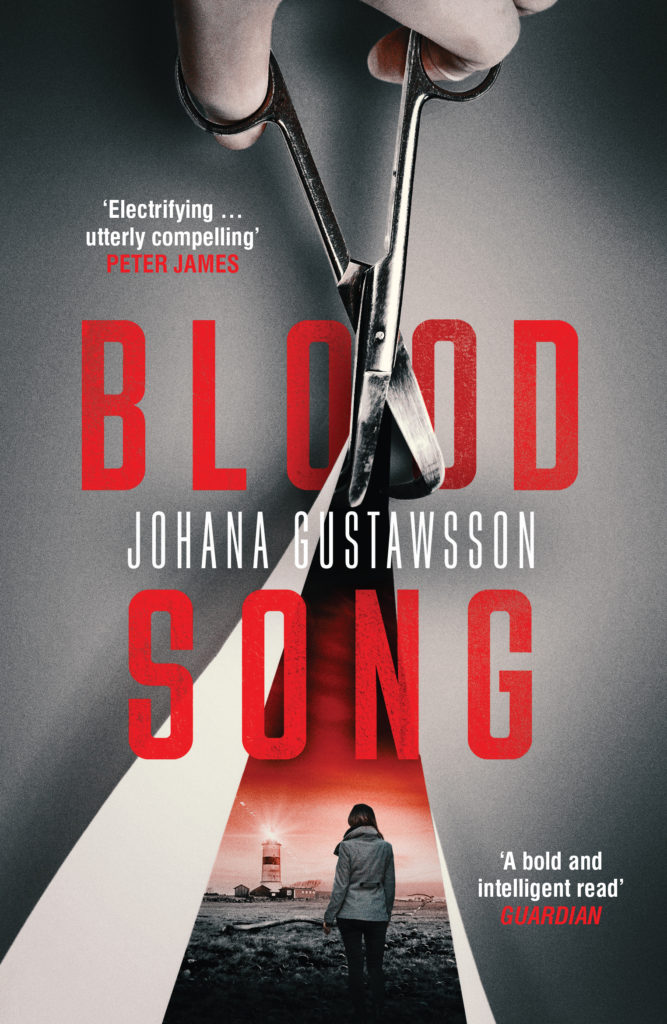


All of the below titles are ONLY 99p at Amazon UK!
Get your copy now!


For the majority of my adult life I have worked in politics and served four terms as an elected member of parliament – with one term as a minister. I found that I tapped into knowledge that has been compounded over a long period of time – an understanding of budgets, the law-making process, and the main topics of public debate.
Be sure, however, that I gave myself permission to fictionalise events and settings. Some of these were based on ´what if´ scenarios – something had been done that was in reality debated but not realised, for example. I deliberately stayed well away from parliament itself because I had so recently left politics when I wrote the book. I wasn’t ready to go deep into that world in Dead Sweet, but who knows what the future will bring! But what I could use – and did – was what I learned about people.
One of the privileges of having been in politics for this long is how well you get to know society and all of its different aspects. Every day you wake up and hear and read about issues that are affecting the people we serve. And then there were all the people we met – the hundreds, thousands of people, with their stories and their individual concerns, and the dynamics they create in various situations. I watched the people around me – everywhere – to see what was worrying them or bringing them joy; I watched them closely in meetings and in social gatherings. It was my job to understand them in order to do my job.
I started writing based on my interest in people and especially the dynamics of different relationships. Sometimes we ask ourselves if it is possible for someone to be born bad and also what makes even the best of us do the unthinkable. I wondered what a smart psychopath could be doing in the surroundings that I live in – how far could he go and if, and then whom, would be able to stop him (or her!).
I started to create the characters who then ended up in Dead Sweet. I imagined them walking into a room, considering how the energy would shift in their presence, how their voices would sound and how others would react to them. Slowly the story started to come alive. When my government official, Óttar, became more defined, I chose to make him a high-ranking official because I know that environment well. I know the set-up, the dynamics, and what happens on a day-to-day basis.
As the writing progressed I found the need to explore and write more about the relationships and interactions between my characters, between Sigurdís and her family, between brother and sister, mother and son, Sigurdís and her boss – because no relationship is the same and relationships are never black and white. There are layers of the past defining every relationship – a shared past between the people involved and also their own individual experiences. And often the most important things you find is in what is ´not´ said but shown in body language and what ´lies in the air´.
I am often asked if Óttar is based on someone I met during my political years. The answer is simply no, because most of the people I worked with were genuinely trying to do their honest best every day. That’s why I found it fascinating to place him there to see what he could get away with. People do the best and worst things.
Katrín Júlíusdóttir’s Dead Sweet, translated by Quentin Bates, is out today in beautiful hardback.

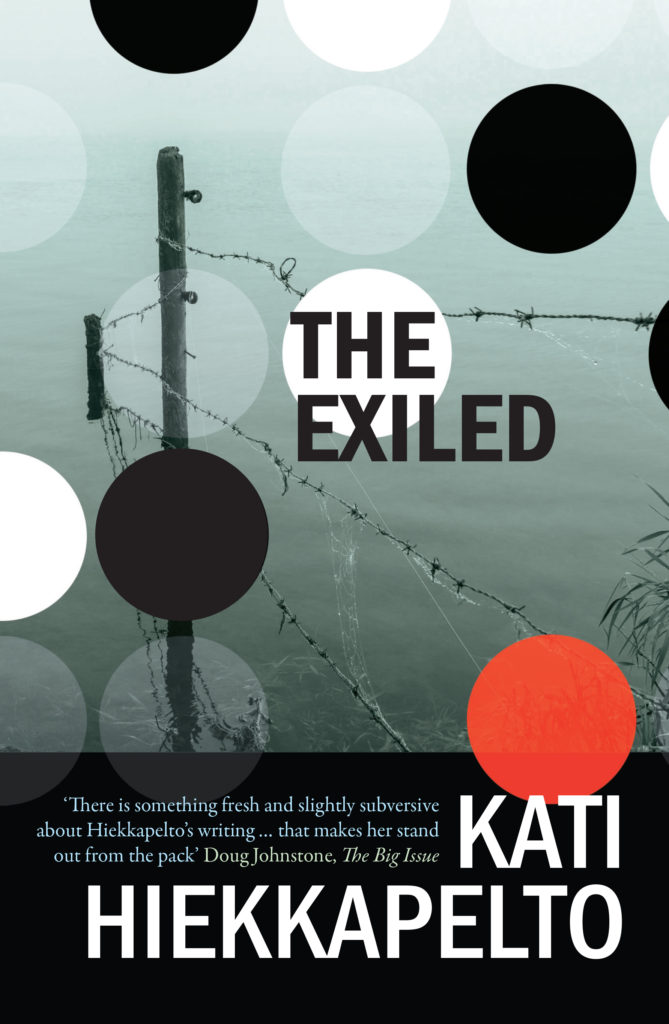
Grab a Christmas bargain!
All of the below titles are ONLY $1.49 (click on the image to buy now!)




Hailed as the ‘most original crime writer in Britain’ and widely compared to Chuck Palahniuk and Bret Easton Ellis, Will Carver’s imagination knows no bounds. Here’s what inspires him … and, of course, his darkly funny, twisty new thriller Upstairs at the Beresford.
You hear about these people who knew from birth that they wanted to be an author.
Not me.
Sure, I secretly wrote poetry through my teenage years. I still do. But my love was with film. I watched EVERYTHING.
I still do.
Then I found theatre. I loved Shakespeare. I read anything by Brecht. And Berkoff. And all that Kitchen Sink stuff. For me, nobody wrote dialogue like David Mamet. That’s still the case – even though Aaron Sorkin clearly has a gift for it.
I thought that maybe I would become a playwright.
And, somewhere inside, I still do.
I was reading Nick Hornby and Helen Fielding and Mike Gayle when I went to university. I thought I might fit in well with that ‘lad lit’ crowd. But I had never really thought about writing a book. I didn’t have a writer out there who was producing novels that made me think that it was the medium for me.
But that changed when I read Fight Club.
I had no idea that you were even allowed to write a book like that and it opened up an entirely new world for me. I think it’s a book that catalysed many writers to action.
Choke clearly had an influence on the support group idea for Psychopaths Anonymous, though I wouldn’t come up with that idea for another twenty years. The opening of that book also has a very similar feel to the opening of Hinton Hollow Death Trip, where the narrator is talking directly to the reader and telling them not to even bother reading the story.
Chuck Palahniuk has, of course, been a huge influence on me. And it must be able to be seen in my writing because I do get compared to him … frequently. And I’m, obviously, okay with that. It’s not that I’m trying to copy his style, it’s just that his books let me know that writing can have style.
Hemingway was the first writer that I devoured. By that, I mean that I read one book and then read only him until I had consumed everything he had written. First was A Moveable Feast. This was a fascinating glimpse into that time in history where many writers and artists were living and creating in Paris. I moved on to The Old Man and the Sea, which isn’t even a hundred pages but so much happens.
This really affected me. The prose was so sparse. There were no drawn-out descriptions. Somehow, he could write, ‘The room was dark and cold’ and I felt like I knew exactly what that room looked like.
When I write things like this post, I can get stuck in waffle, but when I write my fiction, I like to keep it laconic. Every word has to count. No fluff. No bluster. Short sentences. Short chapters. Make the point. Paint the picture enough that the reader fills in the gaps.
Hemingway said something like, ‘The beauty in the movement of an iceberg is that two thirds are underneath the water.’ It’s a beautiful way to describe his style of writing and something that I always consider in my own. This is certainly something I do when I create vignettes of my characters.
My third and final influence is Charles Bukowski. I’m such a cliché, right? Angry, young(ish) man likes Palahniuk and Bukowski. Shocker! Well, yes, they do tend to go hand-in-hand. And maybe I could have put Hunter S. Thompson in there to make the biggest hackneyed statement but his work didn’t really affect me in the same way.
I did with Bukowski what I had done with Hemingway. I read Post Office and completely fell in love. Then I read all he had written. His writing is so raw and dirty. No punches are pulled. I like that. It feels like the lightest of edits has been performed in order to maintain the writer’s voice.
And what a voice.
Bukowski was also a fantastic poet but his poetry, like his prose, is unflinching in its simplicity. Much like Hemingway, he doesn’t try to complicate things. One of my favourite things that he ever said was that ‘An intellectual says a simple thing in a hard way. An artist says a hard thing in a simple way.’
That’s what he did. I think it’s all he knew how to do. As a writer, I try to tackle some tough subjects in my books but put them across in a way that they can be thought about and understood. Bukowski is always in mind when I’m doing this.
So, these are the three biggest influences on the way I write and the things that I read. There are, of course, writers that are fantastic at creating characters or setting scenes or crafting a plot but when it comes to the actual art of putting words on a page, Palahniuk, Hemingway and Bukowski are my go-to guys.
There is a truthfulness to the writing that binds them.
Raw. Sparse. Stylish. And honest. With an added ‘fuck you’.
Upstairs at the Beresford, by Will Carver, is out today.

1. I can solve a Rubik’s cube without pulling off the stickers. I’d generally solve one in under two minutes (which isn’t exactly a world record), but sadly it’s a skill I’ve slowly forgotten due to lack of practice.
2. I’m pretty good at DYI. I can rip out kitchens and bathrooms and replace them, I can tile, wire stuff up, build basic coffee tables or TV cabinets, hang TVs on walls and make the cables disappear, I can paint, and landscape … but I’m hopeless with cars. I know where the petrol goes, and which direction is forward, but that’s about it.
3. When I was 19, I accidently did a 360 degree spin in a car at a funeral, spraying mud all over family members and friends as they were walking away from the grave.
4. I’m a huge Star Trek geek. I have Star Trek posters throughout my house, and Funko Star Trek figures, and other memorabilia. I usually put a Star Trek reference into whatever I’m writing. My ideal job would be to write for one of those shows.
5. I travel only with carry-on, even if I’m heading away for four or five weeks. I hate lugging suitcases around, so keep things pretty tight.
Paul Cleave is author of His Favourite Graves, published on 9th November 2023 by Orenda Books.
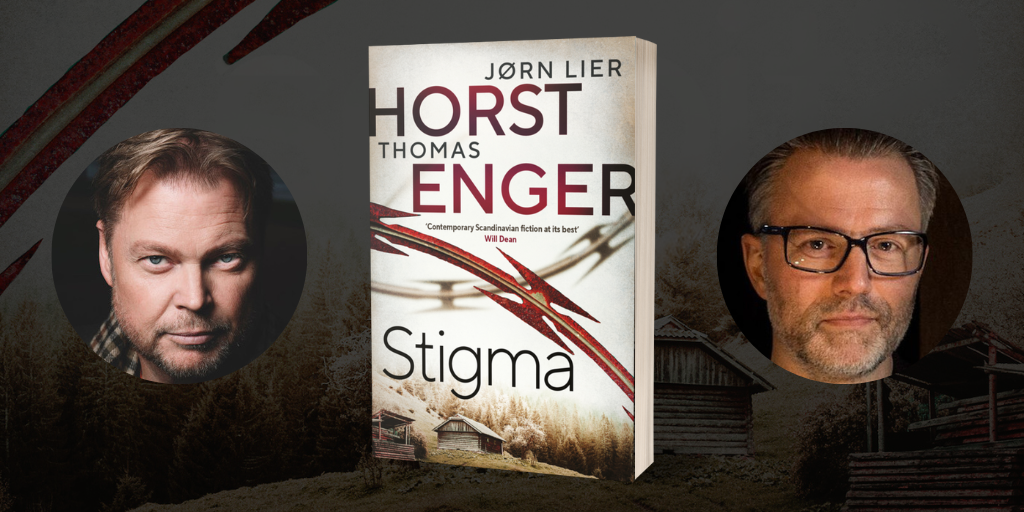
Jørn Lier Horst and Thomas Enger chat about their new Blix & Ramm thriller, Stigma … to each other!
2. We are welcomed back to the series with an incarcerated Alexander Blix. How have the events in Unhinged affected Blix’s morale?
Thomas: This one is definitely for you, Jorn.
Jorn: How come?
Thomas: Because you used to be a policeman. Remember?
Jorn: Yes, but…
Thomas: No buts. Blix. Policeman. Prison. Morale. Go.
(beat)
(sigh)
Jorn: Well … he certainly has hit another rock bottom, our dear friend Mr Blix. He’s struggling to find meaning in his life. He doesn’t really care what happens to him, but at the same time there is still a certain element of self-preservation in him.. A certain sense or need of justice as well, which never leaves him. Not completely.
Thomas: Wow.
Jorn: What?
Thomas: You should do a programme on TV or something. Do book analysis or have a book club.
(beat)
(beat)
Jorn: You’re pulling my leg again.
Thomas: No, no. I’m being serious.
Jorn: You’re never serious.
Thomas: I’m always serious. Wait. You already have a programme on TV. Man! What a shame.
(beat)
(sigh)
Jorn: Maybe you should have a programme on TV.
Thomas: Maybe I should.
(beat)
(sigh)
3. It is discovered that a ruthless killer has escaped from a German jail and, once again, Alexander Blix joins forces with Emma Ramm. Why do you feel this duo works so well together?
Thomas: Take it away, Oprah.
Jorn: I could, but then all the light will be shining on me.
Thomas: True. Well …
(beat)
(beat)
(beat)
Jorn: This is going well.
Thomas: I was doing the cliffhanger thing again. Sorry. Well … there is that dynamic between the two of them, Blix being twice Emma’s age, almost, and the fact that they have a traumatic past together, events which in a sad and yet quite a loving way created a bond between them, which, as the series progresses, just keeps on growing stronger and stronger. They’re also quite driven, in their own way. Blix – at least to begin with, being the policeman following the rules and protocols – while Emma doesn’t necessarily have to. This also creates a bit of tension between them. I think they have quite a lot going for them as a duo.
(beat)
(sigh)
Thomas: You’re not saying anything, Oprah.
Jorn: Because … I’m speechless.
Thomas: What a surprise.
4. What would you love readers to take away from Stigma?
Jorn: It’s by and large a story about emotional scars, which we all have one way or the other. And how they affect us later in life, if we don’t find a way to heal those wounds.
Thomas: Wow.
Jorn: Now what.
Thomas: You were so quick out of the gates on this one.
Jorn: I thought I’d show you how it’s done.
Thomas: And yet, you didn’t answer the question.
Jorn: Oh.
(beat)
(beat)
Jorn: You’re right. Well … I hope the readers will enjoy the fact that it’s yet another departure from what we normally write together, the story going back and forth in time while one of the main characters is actually held up in prison. I’d like to believe that we’ve created a credible story with loads of twists and tensions. And – we’ve been careful not to do similar types of stories in each of the books so far, Stigma being no exception. The last thing we want to be is formulaic. Every book is different and brings something more to the series and the characters.
Thomas: Perfect.
(beat)
(beat)
Jorn: Really?
Thomas: I’m going to have a chat with that TV network you work for. Jorn’s Yawns. Everyone will watch that book show. I’m telling you.
Jorn: You are pulling my leg.
Thomas: What makes you say that?
5. This is the fourth book that you have co-written. What have been your favourite things about writing Stigma together?
Thomas: I think this has been the novel in the series which has been the easiest one to write, wouldn’t you agree, Yawn? I mean, Jorn?
Jorn: Yes.
(beat)
(sigh)
Thomas: In what way, a good talk show host would ask.
Jorn: Yes. True. I don’t know. In what way, Thomas?
Thomas: You tell me.
Jorn: I don’t know.
Thomas: I don’t know either. It just happened that way. But favourite things … for me – maybe the part about shaping the character Walter Kroos, the escaped serial killer from Germany, peelig off the layers of the reasons why he fled and why he needed to go back to Norway where he spent a summer holiday with his somewhat dysfunctional family.
Jorn: I agree.
(beat)
Thomas: Really? I thought you were going to say the prison scenes.
Jorn: Well, yes. Those, too.
Thomas: Man, that must mean we wrote a really good book.
Jorn: I think so, yes.
(beat)
(sigh)
Thomas: I enjoyed writing the scenes with the psychologist as well. To see how the relationship between Blix and his prison nemesis Jarl Inge Ree evolves.
Jorn: Yes.
(beat)
(sigh)
Jorn: I’m going to read this book, I think.
Thomas: You should.
6. You’re quite the duo, Jørn a former investigator in the Norwegian police, and Thomas, a journalist-turned-author. Would you say that you have injected parts of yourselves into your much-loved characters Blix and Ramm?
Jorn: I’m going to say something boring now and…
Thomas: No, no. It’s not boring.
(sigh)
(beat)
Jorn: … (clears throat) I think we put bits and pieces of ourselves into all our characters, not just Blix and Ramm.
Thomas: I agree with you. And I’m exposing all my feminine sides writing Emma, for instance.
Jorn: And while you take care of all the murders in our books, I’m the one solving them.
Thomas: Like the true policeman you are.
Jorn: There you go.
(beat)
(beat)
Thomas: It’s not exactly true, though, is it?
Jorn: What isn’t?
Thomas: That you’re the one solving them.
Jorn: You may have helped on occasion.
Thomas: On plenty of occasions.
Jorn: If you say so.
Thomas: I do, Colombo.
(sigh)
(beat)
(sigh)
7. When writing the Blix and Ramm series, do you plan the next books in the series, or do you prefer to see where the mood takes you?
Jorn: You do this one, Thomas.
Thomas: Okay. No.
(beat)
(beat)
Jorn: What kind of answer is that?
Thomas: No, we don’t plan ahead.
(sigh)
(sigh)
Jorn: I think we can add that we wanted to end the first one with a bang, quite literally, as the scene ended at midnight on New Year’s Eve. Which could have been interpreted as the fireworks going off, but also as an explosion. The readers clearly thought the latter, so then we had to figure out what that explosion was all about. And that’s how book two happened.
Thomas: Yes. Like I said – we don’t plan ahead.
Jorn: We take it step by step.
Thomas: Yes. Like I said – we don’t plan ahead.
(beat)
(sigh)
Jorn: Eloquent, Thomas. Elaborate.
Thomas: I know.
Jorn: You should think of becoming a writer.
8. Could you describe Stigma in one sentence?
Thomas: No.
(beat)
(beat)
Jorn: No.
9. Maybe the most important question, how do you celebrate a new publication?
Thomas: Jorn takes his dog for a walk.
Jorn: Thomas lights up a cigar.
Thomas: I smoke it, too. And I stare at the wall for three minutes, tapping my other fingers on the table. Then I start working on a new one.
Jorn: That’s quite sad, don’t you think?
Thomas: Maybe I should get myself a dog.
Jorn: I thought you were allergic to dogs.
Thomas: I am.
Jorn: You’re in for a treat, then.
Thomas: So is your dog, I’m sure.
Jorn: It’s really nice to have a dog.
Thomas: So you keep telling me.
(beat)
(sigh)
Jorn: Should we tell the readers that Blix has–
Thomas: No.
Jorn: I thought we could … you know, book five and everything.
Thomas: It’s too revealing, Jorn. Cliffhangers, remember?
Jorn: Yes, but … okay.
(beat)
(sigh)
(beat)
(sigh)
Jorn: We really should celebrate more.
Thomas: Have two cigars?
Jorn: Funny. To celebrate the fact that our books have done amazingly well in so many countries.
Thomas: You’re right. Take the dog with you, let’s go have a drink. Kill two birds with one stone. Just don’t accidentally kill the dog.
Jorn: Hm? What?
Thomas: Rule number one in crime fiction. Don’t. Kill. The. Dog. Or pets in general. Darlings, on the other hand.
Jorn: (…)
(beat)
(beat)
Thomas: I’m pulling your leg, Yawn.
Jorn: I knew it.


