Posted on

Crows and Folklore: The Inspiration for Crow Moon

Debut author Suzy Aspley talks about the inspiration for atmospheric gothic novel.

When the caws of the crows signal the last full moon of winter.’ 

Crow Moon is set across the month leading up to the rise of the last full moon of March, called the Crow Moon in some cultures. This is when the ground starts to thaw, earthworms and other creatures begin to emerge and many birds, including Corvids, start to collect materials to build their spring nests.

I’ve always been fascinated by birds and members of the corvid family in particular. Squads of blue-eyed Jackdaws wait to be fed and then land like a circus in the garden, squabbling and bouncing around comically, clearing any bread in seconds. Black-and-white magpies, or Geordie budgies, as we call them in our house, who cackle and taunt, and you hope always to see in pairs. Majestic ravens, with curved beaks and shining black feathers; blue and pink jays, which flash past in the forest chattering loudly.

And then there’s the crow, my favourite of all. Often solitary, although they mate for life, they’re highly intelligent, and once you’ve gained their loyalty they’ll watch and follow you, appearing when you need them. They’re said to remember those who’ve harmed or cared for them, and they’re reputed to grieve for their own dead. They’ve appeared throughout history and their shining black feathers are woven through folklore around the world. From the Native American Crow Tribes, to the fierce Celtic goddess Morrigan, the Gaelic winter witch the Cailleach, to Odin’s two ravens Huginn and Munnin, representing thought and memory, the crows and their kin have been revered and persecuted in equal measure throughout time. 

‘In ink-dark forests, floats mountain witch

Her feathered cloak black as pitch

Fear manifest, how near she comes

To strip all things of flesh and bones.’ 

Long associated with witches and their craft, as familiars, and often strung up or burnt – as women accused of being witches were too – the crow became the perfect metaphor for the folkloric Feannag Dhubh, when I was writing Crow Moon. Feannag Dhubh was a woman believed to be able to shapeshift into a witch, but she was cast out by society. In some ways, she was like my main protagonist, Martha. Martha was ostensibly cast out and isolated by her own grief – solitary, but also fiercely loyal – and she too will bear a grudge against those who harm or threaten her family. So I used all of this to create the myth of the Feannag Dhubh, who lived in Strathbran (Glen of Ravens) and made offerings to the night at the moondial on the land where Martha’s house burned down, killing her twin sons. 

Last year, we sadly lost our almost-tamed crow, who came every day to our garden to be fed. He was an older bird, his feathers flecked with white like flakes of snow, and last summer he brought his young, to feed. They’d watch him warily from nearby trees, or the top of the cabin. In his final days, his breathing visibly shallow, he’d come and sit on the wall, and we got closer than ever before, able to wish him farewell in the next life. A young crow, most likely one of his offspring, very occasionally comes closer now, but watches from nearby tall pines. Hopefully one day, it will know it’s welcome in our garden, too.

Posted on

USA & Canada: March 2024 Kindle Deals

All of the below titles are under $2

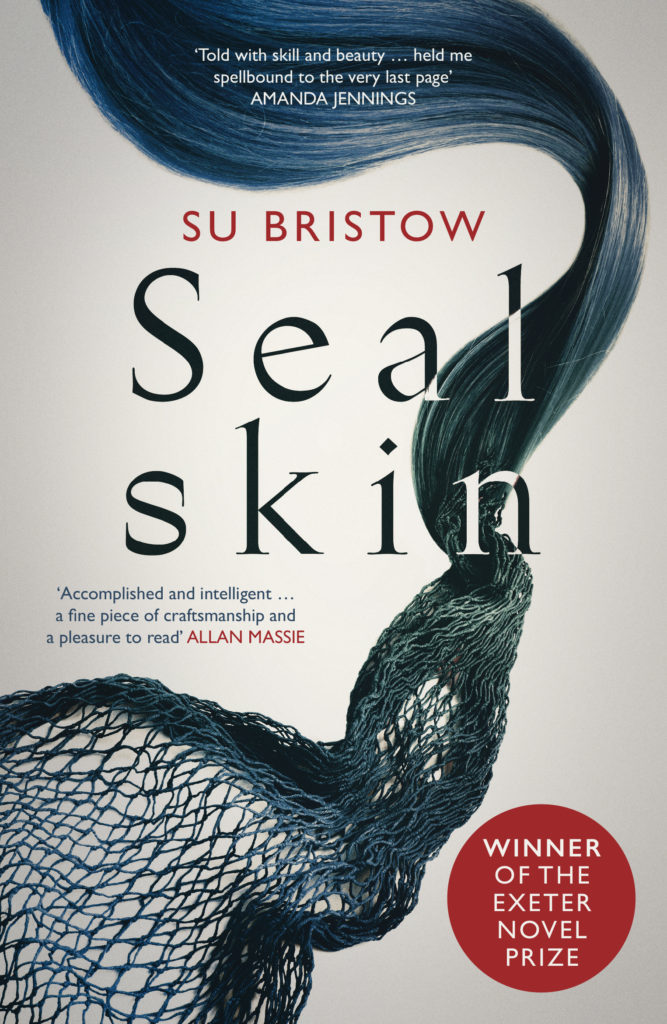
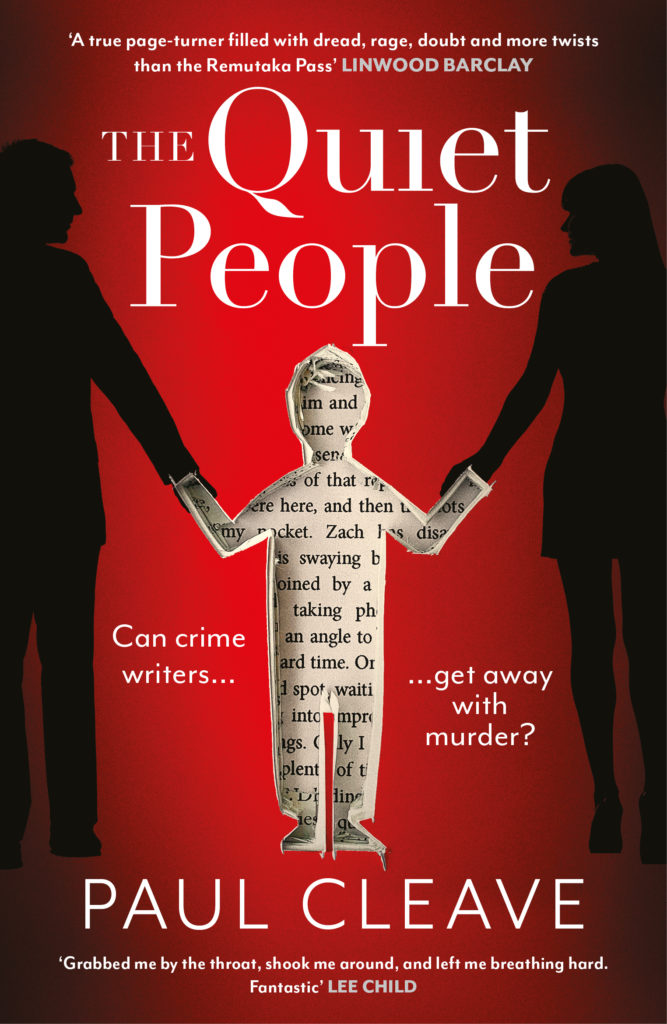
Click on the image to get your copy now!

Catch up with the Father of Nordic Noir…

Chilling Nordic Noir from Kjell Ola Dahl

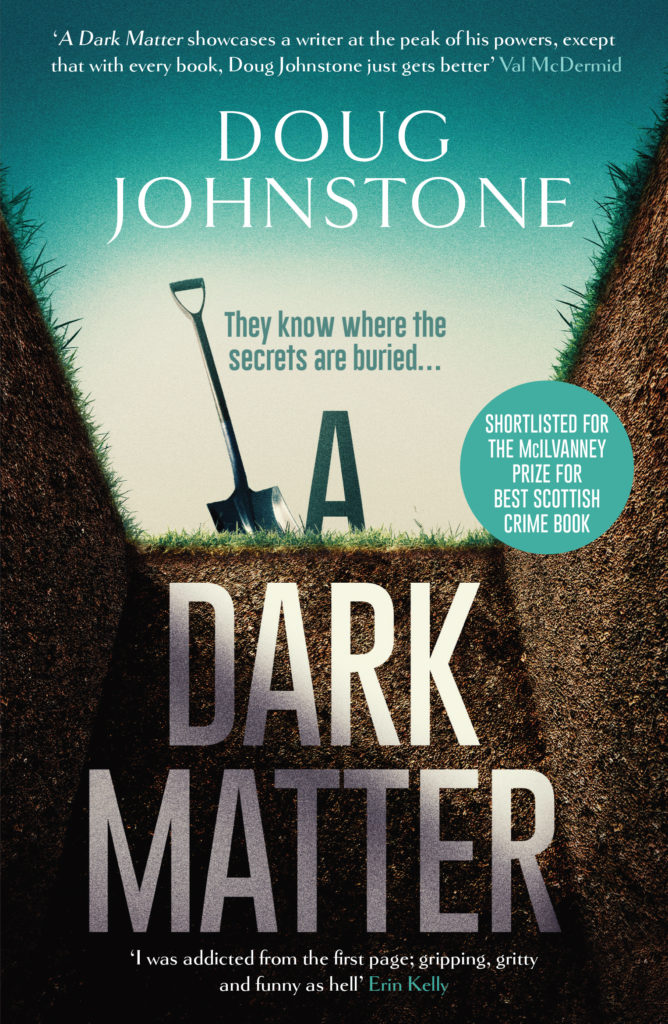
Emotive Scottish Psychological Suspense

Bestselling Nordic Chills

The Queen of Nordic Suspense

Addictive Scottish Thrillers

The New Queen of New Zealand Crime…

The Queen of French Noir…

The Louise Beech Collection

Cult Fiction at its Best…

Electrifying thrillers

Fabulous Finnish Thrillers

Award-Winning Canadian Thrillers

Unforgettable, Utterly Beautiful Reads…

Meet Lori Anderson…

Meet Robert Finlay

Twisty Psychological Suspense

Bold, Eye-Opening Thrillers

Intense, Immense, Award-Winning Action Thrillers

Spills, Thrills and Tears: Unforgettable Scottish Fiction

Simply Horrifying

Travel the World through Crime Fiction

From the author of NETFLIX hit The Cry

An unthinkable decision
A deadly mistake

Award-winning Krimi

There’s a blizzard approaching Siglufjörður and that can only mean one thing…

Posted on

 Christopher MacLehose to launch Open Borders Press at Orenda Books 

 Karen Sullivan, Publisher of Orenda Books, is delighted to announce that Christopher MacLehose will be leading Orenda’s first-ever imprint. 

MacLehose, whose Mountain Leopard Press list was sold by Welbeck to Hachette in December 2022, will now publish Open Borders Press as an associate list of Orenda Books. Orenda and the new imprint have much in common, sharing a culture and approach, and MacLehose says that Open Borders Press is grateful to be able to take advantage of Orenda’s dynamic and responsive operation. 

Having commissioned translations from thirty-seven languages during his years as a publisher, MacLehose will continue to look for authors of exceptional quality from all over the world. 

The list will endeavour to match the success of the Harvill Press and MacLehose Press models in publishing the best literary fiction and non-fiction, much of it in translation, as well as crime fiction (exclusively in translation) written by outstanding storytellers. The quality of the translations and of every aspect of the design of the books will be paramount. 

Koukla MacLehose, who founded the celebrated scouting agency that bore her name, will work with the Press. 

The first title under the new imprint, Andrey Kurkov’s Our Daily War, a sequel to the international bestselling Diary of an Invasion – a deeply personal account of the continuing war in Ukraine – will be published in the summer. 

Karen Sullivan says, ‘I have long admired Christopher, both for the energy and ingenuity he brings to the industry, but also for his unerring eye, his profound and purposeful support of literature in translation, and his uncanny ability to seek out literary gems. It is an honour and a joy to work closely with him, and his publishing vision for Open Borders Press very much reflects Orenda’s ethos and complements our output. 

‘As we approach our tenth anniversary, it feels like the right time to embrace this opportunity, and we are looking forward to what is bound to be an indomitable partnership. OBP’s first published title, Andrey Kurkov’s Our Daily War, is a powerful, insightful and unexpectedly humorous book, and being involved in publishing Ukraine’s finest writer is an absolute privilege.’ 

You can reach Christopher MacLehose on Christopher@maclehose.net or +44 7711 696098 

Andrey Kurkov’s Our Daily War will be published in hardback in July 2024. 

Posted on

People-Watching for a Living – The Inspiration for Dead Sweet

For the majority of my adult life I have worked in politics and served four terms as an elected member of parliament – with one term as a minister. I found that I tapped into knowledge that has been compounded over a long period of time – an understanding of budgets, the law-making process, and the main topics of public debate. 

Be sure, however, that I gave myself permission to fictionalise events and settings. Some of these were based on ´what if´ scenarios – something had been done that was in reality debated but not realised, for example. I deliberately stayed well away from parliament itself because I had so recently left politics when I wrote the book. I wasn’t ready to go deep into that world in Dead Sweet, but who knows what the future will bring! But what I could use – and did – was what I learned about people.
One of the privileges of having been in politics for this long is how well you get to know society and all of its different aspects. Every day you wake up and hear and read about issues that are affecting the people we serve. And then there were all the people we met – the hundreds, thousands of people, with their stories and their individual concerns, and the dynamics they create in various situations. I watched the people around me – everywhere – to see what was worrying them or bringing them joy; I watched them closely in meetings and in social gatherings. It was my job to understand them in order to do my job.

I started writing based on my interest in people and especially the dynamics of different relationships. Sometimes we ask ourselves if it is possible for someone to be born bad and also what makes even the best of us do the unthinkable. I wondered what a smart psychopath could be doing in the surroundings that I live in – how far could he go and if, and then whom, would be able to stop him (or her!). 

I started to create the characters who then ended up in Dead Sweet. I imagined them walking into a room, considering how the energy would shift in their presence, how their voices would sound and how others would react to them. Slowly the story started to come alive. When my government official, Óttar, became more defined, I chose to make him a high-ranking official because I know that environment well. I know the set-up, the dynamics, and what happens on a day-to-day basis. 

 As the writing progressed I found the need to explore and write more about the relationships and interactions between my characters, between Sigurdís and her family, between brother and sister, mother and son, Sigurdís and her boss – because no relationship is the same and relationships are never  black and white. There are layers of the past defining every relationship – a shared past between the people involved and also their own individual experiences. And often the most important things you find is in what is ´not´ said but shown in body language and what ´lies in the air´. 

I am often asked if Óttar is based on someone I met during my political years. The answer is simply no, because most of the people I worked with were genuinely trying to do their honest best every day. That’s why I found it fascinating to place him there to see what he could get away with. People do the best and worst things.

Katrín Júlíusdóttir’s Dead Sweet, translated by Quentin Bates, is out today in beautiful hardback.